When Sports Trigger Sudden Back or Neck Pain
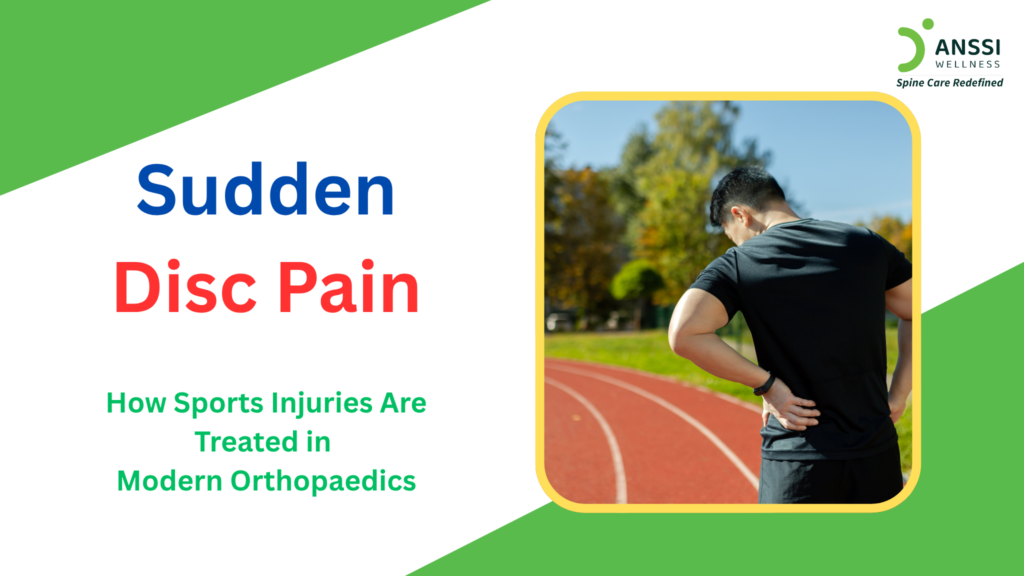
Sports and physical activity support strength, flexibility, and overall health. However, sudden movements, heavy lifting, falls, or intense training can sometimes trigger back or neck pain. For athletes and fitness enthusiasts, the discomfort may interfere with movement, training, and everyday activities.
In some cases, symptoms may be associated with an intervertebral disc problem. A disc bulge or herniation can irritate nearby spinal nerves, potentially causing pain that travels into the arms or legs.
However, not every episode of sudden back pain is caused by a disc injury. Muscle strains, ligament injuries, joint irritation, and fractures can also occur during sports. Identifying the actual cause is essential before choosing treatment.
Common Sports Injuries Affecting Spinal Discs
Intervertebral discs are cushions located between the bones of the spine. They help absorb pressure and allow the spine to move. During sports, these structures experience forces from bending, twisting, lifting, and impact.
Certain movements may contribute to disc-related symptoms, particularly when combined with excessive stress, fatigue, or an existing spinal condition.
1. Heavy Lifting and Weight Training
Incorrect lifting techniques, lifting beyond one’s capacity, or repeatedly stressing the spine while fatigued may contribute to back pain. Exercises such as deadlifts and squats require controlled technique and appropriate progression.
2. Sudden Twisting and Repetitive Bending
Sports involving rapid changes in direction, rotation, or repeated bending can place mechanical demands on the spine. These movements may aggravate an existing disc problem or trigger symptoms.
3. High-Impact Activities and Falls
Contact sports, gymnastics, and activities involving jumping or falling can cause spinal injuries. Depending on the incident, the injury may involve muscles, ligaments, discs, vertebrae, or other structures.
4. Disc Bulges and Herniation
A disc bulge occurs when the disc extends beyond its usual boundary. A herniated disc involves extrusion of disc material that may irritate or compress a nearby nerve.
Symptoms can include local back or neck pain, sciatica, radiating arm or leg pain, tingling, numbness, or weakness. The severity of symptoms does not always correspond directly to the size of a disc abnormality.
How Orthopaedic Specialists Diagnose Disc Injuries
When an athlete experiences sudden spinal pain, an orthopaedic specialist begins by understanding how the injury occurred and how symptoms have developed.
The assessment may include:
- Medical history: The activity or movement that triggered pain, previous injuries, symptom duration, and any changes in strength or sensation.
- Physical examination: Assessment of movement, tenderness, flexibility, and functional limitations.
- Neurological examination: Evaluation of muscle strength, sensation, reflexes, and signs of nerve involvement.
- Imaging when indicated: X-rays may help assess certain bone injuries, while MRI can provide information about discs, nerves, and other soft tissues.
MRI findings must be interpreted alongside the patient’s symptoms and examination. A disc bulge seen on a scan does not automatically mean it is responsible for the pain.
If a significant injury or serious neurological problem is suspected, further investigation and specialist care may be required.
Prevention: Reducing the Risk of Sports-Related Disc Problems
Although not every spinal injury can be prevented, appropriate training habits may help reduce avoidable strain.
Warm Up and Progress Gradually
Begin with a suitable warm-up before intense exercise. Increase training loads and intensity gradually instead of making sudden increases in weight, duration, or frequency.
Use Proper Technique
Learn correct lifting, bending, and movement techniques for your sport. When lifting weights, maintain controlled movement and avoid attempting weights beyond your current ability.
Strengthen Supporting Muscles
A professionally guided exercise programme can improve core strength, coordination, mobility, and muscular endurance. Exercises should match the athlete’s fitness level and medical needs.
Allow Time for Recovery
Adequate rest and recovery between demanding sessions can help manage training-related fatigue. Persistent pain should not be ignored or repeatedly pushed through.
Non-Surgical Treatment Options for Disc Bulges and Herniation
Many people with disc-related back or neck pain can initially be treated without surgery, depending on the diagnosis and severity. Treatment should be individualised and guided by an appropriate spine specialist.
Physiotherapy and Activity Modification
Physiotherapy may help restore movement, improve strength, and support a gradual return to activity. A physiotherapist may recommend exercises, movement retraining, and changes to training habits.
Temporary modification of painful activities may also be necessary. This does not always mean complete bed rest; the appropriate level of activity depends on the injury and symptoms.
Medication for Symptom Management
A doctor may recommend medication to help manage pain or inflammation when appropriate. Medication can support recovery by making movement more comfortable, but it does not necessarily correct an underlying disc abnormality.
Long-term use of medication should be reviewed with a doctor, particularly when symptoms repeatedly return.
Non-Surgical Spinal Decompression Treatment
Non-Surgical Spinal Decompression Treatment (NSSDT) is another option that may be considered for selected patients with certain disc-related conditions.
This approach uses a specialised, computer-controlled table to apply regulated decompressive forces to a targeted spinal region. The treatment is intended to alter mechanical loading and reduce stress on affected structures.
NSSDT is not suitable for every disc injury or every patient with nerve compression. Its role should be considered after reviewing the diagnosis, symptoms, examination findings, and relevant medical history.
When appropriate, Non-Surgical Spinal Decompression Treatment may be incorporated into a broader programme that includes physiotherapy, strengthening, posture guidance, and activity modification.
When Might Spine Surgery Be Necessary?
Surgery may be considered when there is significant structural damage, severe nerve compression, progressive neurological weakness, or persistent symptoms despite appropriate non-surgical treatment.
Depending on the condition and procedure, potential risks can include infection, bleeding, nerve injury, anaesthesia-related complications, persistent symptoms, and the need for additional treatment.
These risks should be discussed with a qualified spine specialist. Surgery may be necessary in some cases, and choosing non-surgical treatment should not delay urgent care when serious symptoms are present.
New loss of bladder or bowel control, numbness around the groin or saddle area, rapidly worsening weakness, or severe difficulty walking requires urgent medical evaluation.
Returning to Sports After a Disc Injury
Returning to training should be based on recovery and clinical guidance; not simply on how many days have passed since the injury.
A gradual return may involve restoring comfortable movement, rebuilding strength, improving technique, and increasing training demands step by step. Athletes should seek professional advice if pain returns, radiating symptoms develop, or strength and sensation change.
About ANSSI:
ANSSI Wellness focuses on improving the quality of life for patients suffering from spinal issues, aiming to provide relief where other conventional treatments have failed. Through advanced Non-Surgical Spinal Decompression Treatment, ANSSI is committed to helping patients avoid surgery and recover in a safe, effective, and compassionate environment.
Book Consultation:
Call +91 9004726844 | 9920936844
Visit www.anssiwellness.com
Connect with ANSSI Wellness on LinkedIn, Instagram, and Facebook for expert guidance.
Clinical References:
- Bono CM. Low-back pain in athletes. Journal of Bone and Joint Surgery. 2004;86(2):382-396.
- Saal JA, Saal JS. Nonoperative treatment of herniated lumbar intervertebral disc with radiculopathy: an outcome study. Spine. 1989;14(4):431-437.
- Hides JA, Jull GA, Richardson CA. Long-term effects of specific stabilizing exercises for first-episode low back pain. Spine. 2001;26(11):E243-E248.
- Weinstein JN, Tosteson TD, Lurie JD, et al. Surgical versus nonoperative treatment for lumbar disc herniation: the Spine Patient Outcomes Research Trial (SPORT). JAMA. 2006;296(20):2441-2450.
- Gose E., Ph.D, Naguszewski W., MD, Naguszewski R., MD. Vertebral Axial Decompression Therapy for Pain Associated with Herniated or Degenerated Discs or Facet Syndrome: An Outcome Study. Journal of Neurological Research, Volume 20, No 3, April 1998.