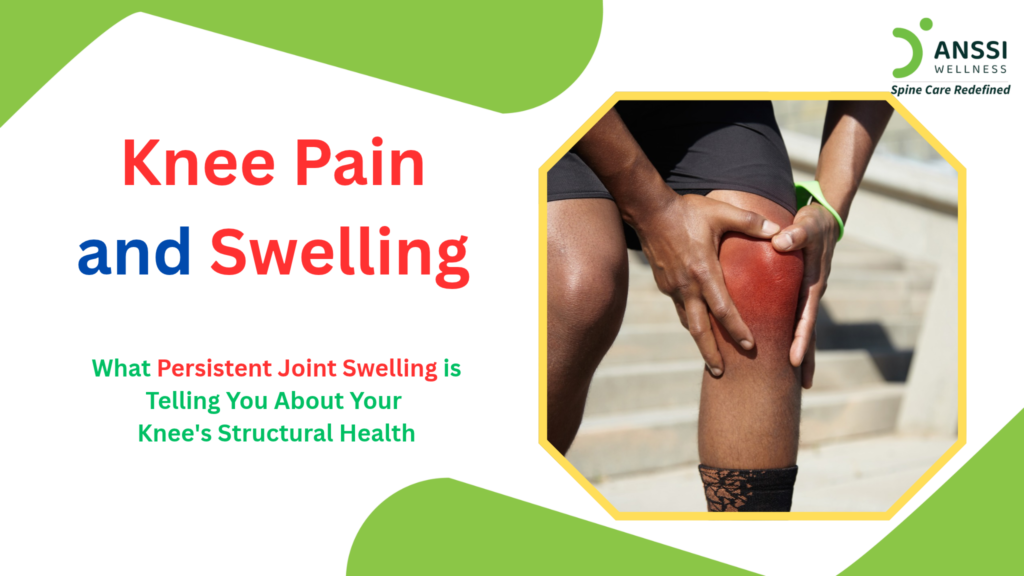
Have you noticed that your knee becomes swollen after walking, climbing stairs, standing for long periods, or performing everyday activities? Perhaps the swelling improves with rest but returns whenever you resume your routine. While occasional swelling can follow physical exertion or a minor injury, recurring knee swelling accompanied by pain or stiffness should not be ignored.
Swelling is often a sign that something inside or around the knee joint needs attention. It may result from an injury, inflammation, osteoarthritis, or another underlying condition.
Understanding what causes the swelling is an important first step toward choosing the right treatment and protecting your long-term knee health.
What Does Knee Swelling Actually Mean?
The knee contains cartilage, ligaments, tendons, and other structures that work together to support movement and distribute body weight. A small amount of synovial fluid normally lubricates the joint. When irritation, inflammation, or injury occurs, the joint may produce excess fluid or accumulate fluid for other reasons.
This accumulation, commonly called a knee joint effusion, can cause visible swelling, tightness, stiffness, and difficulty bending or straightening the knee.
The appearance of swelling alone cannot identify the exact problem. Its timing, severity, associated symptoms, and relationship to activity can, however, help a healthcare professional determine which investigations may be necessary.
Sudden Knee Swelling After an Injury
When the knee swells rapidly after a fall, twisting movement, sports injury, or accident, it may indicate an acute injury.
Possible causes include ligament tears, meniscus injuries, fractures, and bleeding within the joint. Rapid swelling after trauma can sometimes indicate a significant internal injury, even if the person can still move the knee.
Patients may also experience sharp pain, instability, difficulty bearing weight, or a sensation that the knee is locking.
Do not assume that swelling will disappear on its own simply because the initial pain improves. Significant swelling after an injury warrants prompt medical assessment, particularly when walking becomes difficult or the knee feels unstable.
Persistent Swelling Associated With Osteoarthritis
When knee swelling develops gradually or keeps returning over weeks or months, osteoarthritis may be one possible cause.
Osteoarthritis involves changes in the joint’s cartilage and other tissues. As the condition progresses, the joint may become painful, stiff, and less comfortable during activities such as walking, standing, or climbing stairs. Inflammation of the joint lining can contribute to fluid accumulation.
People with early osteoarthritis may notice swelling after activity, while those with more advanced disease can experience more persistent symptoms.
However, recurring swelling does not automatically mean that cartilage damage is severe or that knee replacement is necessary. The cause and extent of the problem must be evaluated through clinical examination and appropriate imaging.
Other inflammatory joint conditions, crystal arthritis, and infections can also cause swelling, so an accurate diagnosis is essential.
Swelling After Walking or Physical Activity
Does your knee become puffy or feel tight after a long walk, household work, climbing stairs, or standing throughout the day?
Post-activity swelling may indicate that the joint is irritated by the demands placed on it. Possible contributors include osteoarthritis, meniscus problems, overuse, and other joint conditions.
Cartilage degeneration can be associated with this pattern, but swelling alone cannot confirm cartilage damage. The amount of activity, muscle strength, joint alignment, body weight, and existing injuries may all influence symptoms.
Repeatedly pushing through pain and swelling without understanding the cause may make everyday movement increasingly uncomfortable. Consider temporarily reducing activities that aggravate symptoms and arranging an assessment if the swelling persists or returns frequently.
Warning Signs You Should Never Ignore
Some forms of knee swelling require urgent medical attention.
Seek prompt medical care if you experience:
- A hot, red, severely swollen knee accompanied by fever or feeling unwell.
- Sudden, substantial swelling after an injury.
- Severe pain or an inability to bear weight.
- A visibly deformed knee following trauma.
- Rapidly worsening symptoms or significant restriction of movement.
A hot, swollen joint with fever can indicate a joint infection, which requires urgent assessment and treatment. Do not attempt to manage such symptoms solely with home remedies or rehabilitation.
How Do Doctors Identify the Cause of Knee Swelling?
Diagnosis begins with a clinical assessment of the symptoms, medical history, recent injuries, and physical condition of the knee.
- X-rays can help identify osteoarthritis, changes in joint space, and certain bone abnormalities.
- MRI may be recommended when a clinician needs more detailed information about structures such as the meniscus, ligaments, cartilage, or other soft tissues.
- In selected cases, doctors may perform joint aspiration, a procedure in which fluid is removed from the knee using a needle. Testing this fluid can help identify infection, crystal deposits associated with gout or other forms of crystal arthritis, and bleeding within the joint.
Not everyone needs an MRI or joint aspiration. The appropriate investigation depends on the clinical findings and suspected cause.
6. Can Knee Swelling Be Managed Without Surgery?
Treatment depends on the underlying diagnosis.
For selected patients with early osteoarthritis or degenerative knee problems, non-surgical management may include activity modification, appropriate pain management, physiotherapy, muscle strengthening, and exercises to improve mobility and joint function.
ANSSI Wellness offers an Advanced Knee Rehabilitation Programme for eligible patients. The programme may include clinical assessment, individualised physiotherapy, strengthening exercises, mobility training, and knee decompression technology where appropriate.
The aim is to help manage symptoms, improve movement, and support everyday function. Knee decompression technology should not be considered a guaranteed way to restore lost cartilage or reverse osteoarthritis. Its suitability and potential benefits depend on the patient’s condition, and outcomes vary.
Patients with significant structural damage or certain other conditions may require additional specialist treatment, including surgery where clinically indicated.
About ANSSI:
ANSSI Wellness focuses on improving the quality of life for patients suffering from knee issues, aiming to provide relief where other conventional treatments have failed. Through Advanced Knee Rehabilitation Treatment, ANSSI is committed to helping patients avoid surgery and recover in a safe, effective, and compassionate environment.
Connect with ANSSI Wellness on LinkedIn, Instagram, and Facebook for expert guidance.