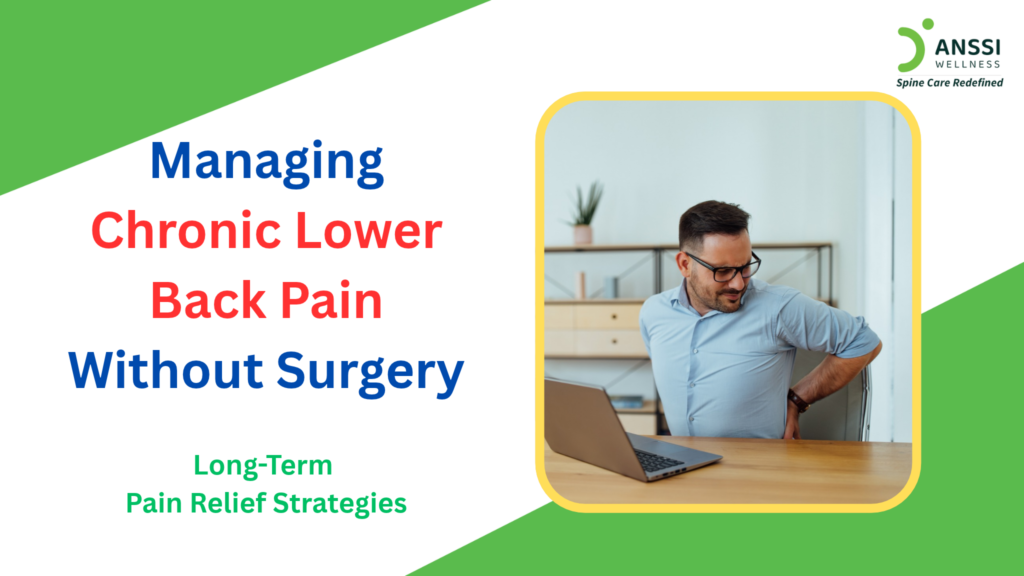
Chronic lower back pain can affect almost every aspect of your daily life, from sitting at work and sleeping comfortably to walking, bending, and participating in family activities. When the pain persists for three months or longer, temporary relief from medication may not always be enough to restore everyday function.
The good news is that surgery is not necessary for every person with chronic lower back pain. Depending on the underlying cause, a personalised combination of physiotherapy, exercise, lifestyle changes, and selected non-surgical treatments may help reduce discomfort and improve mobility.
Understanding the Possible Causes of Chronic Lower Back Pain
The lower back, or lumbar spine, consists of vertebrae, intervertebral discs, joints, ligaments, and supporting muscles. Problems affecting any of these structures can contribute to persistent pain.
Common causes include:
- Lumbar spondylosis: Age-related changes affecting spinal discs and joints that may contribute to stiffness and discomfort.
- Degenerative disc changes: Changes in the structure and flexibility of the discs between vertebrae.
- Disc bulge or herniation: Disc material may protrude and, in some cases, irritate nearby nerve roots.
- Spinal osteoarthritis: Degenerative changes in spinal joints that may cause pain and restricted movement.
- Spinal stenosis: Narrowing of spaces around the spinal nerves, potentially causing leg pain, numbness, or difficulty walking.
- Muscle weakness and sedentary habits: Reduced physical conditioning and sitting for a long time in one position may contribute to symptoms.
Importantly, an MRI finding does not automatically identify the cause of pain. A specialist doctor must consider imaging tests alongside symptoms, medical history, and physical examination.
1. Physiotherapy: Improving Strength and Movement
Physiotherapy is an important part of managing many forms of chronic lower back pain. Persistent discomfort can lead people to avoid movement, which may gradually reduce muscular strength and endurance.
- A physiotherapist can develop an individualised programme that may include gentle mobility exercises, core strengthening, hip exercises, movement retraining, and advice on comfortable lifting techniques.
- For people with spondylosis or osteoarthritis, the goal is to improve function and help manage symptoms rather than reverse the underlying degenerative changes.
- Manual therapy may also be appropriate for some patients as part of a broader programme, but it should complement active rehabilitation rather than replace it.
2. Ice, Cold Therapy, and Heat
These methods are best viewed as supportive measures that may make everyday activities more comfortable.
- Cold therapy may provide short-term relief following certain injuries or activity-related flare-ups. A cold pack wrapped in a towel can be applied for approximately 10-15 minutes, provided the skin is monitored and the person has no condition that makes cold exposure unsafe.
- Heat may be more comfortable for some people experiencing persistent muscular stiffness. A warm pack can help relax the surrounding muscles and make gentle movement easier.
It is important to note that neither cold nor heat treats the underlying cause of disc degeneration, arthritis, or nerve compression.
3. Nutrition and Weight Management
Muscle function, recovery, and overall health are all supported by a balanced diet.
- Include vegetables, fruits, whole grains, adequate protein, and healthy sources of fat as part of a varied eating pattern.
- Avoid relying on unproven supplements or restrictive diets marketed as cures for back pain.
- If you have nutritional concerns or other medical conditions, seek advice from a doctor.
For people carrying excess body weight, gradual weight management may help reduce mechanical demands on the lower back.
4. Exercise and Everyday Movement
Regular, appropriately selected exercise can help improve physical conditioning and reduce the impact of chronic lower back pain.
Depending on your symptoms and abilities, a programme may include:
- Walking
- Gentle stretching
- Trunk-strengthening exercises
- Low-impact activities such as swimming.
Progress gradually, adjusting the routine to your tolerance.
If prolonged sitting aggravates your symptoms:
- Change positions regularly.
- Take short movement breaks throughout the day.
- Adjust your workstation for comfort.
- Avoid repeatedly lifting heavy objects with poor control.
Exercise should not require pushing through severe pain. New or worsening symptoms should lead to a review of your programme.
5. Bracing: When is Back Support Appropriate?
A lumbar brace may provide temporary support in selected situations, depending on the diagnosis and clinical advice. Some people may find it helpful during specific activities or while recovering from certain injuries.
However, a brace is not a universal solution for chronic lower back pain. Prolonged or unnecessary use may restrict movement and contribute to dependence on external support.
Bracing should therefore be guided by a qualified doctor and combined with appropriate activity and rehabilitation.
6. Non-Surgical Spinal Decompression Treatment
Non-Surgical Spinal Decompression Treatment (NSSDT) uses a specialised table and harness system to apply controlled stretching forces to selected spinal segments.
- It may be offered to some patients with disc-related back pain as part of a broader non-surgical treatment plan.
- NSSDT may be combined with physiotherapy, rehabilitation exercises, and guidance on daily activities.
- Suitability depends on the patient’s symptoms, clinical assessment, medical history, and diagnosis.
It is important to understand that NSSDT should not replace appropriate medical treatments with stronger evidence for the specific condition. A qualified doctor can help you consider its potential benefits, limitations, and alternatives.
When Should You Seek Medical Attention?
Consult a healthcare professional if lower back pain persists, repeatedly returns, or interferes with sleep, work, or walking.
Seek prompt medical help for new or progressive leg weakness or significant difficulty walking. New loss of bladder or bowel control, or numbness around the groin or saddle area, requires emergency evaluation.
Surgery may be necessary for certain conditions, including serious or progressive neurological problems. Choosing non-surgical care should not mean delaying treatment when urgent intervention is indicated.
About ANSSI:
ANSSI Wellness focuses on improving the quality of life for patients suffering from spinal issues, aiming to provide relief where other conventional treatments have failed. Through advanced Non-Surgical Spinal Decompression Treatment, ANSSI is committed to helping patients avoid surgery and recover in a safe, effective, and compassionate environment.
Book Consultation:
Call +91 9004726844 | 9920936844
Visit www.anssiwellness.com
Connect with ANSSI Wellness on LinkedIn, Instagram, and Facebook for expert guidance.