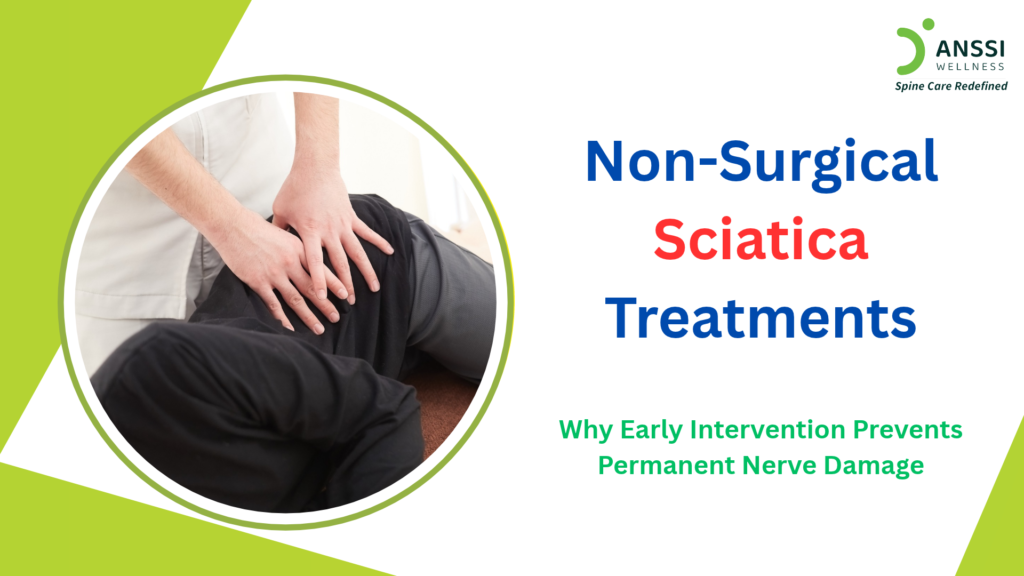
Sciatica can begin with a dull ache in the lower back or buttock and gradually develop into shooting pain, burning sensations, tingling, or numbness travelling down the leg. For many people, the discomfort interferes with sitting, walking, sleeping, and working. Some wait for the symptoms to disappear, hoping that rest or painkillers will resolve the problem.
However, when sciatica involves persistent or worsening nerve compression, delaying medical assessment can allow neurological problems to go unrecognised. Early intervention helps identify the cause, guide appropriate treatment, and reduce the risk of lasting nerve impairment.
Although not every case of sciatica progresses or causes permanent damage, recognising warning signs is essential.
What Causes Sciatica?
Sciatica describes symptoms associated with irritation or compression of nerve roots in the lower spine, commonly involving the L4, L5, or S1 nerve roots. These nerves contribute to sensation and movement in the legs.
- A lumbar disc herniation is one possible cause. When disc material protrudes beyond its normal boundary, it may irritate a nearby nerve root and produce pain that travels from the lower back or buttock into the leg.
- Other causes include spinal stenosis, degenerative spinal changes, and spondylolisthesis.
Not every case of leg pain is sciatica. A clinical assessment helps determine whether nerve irritation is present and what treatment is appropriate.
Progression of Sciatica Symptoms
Sciatica does not follow one predictable progression. Some people improve without developing neurological complications, while others experience worsening symptoms.
1. Radiating Pain and Nerve Irritation
- Early symptoms may include sharp, burning, or electric-shock-like pain extending from the lower back or buttock into one leg.
- Sitting for long periods, coughing, sneezing, or certain movements may aggravate the discomfort.
At this stage, appropriate assessment can help identify the likely cause and establish a management plan. Treatment may include maintaining tolerable activity, physiotherapy, suitable exercises, and medication when clinically appropriate.
2. Tingling and Numbness
As nerve irritation continues, some people experience pins and needles, altered sensation, or numbness in the leg or foot.
These symptoms deserve attention, particularly if they persist, spread, or become more pronounced. A specialist doctor may assess sensation, reflexes, muscle strength, and other neurological signs to determine whether further investigation is necessary.
3. Muscle Weakness
- Nerve dysfunction can sometimes affect the muscles supplied by the affected nerve.
- You may notice difficulty lifting the front of the foot, climbing stairs, standing on the toes, or walking normally.
New or progressive weakness requires a prompt medical check-up. Do not assume that stretching or painkillers alone will resolve the problem.
6. Persistent or Severe Neurological Impairment
Severe or prolonged nerve injury can sometimes result in lasting weakness, sensory changes, or functional limitations.
New loss of bladder or bowel control, numbness around the groin or saddle area, or rapidly progressing weakness may indicate a serious condition such as cauda equina syndrome.
These symptoms require emergency medical evaluation. However, permanent nerve damage is not an inevitable outcome of untreated sciatica, and symptoms do not always worsen in a fixed sequence.
Non-Surgical Treatments for Sciatica
Many people with sciatica can initially be managed without surgery, depending on the underlying cause, symptom severity, and neurological findings.
Physiotherapy and Exercise
A physiotherapist can recommend suitable movements, strengthening exercises, and activity modifications based on the patient’s condition. Prolonged bed rest is generally discouraged, although activities may need to be adjusted during a painful flare-up.
Medication
A doctor may prescribe medication to help manage symptoms, taking into account potential side effects and the patient’s medical history. Medication should not be used to mask worsening neurological symptoms.
Lifestyle Adjustments
Changing positions regularly, avoiding activities that repeatedly aggravate symptoms, and gradually returning to tolerable movement may support recovery.
Further Assessment and Imaging Tests
MRI may be appropriate when symptoms persist, neurological deficits are present, or the findings could change treatment decisions.
Surgery may be recommended when there is significant or progressive neurological impairment or persistent disabling symptoms despite appropriate conservative care.
Can Non-Surgical Spinal Decompression Treatment Help?
Non-Surgical Spinal Decompression Treatment (NSSDT) uses an advanced US-based technology system to apply controlled decompression forces to selected spinal segments.
- It can help reduce the pressure on nerves by facilitating the healing of spinal discs.
- It is often combined with physiotherapy, exercises, and guidance on daily activities.
- It can be offered to selected patients with disc-related back pain and associated leg symptoms as part of a broader rehabilitation programme.
- Whether it is appropriate depends on the clinical diagnosis, neurological examination, medical history, and overall condition.
Why Early Intervention Makes a Difference
Early assessment helps distinguish uncomplicated sciatica from conditions requiring more urgent treatment. It also allows doctors to monitor changes in muscle strength, sensation, and walking ability and adjust the treatment plan when necessary.
If you have recurring pain travelling down your leg, persistent numbness, or symptoms that interfere with daily activities, arrange a medical evaluation rather than repeatedly relying on temporary pain relief.
About ANSSI:
ANSSI Wellness focuses on improving the quality of life for patients suffering from spinal issues, aiming to provide relief where other conventional treatments have failed. Through advanced Non-Surgical Spinal Decompression Treatment, ANSSI is committed to helping patients avoid surgery and recover in a safe, effective, and compassionate environment.
Book Consultation:
Call +91 9004726844 | 9920936844
Visit www.anssiwellness.com
Connect with ANSSI Wellness on LinkedIn, Instagram, and Facebook for expert guidance.