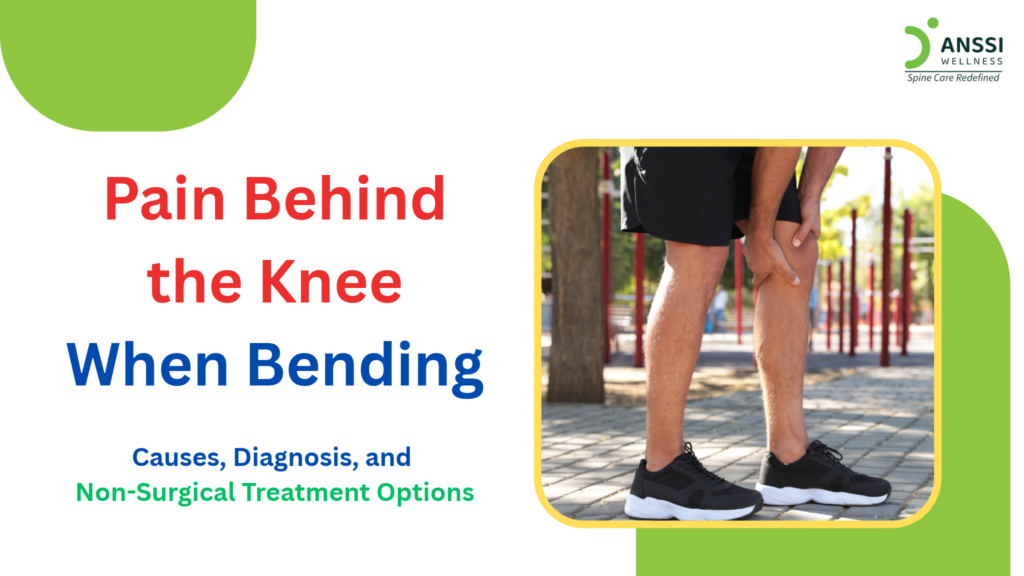
Experiencing pain behind the knee when bending can make everyday activities such as climbing stairs, squatting, walking, or sitting with your knees folded uncomfortable. This type of discomfort, known as posterior knee pain, may develop gradually or appear suddenly following an injury.
While many people initially ignore it or rely on pain-relief medication, persistent pain may indicate an underlying problem involving the meniscus, tendons, or other structures surrounding the knee joint.
Understanding the actual cause of posterior knee pain is essential for choosing the right treatment and preventing further complications.
Common Causes of Pain Behind the Knee When Bending
The back of the knee contains several important structures, including tendons, ligaments, muscles, and joint tissues. Problems affecting these structures can cause pain, particularly when the knee is flexed.
1. Popliteal Cyst (Baker’s Cyst)
A popliteal cyst, commonly called a Baker’s cyst, is a fluid-filled swelling that develops behind the knee. It frequently occurs when an underlying knee condition, such as osteoarthritis or a meniscus injury, causes excess joint fluid production.
Common symptoms include:
- A noticeable lump or swelling behind the knee
- Tightness when bending or straightening the leg
- Discomfort during walking or physical activity
- A feeling of pressure or fullness behind the knee
Larger cysts may restrict knee movement and cause considerable discomfort. Sudden calf swelling or pain may indicate a ruptured cyst or another condition, including deep vein thrombosis (DVT), and requires prompt medical evaluation.
2. Posterior Meniscus Tears
The meniscus is a C-shaped piece of cartilage that acts as a cushion between the thighbone and shinbone. Each knee contains two menisci, and their posterior portions help distribute pressure during knee movement.
A tear in the posterior meniscus, particularly the posterior horn, may cause pain behind or along the joint line.
Common symptoms include:
- Pain while bending the knee deeply
- Discomfort during squatting or twisting
- Swelling following physical activity
- Clicking, catching, or locking sensations
- Difficulty fully bending or straightening the knee
Meniscus injuries may occur due to sudden twisting movements, sports injuries, or age-related degeneration. Without appropriate management, symptoms can persist and interfere with everyday activities.
3. Hamstring Tendon Problems
The hamstring muscles extend along the back of the thigh and attach around the knee. Their tendons help control knee bending and support lower-limb movement.
Overuse, excessive stretching or sudden physical exertion can irritate or injure these tendons.
Symptoms may include:
- Pain behind the knee during bending
- Tenderness around the tendon attachment
- Discomfort while walking, running, or climbing stairs
- Tightness when stretching the hamstring muscles
Other possible causes include knee osteoarthritis, ligament injuries, and inflammation involving structures around the posterior knee.
Symptoms and Warning Signs You Should Not Ignore
Posterior knee pain can present differently depending on its underlying cause. Some people experience discomfort only while bending, whereas others develop persistent pain and swelling.
Watch for the following symptoms:
- Pain when bending or straightening the knee
- Swelling or a lump behind the knee
- Stiffness after sitting for extended periods
- Difficulty squatting or climbing stairs
- Reduced knee flexibility and mobility
- Pain that worsens after physical activity
Seek prompt medical attention if you experience sudden severe pain, significant swelling, redness, warmth, or difficulty bearing weight. Sudden calf swelling or pain, particularly with breathlessness or chest pain, requires urgent assessment to rule out a blood clot.
Diagnosis: Identifying the Actual Cause of Posterior Knee Pain
Treating pain behind the knee effectively requires identifying the structure responsible for the discomfort. Simply reducing pain without investigating its cause may allow an underlying problem to remain unaddressed.
A healthcare professional may recommend the following diagnostic steps:
- Clinical Examination: The doctor evaluates pain location, swelling, tenderness, knee movement, muscle strength, and joint stability.
- Movement and Stability Tests: Specific examination techniques help identify possible meniscus injuries, ligament problems, and hamstring tendon involvement.
- X-ray: This may help identify osteoarthritis, bone abnormalities, and other structural changes.
- MRI Scan: MRI provides detailed images of soft tissues and may help identify posterior meniscus tears, tendon injuries, ligament damage, and other abnormalities.
- Ultrasound: This may be useful for identifying a Baker’s cyst, assessing fluid accumulation and examining certain tendon problems.
An accurate diagnosis helps determine whether conservative treatment and rehabilitation are appropriate.
Non-Surgical Treatment Options for Pain Behind the Knee
Treatment depends on the underlying condition, severity of symptoms, and the patient’s functional limitations.
Common treatment approaches include:
- Activity modification: Temporarily reducing deep squats, repetitive bending, and activities that aggravate the pain
- Pain and swelling management: Appropriate medication, ice therapy, and other measures recommended by a doctor
- Physiotherapy: Guided exercises to improve flexibility, strength, and knee movement
- Muscle strengthening: Strengthening the quadriceps, hamstrings, and surrounding muscles to improve joint support
- Weight management: Maintaining a healthy weight to help reduce unnecessary mechanical stress on the knee
A Baker’s cyst or meniscus tear may require condition-specific management. Severe injuries and certain mechanical problems may need surgical intervention.
Advanced Knee Rehabilitation Treatment at ANSSI Wellness
For individuals experiencing chronic knee pain and mobility difficulties, ANSSI Wellness offers an Advanced Knee Rehabilitation Treatment, a rehabilitation programme designed for appropriately selected patients.
The programme combines modern knee decompression technology with personalised physiotherapy and strengthening exercises to support improved knee function.
Its key components include:
- Comprehensive Knee Assessment: Evaluation of pain, swelling, joint movement, muscle strength, and relevant MRI or X-ray findings helps determine the patient’s rehabilitation requirements.
- Modern Knee Decompression Technology: Controlled knee decompression is intended to reduce joint loading during treatment and support comfortable movement.
- Personalised Physiotherapy: Guided exercises focus on improving flexibility, muscle strength, stability, and range of motion.
- Functional Rehabilitation: Patients receive guidance on appropriate activities, movement patterns, and exercises to support everyday mobility.
The programme may be considered for suitable patients with chronic knee discomfort associated with osteoarthritis, cartilage degeneration, or other conditions after appropriate clinical assessment.
ANSSI के बारे में:
ANSSI Wellness का मुख्य उद्देश्य घुटनों के दर्द से जूझ रहे मरीज़ों के जीवन की गुणवत्ता को बेहतर बनाना है; खास करके उन मामलों में, जहाँ अन्य पारंपरिक उपचार असफल रहे हैं। एडवांस्ड नी रिहैबिलिटेशन ट्रीटमेंट (Advanced Knee Rehabilitation Treatment) के माध्यम से, ANSSI Wellness मरीज़ों को सर्जरी से बचने और एक सुरक्षित, प्रभावी, तथा सहानुभूतिपूर्ण वातावरण में ठीक होने में मदद करने के लिए प्रतिबद्ध है।
विशेषज्ञ मार्गदर्शन के लिए LinkedIn, Instagram, और Facebook पर ANSSI Wellness से जुड़ें।