
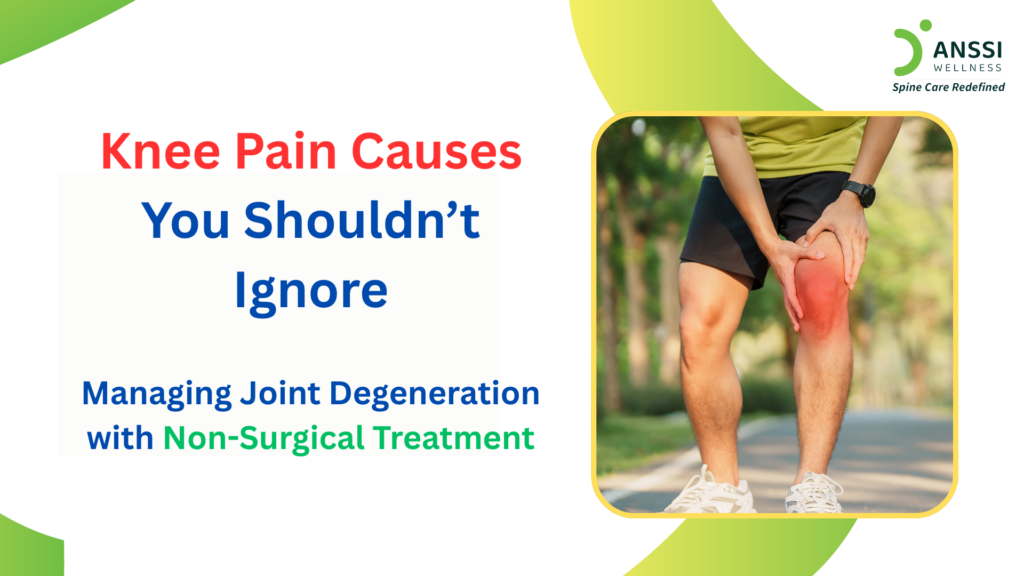
Knee pain is no longer a condition limited to the elderly. Today, working professionals, homemakers, athletes, and even young adults frequently complain of knee discomfort. While occasional pain after exertion may not be alarming, persistent or recurring knee pain should never be ignored. It can be an early warning sign of joint injury or degeneration.
Understanding the causes and recognising early symptoms can help prevent long-term damage and reduce the risk of surgery.
Common Causes of Knee Pain
Knee pain can develop gradually or suddenly, depending on the underlying issue. Some of the most common causes include:
1. Age-Related Wear and Tear
As we age, the cartilage that cushions the knee joint naturally begins to thin. This gradual degeneration increases friction within the joint, leading to stiffness and pain.
2. Knee Osteoarthritis
Osteoarthritis, one of the leading causes of chronic knee pain, occurs when cartilage breaks down over time. It leads to inflammation, reduced joint space, and difficulty performing everyday activities like walking or climbing stairs.
3. Ligament Strain and Minor Injuries
Even small ligament sprains or repetitive strain injuries can cause ongoing discomfort. Many people overlook these injuries, assuming they will heal on their own.
4. Muscle Weakness and Biomechanical Imbalance
Weak quadriceps, hamstrings, or hip muscles can change knee alignment. Poor biomechanics increase joint stress, accelerating degeneration.
5. Sedentary Lifestyle or Prolonged Standing
Sitting for long hours weakens supporting muscles, while prolonged standing increases joint pressure. Both habits contribute to knee strain.
6. Obesity and Excess Joint Pressure
Excess body weight significantly increases the load on the knee joint. Over time, this added stress speeds up cartilage breakdown.
Early Warning Signs of Joint Degeneration
Knee degeneration does not happen overnight. It develops gradually, often presenting subtle symptoms in the beginning. Recognising these early signs can help prevent worsening damage:
- Morning stiffness lasting more than 15-20 minutes
- Pain while climbing stairs or standing up from a seated position
- Mild swelling or tenderness around the knee
- Clicking, grinding, or cracking sounds (crepitus)
- Reduced flexibility or difficulty fully bending or straightening the knee
- Pain after prolonged sitting
These symptoms may appear minor, but they signal increasing joint stress. Ignoring them can allow inflammation and cartilage damage to progress.
Why Ignoring Knee Pain Can Be Risky
Many individuals rely on painkillers or home remedies to manage knee discomfort. While these may provide temporary relief, they do not address the root cause, which is joint compression and degeneration.
Over time, untreated knee pain can lead to:
- Progressive cartilage damage
- Increased inflammation
- Reduced joint space
- Limited mobility
- Chronic pain affecting daily life
In advanced stages, patients may be advised to undergo knee replacement surgery. However, early intervention can often prevent or delay such invasive procedures.
The Importance of Early Diagnosis
The earlier knee degeneration is identified, the better the outcomes. Many patients delay consultation until pain becomes severe. However, early-stage intervention provides the greatest opportunity to restore joint health and prevent further damage.
A thorough evaluation, including physical examination and imaging if necessary, helps determine the severity of joint changes and suitability for non-surgical rehabilitation.
Non-Surgical Knee Rehabilitation at ANSSI Wellness
At ANSSI Wellness clinics, patients have access to advanced Non-Surgical Knee Rehabilitation Treatment designed to address joint degeneration at its source.
The specialised Knee Decompression mechanism works by gently reducing pressure within the knee joint.
This helps:
- Reduce mechanical stress on cartilage
- Improve blood circulation
- Enhance nutrient exchange
- Decrease inflammation
- Promote natural healing
Unlike medication or injections, the Non-Surgical Knee Rehabilitation Treatment is drug-free and non-invasive. It does not require surgery, stitches, or downtime.
Who Can Benefit from Non-Surgical Knee Treatment?
This rehabilitation approach is especially beneficial for individuals with:
- Early to moderate knee osteoarthritis
- Chronic knee pain
- Joint stiffness
- Mild ligament strain
- Degenerative changes visible on X-rays
It is suitable for middle-aged adults, elderly patients, and even active individuals who wish to avoid surgery.
Advantages of Non-Surgical Knee Rehabilitation
Patients choosing non-surgical treatment at ANSSI Wellness experience several benefits:
- Reduced joint pressure
- Improved mobility and range of motion
- Long-term pain relief
- Enhanced function in daily activities
- Safe and controlled treatment protocols
The focus is not just on symptom relief but on restoring joint function and slowing degeneration.
About ANSSI:
ANSSI Wellness focuses on improving the quality of life for patients suffering from spinal issues, aiming to provide relief where other conventional treatments have failed. Through advanced Non-Surgical Knee Rehabilitation Treatment, ANSSI is committed to helping patients avoid surgery and recover in a safe, effective, and compassionate environment.
Connect with ANSSI Wellness on LinkedIn, Instagram, and Facebook for expert guidance.