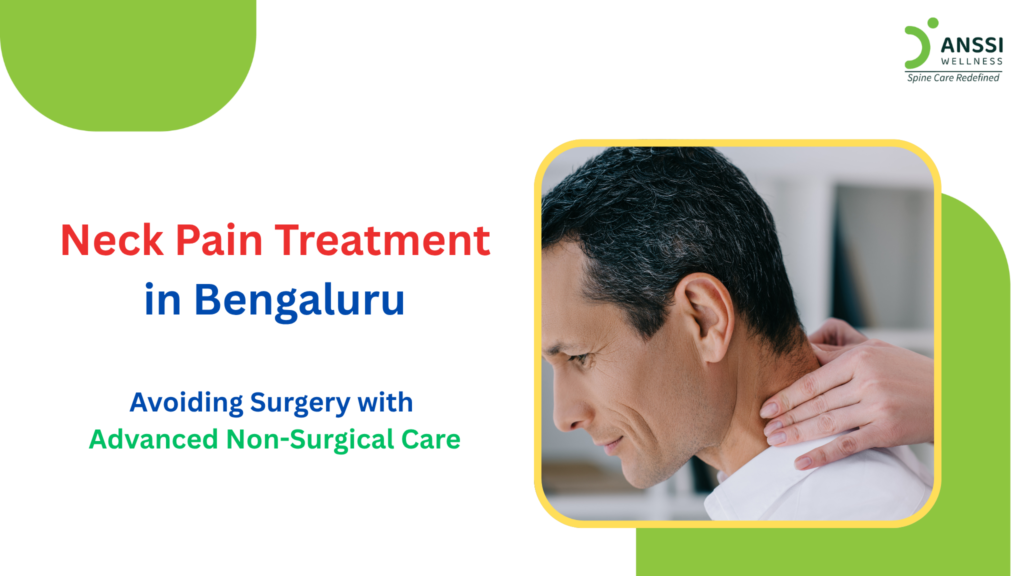
Chronic neck pain has become increasingly common among Bengaluru residents. As India’s leading technology hub, Bengaluru is home to millions of IT professionals, office workers, entrepreneurs, and students who spend long hours in front of computers and mobile devices. Combined with long commutes, poor posture, and sedentary lifestyles, these factors place significant stress on the cervical spine.
When neck pain becomes persistent and begins affecting daily activities, many patients worry that surgery may be inevitable. Fortunately, this is not always the case. In fact, most cervical spine conditions can often be managed successfully with advanced non-surgical treatments, particularly when diagnosed early.
Understanding when surgery is truly necessary, and when effective non-surgical alternatives are available, can help patients make informed decisions about their care.
Understanding Chronic Neck Pain
The cervical spine consists of seven vertebrae, intervertebral discs, nerves, ligaments, and joints that work together to support the head and allow movement.
When these structures become damaged or degenerate, chronic neck pain can develop.
Common Causes
Several structural conditions may contribute to persistent neck pain, including:
- Cervical disc herniation
- Cervical spondylosis
- Degenerative Disc Disease
- Cervical spinal stenosis
- Cervical nerve compression
These conditions often progress gradually and may worsen if left untreated.
Common Symptoms
Patients with cervical spine disorders may experience:
- Persistent neck pain
- Shoulder pain
- Arm pain
- Tingling sensations in the fingers
- Numbness in the hands
- Headaches
- Neck stiffness
- Reduced range of motion
In some cases, symptoms may interfere with work, sleep, driving, and other daily activities.
Is Neck Surgery Always Necessary?
One of the most common misconceptions about neck pain is that surgery is required whenever MRI findings reveal disc degeneration or disc herniation.
In reality, most patients do not require immediate surgery.
The Early Stages of Cervical Spine Conditions
Many cervical spine conditions begin with mild-to-moderate disc degeneration, inflammation, or nerve irritation.
At this stage, conservative treatment may help:
- Reduce symptoms
- Improve mobility
- Relieve nerve pressure
- Slow disease progression
Early diagnosis is often the key to preventing more serious complications later.
Goals of Non-Surgical Treatment
The primary objectives of non-surgical treatment include:
- Pain reduction
- Improved spinal function
- Relief of nerve compression
- Restoration of mobility
- Enhanced quality of life
By targeting the source of symptoms early, many patients can avoid invasive procedures.
Understanding the Risks of Neck Surgery
Although cervical spine surgery can be highly effective in carefully selected cases, it is still a major medical procedure with potential risks.
Surgical Considerations
Some of the risks associated with neck surgery include:
- Infection
- Bleeding
- Adverse reactions to anaesthesia
- Scar tissue formation
- Post-operative pain
Recovery may also require several weeks or months, depending on the procedure performed.
Long-Term Concerns
Even after successful surgery, some patients may continue to experience symptoms.
Potential long-term considerations include:
- Stress on adjacent spinal segments
- Future degeneration at nearby levels
- Continued rehabilitation requirements
- Residual neck discomfort
For these reasons, many spine specialists recommend exploring appropriate non-surgical options before considering surgery whenever clinically appropriate.
Non-Surgical Spinal Decompression Treatment (NSSDT)
One of the advanced non-surgical treatment options available for cervical spine conditions is Non-Surgical Spinal Decompression Treatment (NSSDT).
How NSSDT Works
NSSDT uses specialised decompression technology designed to gently reduce pressure within affected cervical discs.
The treatment aims to:
- Lower intradiscal pressure
- Relieve nerve root compression
- Promote disc hydration
- Improve nutrient exchange within spinal discs
By targeting the structural source of pain, NSSDT seeks to support the body’s natural recovery processes.
Benefits of NSSDT
Potential benefits may include:
- Reduced neck pain
- Relief from arm pain and numbness
- Improved mobility
- Enhanced spinal function
- Non-invasive treatment
- Minimal downtime
For many patients, NSSDT offers an attractive alternative to surgery because it does not involve incisions, implants, or lengthy recovery periods.
Why Choose ANSSI Wellness Bengaluru?
Comprehensive Diagnostic Assessment
At ANSSI Wellness Bengaluru, treatment begins with a thorough evaluation that may include:
- Clinical examination
- Functional assessment
- Postural analysis
- MRI review
This helps identify the exact source of symptoms and guides treatment planning.
Personalised Treatment Programs
Every patient receives an individualised treatment strategy based on:
- Diagnosis
- Severity of symptoms
- Lifestyle factors
- Functional limitations
Treatment programs may combine:
- Non-Surgical Spinal Decompression Treatment
- Physiotherapy
- Posture correction
- Ergonomic counselling
- Strengthening exercises
Focus on Root Cause Treatment
Rather than simply masking symptoms with medication, the goal is to address the underlying structural problem responsible for pain and nerve irritation.
This comprehensive approach may help improve both short-term comfort and long-term spinal health.
When is Neck Surgery Unavoidable?
While many patients can benefit from non-surgical care, there are circumstances where surgery becomes necessary.
Warning Signs Requiring Surgical Evaluation
Patients should seek urgent specialist assessment if they experience:
- Progressive muscle weakness in the arms or hands
- Significant loss of grip strength
- Severe spinal cord compression
- Difficulty walking or maintaining balance
- Loss of bowel or bladder control
- Progressive neurological deterioration despite treatment
These symptoms may indicate serious neurological involvement requiring surgical intervention.
About ANSSI:
ANSSI Wellness focuses on improving the quality of life for patients suffering from spinal issues, aiming to provide relief where other conventional treatments have failed. Through advanced Non-Surgical Spinal Decompression Treatment, ANSSI is committed to helping patients avoid surgery and recover in a safe, effective, and compassionate environment.
Book Consultation:
Call +91 9004726844 | 9920936844
Visit www.anssiwellness.com
Connect with ANSSI Wellness on LinkedIn, Instagram, and Facebook for expert guidance.
Clinical References
- North American Spine Society. Comprehensive recommendations for diagnosis, conservative management, and surgical indications in cervical spine disorders.
Silva LECTD, Almeida LEPCA. Update on Cervical Hernia Treatment: Conservative Management and Indications of Different Surgical Techniques. Rev Bras Ortop (Sao Paulo). 2021 Feb;56(1):18-23. - Waheed MA, Hasan S, Tan LA, Bosco A, Reinas R, Ter Wengel PV, Hey HWD, Aleem IS. Cervical spine pathology and treatment: a global overview. J Spine Surg. 2020 Mar;6(1):340-350.
- Ramos G., MD, Martin W., MD. Effects of Vertebral Axial Decompression On Intradiscal Pressure. Journal of Neurosurgery 81: 350-353, 1994.
- Naguszewski W., MD, Naguszewski R., MD, Gose E., Ph.D. Dermatosomal Somatosensory Evoked Potential Demonstration of Nerve Root Decompression After VAX-D Therapy. Journal of Neurological Research Vol 23, No 7, October 2001.