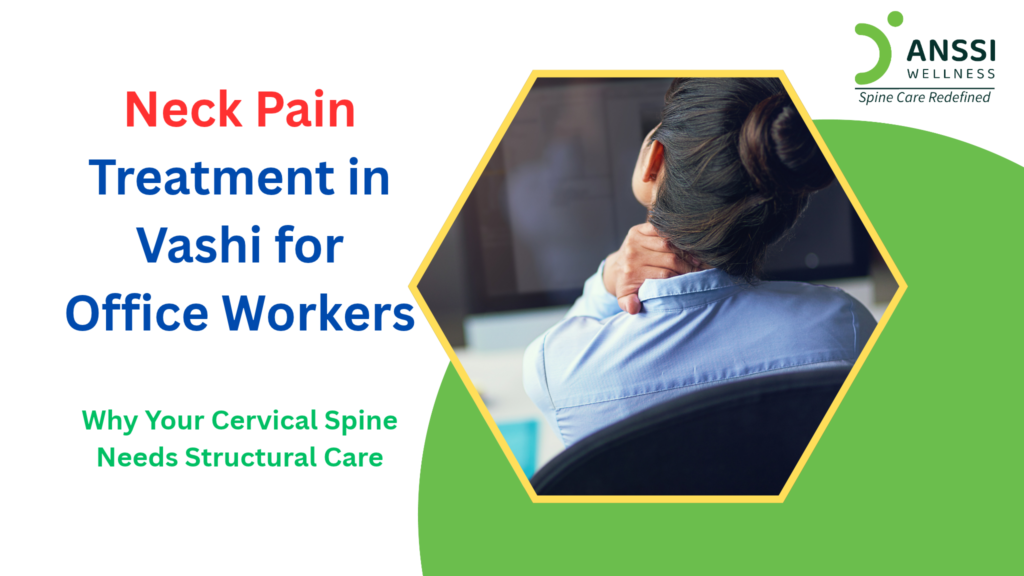
For many working professionals in Vashi, neck pain has become an increasingly familiar problem. Long hours in front of computers, continuous mobile phone use, extended sitting, and daily commuting can place considerable strain on your neck. What may begin as occasional stiffness can gradually develop into recurring pain, shoulder discomfort, headaches, or even pain radiating into your arms.
While taking painkillers or getting a massage may provide you with temporary comfort, persistent neck pain deserves a closer look. Understanding the condition of your cervical spine and identifying the underlying cause are important steps towards effective treatment.
How Office Work and Daily Commuting Affect Your Cervical Spine
The cervical spine consists of seven vertebrae, supported by muscles, ligaments, joints, and intervertebral discs. These structures work together to support the head and allow neck movement.
- Office workers in Vashi often spend several hours sitting at desks, attending virtual meetings, working on laptops, or looking at computer screens. When the screen is positioned too low or too far away, people may repeatedly lean their heads forward. This forward-head posture can increase the mechanical load on the neck muscles and joints.
- Daily commuting can add to the problem. Whether travelling by train, bus, car, or two-wheeler, prolonged journeys may involve sustained sitting, limited opportunities to change posture, and frequent downward movement of the head to check mobile phones.
Over time, these habits may aggravate existing cervical spine problems. However, poor posture and commuting do not automatically cause disc degeneration. Age-related changes, genetics, previous injuries, physical conditioning, and other health factors can also influence disc health.
Recognising the Symptoms of Cervical Disc Problems
Recurring neck discomfort should not always be dismissed as ordinary muscle fatigue. In some cases, cervical disc degeneration, disc bulges, or nerve irritation may contribute to the symptoms.
Common warning signs include:
- Persistent neck pain or stiffness
- Difficulty turning or bending the neck
- Pain spreading towards your shoulders or shoulder blades
- Headaches associated with neck discomfort
- Pain travelling from your neck into one or both arms
- Tingling, numbness, or altered sensation in the fingers
- Weakness in your arms or hands
When a cervical disc bulges or herniates, it may irritate or compress a nearby nerve root. This can produce symptoms such as radiating arm pain, tingling, or numbness. However, similar symptoms can arise from other conditions, so an orthopaedic assessment and appropriate investigations are important.
New or progressive arm or hand weakness, difficulty walking, loss of balance, or problems with coordination require prompt medical evaluation.
Why Temporary Pain Relief May Not Be Enough
Painkillers, hot or cold therapy, massage, and rest can help manage neck pain in certain situations. Physiotherapy can also improve mobility, strengthen supporting muscles, and address movement-related problems.
However, when pain keeps returning, relying only on temporary symptom relief may not address all the contributing factors. A proper evaluation can help determine whether the discomfort is related to muscular strain, joint problems, cervical disc changes, nerve irritation, or another condition.
A suitable treatment plan may include prescribed exercises, posture correction, ergonomic modifications, activity adjustments, and medication when clinically appropriate. Surgery is considered in selected cases, particularly when there is significant or progressive neurological involvement or when other appropriate treatments have not provided sufficient relief.
NSSDT at ANSSI Wellness, Vashi: A Non-Surgical Treatment Option
For working professionals looking for non-surgical neck pain treatment in Vashi, ANSSI Wellness offers Non-Surgical Spinal Decompression Treatment (NSSDT).
- NSSDT uses a specialised, computer-regulated decompression technology to apply controlled stretching forces to selected spinal segments.
- The treatment is designed to reduce mechanical loading on the targeted area and may help manage symptoms in some carefully selected patients with disc-related conditions.
- The treatment approach can be combined with physiotherapy and supportive rehabilitation, depending on the patient’s condition and clinical assessment.
- The objective is to improve comfort, support mobility, and help patients manage their symptoms through a structured programme.
It is important to understand that a qualified doctor should assess the patient’s symptoms, medical history, and relevant imaging before recommending Non-Surgical Spinal Decompression Treatment.
Practical Ways to Protect Your Neck During Office Hours
Treatment is only one part of cervical spine care. Small changes to daily routines can help reduce unnecessary strain.
- Keep your computer screen close to eye level.
- Use a chair that supports your back and allows your feet to rest comfortably.
- Avoid holding your head forward for prolonged periods.
- Take short movement breaks every 30-45 minutes.
- Keep your mobile phone closer to eye level instead of repeatedly bending your neck.
- Follow a physiotherapist-recommended exercise programme.
- During long commutes, maintain a comfortable posture and avoid prolonged downward phone use.
About ANSSI:
ANSSI Wellness focuses on improving the quality of life for patients suffering from spinal issues, aiming to provide relief where other conventional treatments have failed. Through advanced Non-Surgical Spinal Decompression Treatment, ANSSI is committed to helping patients avoid surgery and recover in a safe, effective, and compassionate environment.
Book Consultation:
Call +91 9004726844 | 9920936844
Visit www.anssiwellness.com
Connect with ANSSI Wellness on LinkedIn, Instagram, and Facebook for expert guidance.