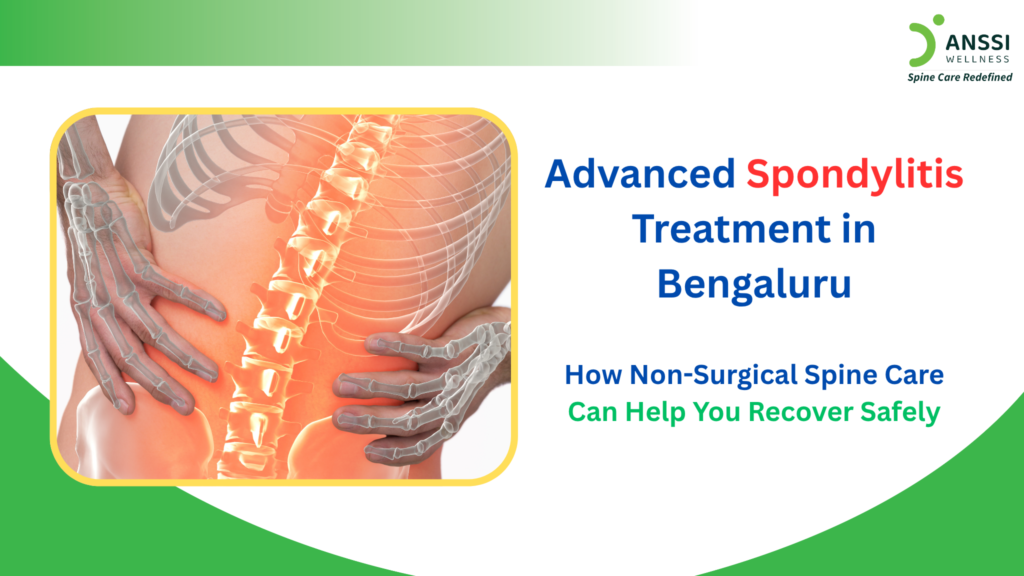
Spondylitis is a chronic spinal condition that can significantly impact a person’s mobility, productivity, and overall quality of life. In a fast-paced city like Bengaluru, where many people spend long hours working on computers, sitting in offices, and commuting through traffic, spinal health issues have become increasingly common.
Persistent back pain, stiffness, and reduced flexibility are often ignored as signs of ageing or work-related fatigue. However, these symptoms may indicate the presence of spondylitis, a condition that requires proper diagnosis and timely treatment.
Fortunately, modern non-surgical treatment options are helping many patients manage their symptoms safely while avoiding unnecessary surgery.
Understanding Spondylitis
Spondylitis refers to a group of conditions that involve inflammation and degeneration affecting the spine and its surrounding structures.
Broadly, spondylitis can be classified into two categories:
Inflammatory Spondylitis
This form is associated with chronic inflammation affecting the spine and sacroiliac joints. Ankylosing spondylitis is one of the most well-known examples.
Degenerative Spondylitis
This form develops due to age-related wear and tear of the spinal discs and joints, commonly affecting the neck and lower back.
Both forms can eventually contribute to nerve irritation, reduced spinal flexibility, and chronic pain.
Common Symptoms of Spondylitis
Symptoms may vary among individuals but commonly include:
- Persistent back pain
- Chronic neck pain
- Morning stiffness
- Reduced spinal flexibility
- Fatigue
- Pain radiating into the arms or legs
- Tingling sensations
- Numbness
- Muscle weakness
Symptoms may gradually worsen if left untreated.
How Spondylitis Impacts Daily Life
Spondylitis is not simply a pain condition; it can interfere with almost every aspect of daily living.
Physical Limitations
Many patients experience difficulty with routine activities such as:
- Sitting for long periods
- Standing comfortably
- Walking long distances
- Climbing stairs
- Sleeping without discomfort
These limitations can affect both personal and professional life.
Reduced Productivity
For Bengaluru’s IT professionals and office workers, chronic pain may reduce concentration, work efficiency, and overall performance.
Long-Term Consequences
Without proper treatment, spondylitis may lead to:
- Progressive loss of spinal mobility
- Reduced flexibility
- Chronic disability
- Persistent nerve compression
Early intervention is therefore essential.
Limitations of Conventional Treatments
Many patients initially depend on medication or consider surgery when symptoms become severe.
However, both approaches have limitations.
Drawbacks of Long-Term Medication
Painkillers and anti-inflammatory medications can temporarily control symptoms.
However, they do not:
- Reverse structural degeneration
- Repair damaged discs
- Relieve nerve compression
- Restore spinal function
Long-term medication use may also increase the risk of:
- Gastrointestinal problems
- Kidney-related complications
- Liver-related side effects
Risks and Limitations of Surgery
Surgery may be appropriate for selected patients with severe neurological deficits or advanced spinal instability.
However, surgery is not always necessary for many mild-to-moderate cases.
Potential concerns include:
- Surgical complications
- Extended recovery periods
- Rehabilitation requirements
- Time away from work and daily activities
Many patients, therefore, prefer to explore non-surgical alternatives first.
The Importance of Accurate Diagnosis
Effective treatment begins with identifying the precise source of pain.
Comprehensive Clinical Assessment
Specialists typically perform:
- Detailed medical history evaluation
- Physical examination
- Neurological assessment
- Functional movement analysis
MRI-Based Evaluation
MRI scans help identify:
- Disc degeneration
- Disc bulges
- Nerve compression
- Inflammatory changes
- Structural abnormalities
An accurate diagnosis enables clinicians to create personalised treatment plans.
Non-Surgical Treatment Options for Spondylitis
Managing spondylitis often requires a comprehensive approach.
Lifestyle and Rehabilitation Strategies
Patients may benefit from:
- Posture Correction: Maintaining proper posture reduces unnecessary stress on the spine.
- Physiotherapy: Physiotherapy can help improve flexibility, strength, and spinal stability.
- Strengthening and Flexibility Exercises: Specific exercises help support the muscles surrounding the spine.
- Ergonomic Modifications: Adjusting workstation setups and improving movement habits can reduce repetitive spinal strain.
These strategies often work best when combined with advanced treatment methods.
Advanced Non-Surgical Spinal Decompression Treatment (NSSDT)
One of the advanced treatment options available for patients with spondylitis is Non-Surgical Spinal Decompression Treatment (NSSDT).
How NSSDT Works
NSSDT uses specialised computer-controlled technology to gently stretch the spine in a controlled manner.
The treatment aims to:
- Reduce pressure within spinal discs
- Relieve nerve compression
- Improve nutrient exchange
- Support disc hydration and recovery
By reducing structural stress within the spine, NSSDT addresses one of the underlying contributors to chronic pain.
Benefits for Spondylitis Patients
Potential benefits include:
- Reduced pain and stiffness
- Improved flexibility
- Better mobility
- Relief from nerve-related symptoms
- Enhanced spinal function
- A non-invasive alternative to surgery
Because the procedure is non-surgical, it avoids many of the risks associated with operative procedures.
ANSSI Wellness Bengaluru: Personalised Spine Care
At ANSSI Wellness Bengaluru, treatment programs are designed to address each patient’s unique condition.
Individualised Treatment Programs
Treatment plans are customised according to:
- Diagnosis
- Symptom severity
- Lifestyle requirements
- Functional limitations
Programs may integrate:
- Non-Surgical Spinal Decompression Treatment
- Physiotherapy
- Posture correction
- Strengthening exercises
- Ergonomic guidance
- Lifestyle modifications
- Focus on Safe, Long-Term Recovery
The objective is to improve spinal function and help patients achieve sustainable symptom relief by addressing the root cause rather than simply suppressing pain.
About ANSSI:
ANSSI Wellness focuses on improving the quality of life for patients suffering from spinal issues, aiming to provide relief where other conventional treatments have failed. Through advanced Non-Surgical Spinal Decompression Treatment, ANSSI is committed to helping patients avoid surgery and recover in a safe, effective, and compassionate environment.
Book Consultation:
Call +91 9004726844 | 9920936844
Visit www.anssiwellness.com
Connect with ANSSI Wellness on LinkedIn, Instagram, and Facebook for expert guidance.
Clinical References
- Burgos-Vargas R. The assessment of the spondyloarthritis international society concept and criteria for the classification of axial spondyloarthritis and peripheral spondyloarthritis: A critical appraisal for the pediatric rheumatologist. Pediatr Rheumatol Online J. 2012 May 31;10(1):14.
- David C. Duncan, MD, Don Keenan, SPHR, Ph.D. An Industry Based, Retrospective, Cost Analysis of Vertebral Axial Decompression (VAX-D) VS. Surgery For Lumbar Disc Disease: 10 Case Studies. Sinclair Oil Corporation Study, Tulsa Oklahoma.
- Ramos G., MD. Efficacy of Vertebral Axial Decompression (VAX-D) on Chronic Low Back Pain: A Study of Dosage Regimen. Journal of Neurological Research, Volume 26, April 2004.