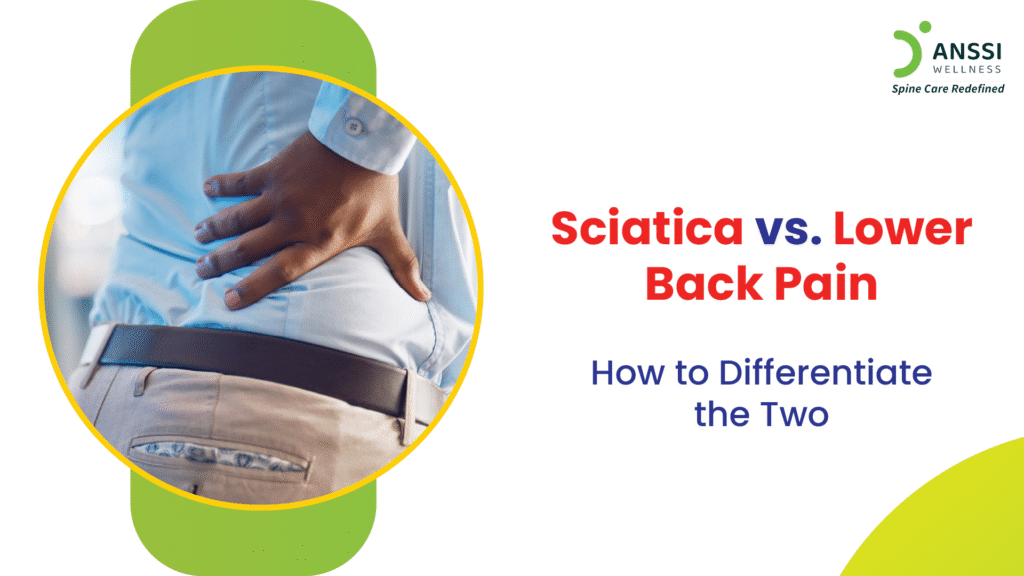
Back pain is one of the most common health issues faced by people of all ages today. Long working hours, lack of exercise, or simply poor posture can make life uncomfortable. Among the many types of back issues, two terms often appear in such cases: lower back pain and sciatica.
Though they are connected to each other sometimes, they are often two distinct conditions with different causes, symptoms, and treatments. Understanding the difference is crucial for effective pain relief and long-term spine health.
Understanding Lower Back Pain
Lower back pain refers to pain or discomfort localised in the lumbar region of the spine. This type of pain is extremely common and may range from a mild, dull ache to severe, immobilising discomfort.
Causes of Lower Back Pain:
- Muscle or ligament strain due to overexertion or heavy lifting
- Poor posture while sitting or standing
- A sedentary lifestyle that weakens spinal muscles
- Injuries or minor accidents affecting the spine
Symptoms of Lower Back Pain:
- Persistent dull ache in the lower back
- Muscle stiffness and reduced flexibility
- Difficulty standing up straight or bending
- Pain typically remains in the back and does not travel down the legs
Localised lower back pain is musculoskeletal in nature, meaning it stems from bones, muscles, or ligaments. However, in other cases, lower back pain could be a symptom of sciatica.
What is Sciatica?
Sciatica, on the other hand, is not simply back pain. It is a condition caused by irritation or compression of the sciatic nerve, the longest nerve in the body, which runs from the lower back down to the legs.
Causes of Sciatica:
- A herniated or slipped disc pressing on the sciatic nerve
- Spinal stenosis (narrowing of the spinal canal)
- Bone spurs or degenerative spine changes
Symptoms of Sciatica:
- Sharp, shooting pain that radiates from the lower back to the buttocks and legs
- Numbness, tingling, or burning sensation in the legs or feet
- Weakness in the affected leg
- Pain often worsens while sitting, sneezing, or coughing
Unlike localised lower back pain, sciatica involves nerve-related pain that radiates beyond the back and can severely impact daily activities.
Key Differences Between Lower Back Pain and Sciatica
Though they are related, here are the key differences between the two:
- Pain Location: Lower back pain is localised; sciatica radiates down to the legs.
- Type of Pain: Back pain is often dull and aching; sciatica is sharp, shooting, or burning.
- Cause: Back pain is usually due to muscle strain or poor posture; sciatica is caused by nerve compression.
- Duration: Back pain may resolve with rest and lifestyle changes; sciatica often requires targeted treatment for nerve relief.
Recognising these distinctions helps in seeking the right treatment.
Diagnosis: Knowing the Root Cause
Accurate diagnosis is key to differentiating between general back pain and sciatica. Spine specialists usually begin with a physical examination and medical history evaluation. Imaging tests like MRI or CT scans may be used to identify issues like herniated discs or nerve compression. Early and precise diagnosis prevents the condition from worsening and ensures effective treatment.
Non-Surgical Treatment Options
Many people believe surgery is the only solution for sciatica or chronic back pain. However, in most cases, non-surgical treatments provide significant relief and help restore mobility without the risks associated with surgery.
1. Rest and Posture Correction
Short-term rest helps reduce strain, while correcting posture during sitting, standing, and sleeping prevents recurring pain.
2. Physical Therapy and Exercises
Stretching and strengthening exercises improve spinal flexibility, reduce stiffness, and relieve pressure on the sciatic nerve. Therapists guide patients with targeted routines to restore strength and mobility.
3. Lifestyle Adjustments
Regular physical activity, a healthy weight, and ergonomic work setups can reduce both lower back pain and sciatica flare-ups.
4. Non-Surgical Spinal Decompression Treatment
This advanced, non-invasive treatment is highly effective for sciatica and disc-related issues. It gently stretches the spine, creating negative pressure that relieves nerve compression, improves blood flow, and promotes healing of damaged discs. Unlike surgery, non-surgical spinal decompression treatment is safe, painless, and has no downtime.
5. Stress Management and Holistic Care
Stress often worsens muscle tension and pain perception. Mindfulness, yoga, and relaxation techniques play an important role in overall recovery.
About ANSSI:
ANSSI Wellness focuses on improving the quality of life for patients suffering from spinal issues, aiming to provide relief where other conventional treatments have failed. Through advanced Non-Surgical Spinal Decompression Treatment, ANSSI is committed to helping patients avoid surgery and recover in a safe, effective, and compassionate environment.
Connect with ANSSI Wellness on LinkedIn, Instagram, and Facebook for expert guidance.