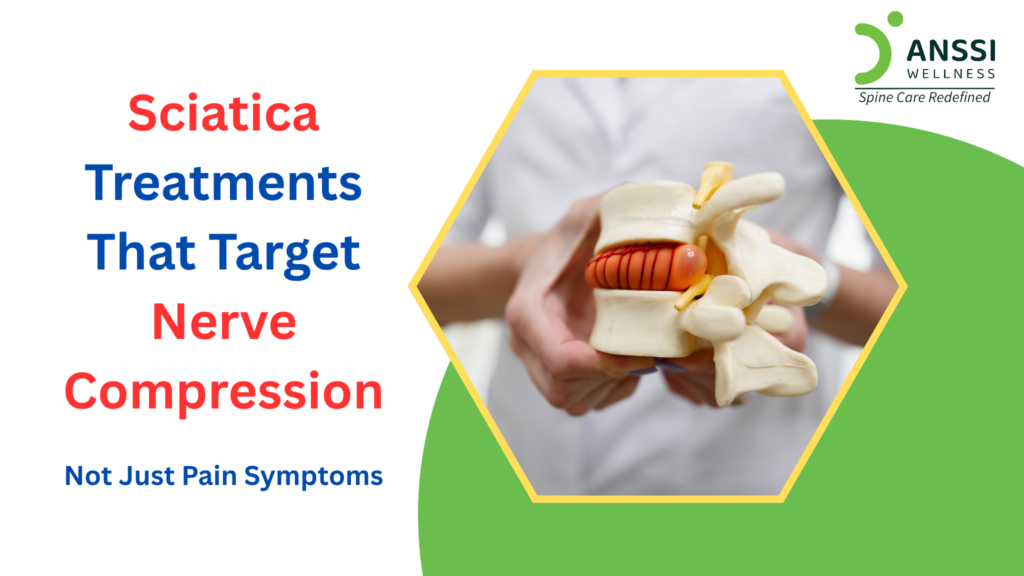
Lower back pain that travels down the leg is a common yet distressing condition experienced by many individuals today. One of the most frequent causes of this type of pain is Sciatica. While the pain can be severe and disruptive, it is important to understand that sciatica is not just about pain; it is primarily caused by nerve compression in the spine.
Many patients rely on painkillers to manage sciatica symptoms. However, these medicines don’t deal with the fundamental issue; they merely offer short-term relief. To achieve long-term relief, it is essential to focus on treatments that target the root cause, which is the compression of the sciatic nerve.
What Causes Nerve Compression in Sciatica
Sciatica occurs when the sciatic nerve becomes irritated or compressed, usually in the lower spine. This compression can result from several underlying conditions.
One of the most common causes is a herniated or bulging disc, where the soft inner material of a spinal disc pushes outward and presses against nearby nerves. This condition is often associated with Lumbar Disc Herniation, which directly affects the lower back.
Another significant cause is spinal stenosis. In this condition, the spinal canal narrows, reducing the space available for nerves and increasing the likelihood of compression.
In addition to these medical conditions, lifestyle factors also play a major role. Poor posture, prolonged sitting, and lack of physical activity can weaken the muscles that support the spine. This can lead to misalignment and increased pressure on spinal discs and nerves.
Other contributing factors include:
- Repetitive strain or heavy lifting
- Sudden twisting movements
- Weak core muscles
- Age-related degeneration of spinal structures
All these factors can contribute to nerve compression, which is the primary reason behind sciatica pain.
Symptoms Linked to Nerve Compression
The symptoms of sciatica are directly related to the compression of the sciatic nerve. These symptoms often extend beyond the lower back and affect other parts of the body.
Common symptoms include:
- Burning or sharp pain that travels down the leg from the lower back
- Tingling or “pins and needles” sensations
- Numbness in the leg or foot
- Muscle weakness in the affected leg
- Pain that worsens while sitting or with certain movements
In most cases, sciatica affects only one side of the body. The severity of symptoms may vary depending on the extent of nerve compression.
If left untreated, these symptoms can worsen over time and interfere with daily activities such as walking, sitting, or standing.
Why Symptom-Based Treatments Fall Short
Painkillers are commonly used to manage sciatica because they can reduce inflammation and block pain signals. While they may offer temporary relief, they do not resolve the underlying issue.
The main problem in sciatica is nerve compression, often caused by disc bulging or spinal narrowing. Painkillers cannot correct these structural problems. As a result, once the medication wears off, the pain typically returns.
Long-term reliance on symptom-based treatments can lead to:
- Recurring pain episodes
- Increased dependence on medication
- Potential side effects affecting overall health
By focusing only on symptoms, these treatments fail to provide a lasting solution. This is why addressing the root cause is essential for effective sciatica management.
Non-Surgical Treatments That Target the Root Cause
Modern spine care focuses on non-surgical treatments that aim to relieve nerve compression and restore normal spinal function. These approaches are designed to provide long-term relief without the risks associated with surgery or prolonged medication use.
Physiotherapy and Posture Correction
Targeted exercises help strengthen the muscles that support the spine, particularly the core and lower back. Improved muscle strength enhances spinal stability and reduces pressure on the discs and nerves.
Physiotherapists also guide patients on posture correction, helping them adopt habits that minimise strain on the spine. Correct posture during sitting, standing, and lifting can significantly reduce the risk of nerve compression.
Non-Surgical Spinal Decompression Treatment
One of the most effective treatments for addressing nerve compression is Non-Surgical Spinal Decompression Treatment. This advanced procedure is designed to relieve pressure on spinal discs and nerves.
The treatment involves gently stretching the spine using specialised equipment. This controlled stretching creates negative pressure within the discs, which can help reposition bulging disc material and reduce nerve compression.
As the pressure on the sciatic nerve decreases, patients may experience:
- Reduced pain and inflammation
- Improved mobility
- Enhanced circulation to the affected area
- Support for natural healing
Non-surgical spinal decompression treatment directly targets the root cause of sciatica, making it a highly effective option for long-term relief.
Lifestyle Modifications
In addition to medical treatments, lifestyle changes play a crucial role in preventing and managing sciatica.
Some important measures include:
- Maintaining proper posture
- Taking regular breaks during long periods of sitting
- Engaging in regular physical activity
- Strengthening core muscles
- Avoiding heavy lifting or improper movements
These changes help reduce stress on the spine and support overall spinal health.
About ANSSI:
ANSSI Wellness focuses on improving the quality of life for patients suffering from spinal issues, aiming to provide relief where other conventional treatments have failed. Through advanced Non-Surgical Spinal Decompression Treatment, ANSSI is committed to helping patients avoid surgery and recover in a safe, effective, and compassionate environment.
Connect with ANSSI Wellness on LinkedIn, Instagram, and Facebook for expert guidance.