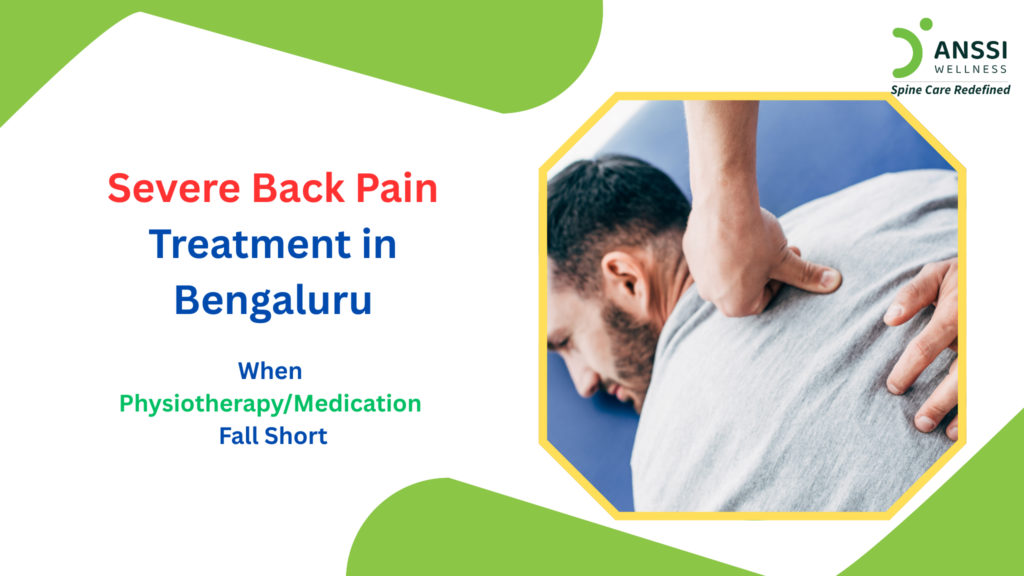
Chronic back pain has become one of the most common health concerns among residents of Bengaluru. Known as India’s technology hub, the city is home to thousands of IT professionals, entrepreneurs, office workers, and commuters who spend long hours sitting at desks, working on computers, or travelling through heavy traffic. Over time, these lifestyle factors can place tremendous stress on the spine, leading to persistent back pain that affects work performance, sleep quality, mobility, and overall well-being.
Many patients initially seek relief through pain medications or physiotherapy. While these treatments can be helpful, some individuals find that their pain keeps returning despite months of treatment. When this happens, it is often a sign that the underlying cause of the problem has not been fully addressed.
If you are experiencing severe back pain in Bengaluru and conventional treatments have failed to provide lasting relief, it may be time to explore advanced non-surgical treatment options that focus on the root cause of your condition.
Why Does Severe Back Pain Persist Despite Treatment?
One of the biggest misconceptions about back pain treatment is that reducing symptoms automatically means the condition has healed.
The Difference Between Symptom Relief and Root Cause Treatment
Painkillers and anti-inflammatory medications are designed primarily to manage symptoms. They can reduce pain, control inflammation, and help patients function more comfortably in the short term.
However, these medications do not:
- Repair damaged spinal discs
- Reverse disc degeneration
- Relieve structural nerve compression
- Correct spinal instability
As a result, patients often experience temporary improvement, only to find that the pain returns once the medication’s effect wears off.
Limitations of Physiotherapy Alone
Physiotherapy is an important component of back pain management. It helps improve flexibility, strengthen supporting muscles, and enhance posture.
However, when significant structural problems exist within the spine, physiotherapy alone may not be enough.
Conditions such as severe disc bulges, herniated discs, spinal degeneration, and nerve compression may continue to generate pain despite ongoing exercise and rehabilitation efforts.
This is why many patients with chronic back pain require treatments that directly target the source of the problem.
Understanding the Common Structural Causes of Severe Back Pain
Slipped Disc and Disc Herniation
A slipped disc occurs when the soft inner material of a spinal disc protrudes through a weakened outer layer.
This can place pressure on nearby nerves, causing:
- Lower back pain
- Sciatica
- Tingling sensations
- Numbness
- Muscle weakness
Degenerative Disc Disease
As people age, spinal discs gradually lose water content and elasticity.
This process can lead to:
- Reduced disc height
- Increased spinal stress
- Chronic pain
- Restricted movement
Lumbar Spondylosis
Lumbar spondylosis refers to age-related wear and tear affecting the spinal discs and joints.
It commonly causes:
- Persistent lower back pain
- Stiffness
- Reduced flexibility
- Functional limitations
Nerve Compression and Sciatica
When spinal discs or surrounding structures compress nerves, patients may experience symptoms that extend beyond the back.
Common signs include:
- Pain radiating into the legs
- Tingling and numbness
- Burning sensations
- Weakness in the lower limbs
These symptoms often indicate the need for more advanced evaluation and treatment.
Signs You Need Advanced Spine Care
If you experience any of the following, it may be time to seek specialised spine care:
Back pain lasting several months
Recurring symptoms despite medication
Limited improvement after physiotherapy
Difficulty sitting, standing, or walking
Persistent sciatica
Progressive tingling, numbness, or weakness
Ignoring these symptoms can allow the underlying condition to worsen over time.
The Importance of Accurate Diagnosis
Successful treatment begins with understanding exactly what is causing the pain.
Comprehensive Clinical Assessment
A detailed evaluation may include:
- Medical history review
- Physical examination
- Postural assessment
- Neurological testing
- Functional movement analysis
MRI-Based Diagnosis
MRI scans provide valuable information about the spine’s internal structures.
They can help identify:
- Disc bulges and herniations
- Nerve compression
- Degenerative changes
- Spinal stenosis
An accurate diagnosis allows clinicians to create a treatment plan that addresses the specific source of pain.
Non-Surgical Spinal Decompression Treatment (NSSDT)
One of the most advanced non-surgical treatment options available for chronic back pain is Non-Surgical Spinal Decompression Treatment (NSSDT).
How NSSDT Works
NSSDT uses specialised decompression technology to gently and precisely stretch the spine.
This process aims to:
- Reduce pressure within spinal discs
- Relieve nerve compression
- Improve nutrient flow into damaged discs
- Support disc rehydration and recovery
Unlike treatments that simply manage symptoms, NSSDT focuses on the structural issues contributing to chronic pain.
Benefits for Chronic Back Pain Patients
Potential benefits include:
- Reduced back pain
- Relief from sciatica symptoms
- Improved mobility
- Better spinal function
- Enhanced quality of life
- Non-invasive alternative to surgery
For many patients, NSSDT offers a promising pathway toward long-term relief without the risks associated with surgical procedures.
Why Choose ANSSI Wellness Bengaluru?
Personalised Treatment Programs
At ANSSI Wellness Bengaluru, every patient receives a customised treatment plan based on their diagnosis, symptoms, lifestyle, and functional goals.
Advanced Decompression Technology
NSSDT is integrated into comprehensive spine care programs designed to address the underlying causes of chronic back pain.
Multidisciplinary Rehabilitation Approach
Treatment programs may include:
- Non-Surgical Spinal Decompression Treatment
- Physiotherapy
- Postural correction
- Ergonomic guidance
- Strengthening exercises
- Lifestyle modification strategies
This integrated approach helps maximise recovery and long-term outcomes.
Focus on Long-Term Relief
Rather than merely masking symptoms, the goal is to improve spinal health, reduce structural stress, and help patients regain their quality of life.
About ANSSI:
ANSSI Wellness focuses on improving the quality of life for patients suffering from spinal issues, aiming to provide relief where other conventional treatments have failed. Through advanced Non-Surgical Spinal Decompression Treatment, ANSSI is committed to helping patients avoid surgery and recover in a safe, effective, and compassionate environment.
Book Consultation:
Call +91 9004726844 | 9920936844
Visit www.anssiwellness.com
Connect with ANSSI Wellness on LinkedIn, Instagram, and Facebook for expert guidance.
Clinical References
- GBD 2021 Low Back Pain Collaborators. Global, regional, and national burden of low back pain, 1990-2020, its attributable risk factors, and projections to 2050: a systematic analysis of the Global Burden of Disease Study 2021. Lancet Rheumatol 2023: 5: e316-29.
- GBD 2019: Global burden of 369 diseases and injuries in 204 countries and territories, 1990–2019: a systematic analysis for the Global Burden of Disease Study 2019.
- North American Spine Society: Clinical recommendations for diagnosis and non-surgical management of chronic back pain.
- Gugliotta M, da Costa BR, Dabis E, Theiler R, Jüni P, Reichenbach S, Landolt H, Hasler P. Surgical versus conservative treatment for lumbar disc herniation: a prospective cohort study. BMJ Open. 2016 Dec 21;6(12):e012938.
- Sherry E., MD FRACS, Kitchener P., MB, BS FRANZCR, Smart R., MB, Ch.B. A Prospective Randomized Controlled Study of VAX-D and TENS for the Treatment of Chronic Low Back Pain. Journal of Neurological Research Volume 23, No 7, October 2001.