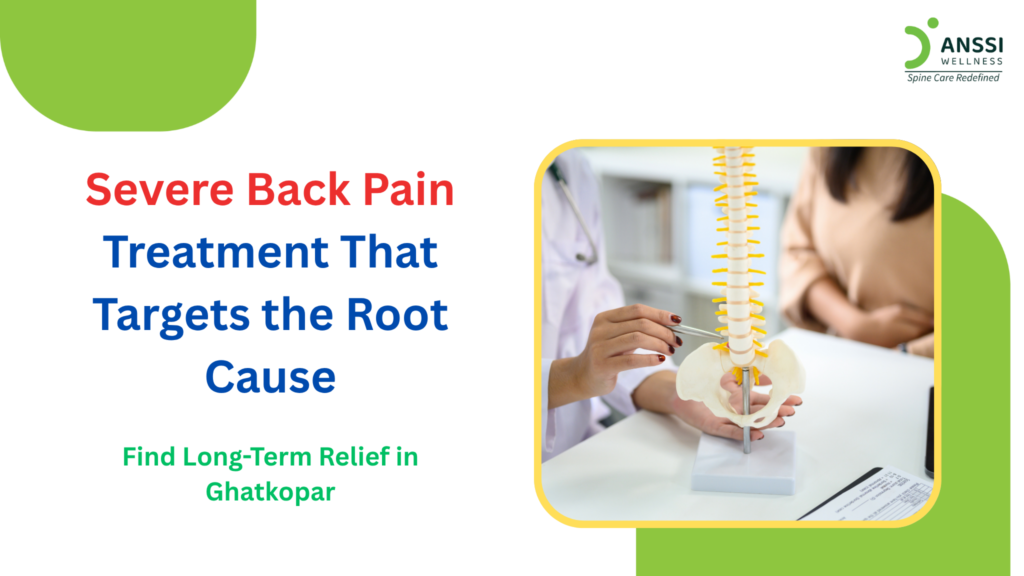
Severe back pain has become an increasingly common health concern among residents of Ghatkopar and other suburbs of Mumbai. Long commuting hours, desk-based jobs, physically demanding work schedules, and sedentary lifestyles place continuous stress on the spine, making chronic back pain a growing problem among people of all age groups.
Many individuals initially rely on painkillers, rest, or temporary therapies to manage their symptoms. While these methods may provide short-term comfort, the pain often returns because the actual source of the problem remains untreated.
Modern spine care is now shifting its focus from merely controlling symptoms to identifying and treating the root cause of chronic back pain. This approach can help patients achieve long-term relief without immediately resorting to surgery.
Understanding Severe Chronic Back Pain
Chronic back pain is typically defined as pain that persists for more than 12 weeks and continues to interfere with daily life.
In many cases, the pain is caused by underlying structural problems affecting the spine.
Common Structural Causes of Back Pain
- Disc Bulge: A disc bulge occurs when a spinal disc extends beyond its normal boundary and begins pressing against surrounding structures.
- Slipped Disc (Herniated Disc): A slipped disc develops when the soft inner material of a spinal disc protrudes through its outer layer and compresses nearby nerves.
- Lumbar Spondylosis: This age-related degenerative condition affects the spinal discs and joints, causing stiffness and persistent pain.
- Degenerative Disc Disease: As spinal discs lose hydration over time, their ability to absorb shock decreases.
- Spinal Stenosis: Narrowing of the spinal canal can compress nerves and cause chronic discomfort.
- Nerve Compression and Sciatica: Compressed nerves can produce pain that radiates from the lower back into the buttocks, legs, and feet.
Common Symptoms of Chronic Back Pain
Symptoms vary depending on the underlying condition, but may include:
- Persistent lower back pain
- Morning stiffness
- Reduced flexibility
- Pain radiating into the legs
- Tingling sensations
- Numbness
- Muscle weakness
- Difficulty sitting, standing, or walking for prolonged periods
If these symptoms persist, professional evaluation becomes essential.
Why Treating Only Symptoms is Not Enough
One of the biggest mistakes many patients make is focusing solely on symptom relief.
Limitations of Painkillers
Painkillers and anti-inflammatory medications may reduce discomfort temporarily.
However, they do not:
- Repair damaged discs
- Reverse spinal degeneration
- Relieve structural nerve compression
- Restore spinal function
As a result, symptoms frequently return.
Temporary Therapies Have Limitations
Some patients may also try massage, heat therapy, or short-term physiotherapy.
While these methods can provide temporary comfort, they may not adequately address structural abnormalities within the spine.
The Importance of Root-Cause Treatment
Chronic back pain often develops because of structural changes occurring inside the spine.
Therefore, effective treatment must focus on identifying and correcting these underlying problems.
Root-cause treatment can help:
- Prevent symptom recurrence
- Slow disease progression
- Improve spinal function
- Enhance quality of life
This approach offers more sustainable results than repeatedly treating symptoms alone.
The Importance of Accurate Diagnosis
Every successful treatment plan begins with an accurate diagnosis.
Comprehensive Clinical Assessment
Specialists typically perform:
- Detailed medical history evaluation
- Physical examination
- Neurological assessment
- Functional movement analysis
MRI-Based Evaluation
MRI scans can help identify:
- Disc bulges
- Slipped discs
- Nerve compression
- Degenerative changes
- Spinal stenosis
Once the underlying cause is identified, a personalised treatment plan can be developed.
Non-Surgical Treatment Options for Long-Term Relief
Many patients can benefit from comprehensive non-surgical approaches before considering surgery.
Lifestyle and Rehabilitation Strategies
Several supportive therapies can improve spinal health.
Posture Correction
Maintaining proper posture reduces unnecessary strain on the spine.
Physiotherapy
Physiotherapy helps strengthen supporting muscles and improve movement patterns.
Strengthening and Flexibility Exercises
Targeted exercises improve spinal stability and mobility.
Ergonomic Modifications
Improving workstation setup and movement habits reduces repetitive stress on the spine.
Advanced Non-Surgical Spinal Decompression Treatment (NSSDT)
One of the most advanced non-surgical treatment options available today is Non-Surgical Spinal Decompression Treatment (NSSDT).
How NSSDT Works
NSSDT uses specialised computer-controlled technology to gently stretch the spine in a controlled manner.
The treatment aims to:
- Reduce pressure within spinal discs
- Relieve nerve compression
- Improve nutrient exchange
- Support disc hydration and recovery
By addressing the structural source of pain, NSSDT provides a more comprehensive approach to treatment.
Benefits of NSSDT
Patients may experience several benefits, including:
- Reduced back pain
- Relief from sciatica symptoms
- Improved flexibility
- Better mobility
- Enhanced spinal function
- A non-invasive alternative to surgery
Because NSSDT is non-surgical, patients can often continue many of their regular activities while undergoing treatment.
ANSSI Wellness Ghatkopar: Personalised Spine Care
At ANSSI Wellness Ghatkopar, treatment programs are customised according to each patient’s specific condition and recovery goals.
Individualised Treatment Programs
Treatment plans may integrate:
- Non-Surgical Spinal Decompression Treatment
- Physiotherapy
- Posture correction
- Strengthening exercises
- Ergonomic guidance
- Lifestyle modifications
Focus on Long-Term Recovery
The goal is not simply to reduce pain temporarily but to improve spinal function and address the underlying structural cause of symptoms. This patient-centred approach helps support sustainable recovery.
About ANSSI:
ANSSI Wellness focuses on improving the quality of life for patients suffering from spinal issues, aiming to provide relief where other conventional treatments have failed. Through advanced Non-Surgical Spinal Decompression Treatment, ANSSI is committed to helping patients avoid surgery and recover in a safe, effective, and compassionate environment.
Book Consultation:
Call +91 9004726844 | 9920936844
Visit www.anssiwellness.com
Connect with ANSSI Wellness on LinkedIn, Instagram, and Facebook for expert guidance.
Clinical References:
- GBD 2021 Low Back Pain Collaborators. Global, regional, and national burden of low back pain, 1990-2020, its attributable risk factors, and projections to 2050: a systematic analysis of the Global Burden of Disease Study 2021. Lancet Rheumatol 2023: 5: e316-29.
- GBD 2019: Global burden of 369 diseases and injuries in 204 countries and territories, 1990–2019: a systematic analysis for the Global Burden of Disease Study 2019. https://vizhub.healthdata.org/gbd-results/.
- North American Spine Society: Clinical recommendations for diagnosis and non-surgical management of chronic back pain.
- Gugliotta M, da Costa BR, Dabis E, Theiler R, Jüni P, Reichenbach S, Landolt H, Hasler P. Surgical versus conservative treatment for lumbar disc herniation: a prospective cohort study. BMJ Open. 2016 Dec 21;6(12):e012938.
- Sherry E., MD FRACS, Kitchener P., MB, BS FRANZCR, Smart R., MB, Ch.B. A Prospective Randomized Controlled Study of VAX-D and TENS for the Treatment of Chronic Low Back Pain. Journal of Neurological Research Volume 23, No 7, October 2001.