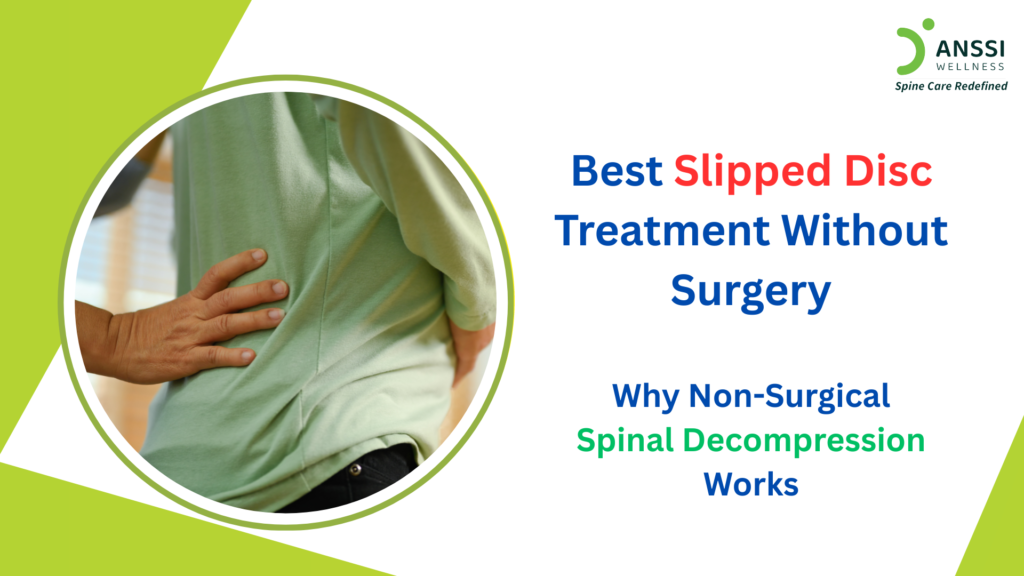
Back and neck pain are among the most common health problems today, and one of the leading causes behind this discomfort is a slipped disc. This condition can significantly affect daily life, making it difficult to sit, stand, walk, or even sleep comfortably.
Many people diagnosed with a slipped disc are often advised to consider surgery or rely on long-term medication. This can be overwhelming and concerning. However, the good news is that surgery is not always necessary. In many cases, non-surgical treatments, especially spinal decompression treatment, can provide effective and long-lasting relief.
Understanding Slipped Disc Pain
The vertebrae that make up the spine are divided by soft discs that resemble cushions. These discs act as shock absorbers and allow flexibility in movement. A slipped disc occurs when the soft inner material of a disc pushes through its outer layer.
When this happens, the disc may press against nearby nerves, leading to pain, numbness, or weakness. Depending on the location of the slipped disc, the pain may affect the lower back, neck, arms, or legs.
For example, a slipped disc in the lower back may cause sciatica, where pain radiates down the leg. In the neck, it may cause pain that spreads to the shoulders or arms.
Causes of Slipped Disc
A slipped disc may arise as a result of multiple circumstances. One of the most common causes is age-related degeneration. As we age, spinal discs lose water content and become less flexible, making them more prone to damage.
Lifestyle factors also play a major role. Poor posture, especially during long hours of sitting or working on computers, can place excessive stress on the spine.
Other common causes include:
- Sudden strain or injury from lifting heavy objects
- Repetitive movements that stress the spine
- Sedentary lifestyle and weak core muscles
- Obesity, which increases pressure on spinal discs
When these factors combine, they increase the risk of disc damage and nerve compression.
Symptoms That Should Not Be Ignored
The symptoms of a slipped disc can vary depending on the severity and location of the condition. Some individuals may experience mild discomfort, while others may suffer from severe pain.
Common symptoms include:
- Persistent back or neck pain
- Pain that radiates to the arms or legs
- Tingling or numbness in the affected areas
- Muscle weakness
- Difficulty sitting, standing, or bending
In many cases, the pain may worsen with certain movements or prolonged sitting. It’s critical to get a professional medical evaluation if these symptoms continue.
Limitations of Medication and Surgery
Painkillers are often the first line of treatment for slipped disc pain. These medications can reduce inflammation and temporarily relieve discomfort. However, they do not address the underlying cause of the problem.
A slipped disc involves structural changes in the spine, such as disc bulging and nerve compression. Painkillers cannot correct these issues. Once the effect of the medication wears off, the pain may return.
Long-term use of medication can also lead to side effects such as:
- Digestive issues
- Kidney or liver problems
- Dependency on medication
Surgery is another option that may be recommended in severe cases. While it can be effective for certain conditions, it is not always necessary and comes with potential risks, including:
- Infection or complications
- Long recovery periods
- High costs
- Possibility of recurring symptoms
Because of these limitations, many patients prefer to explore non-surgical alternatives first.
Why Non-Surgical Spinal Decompression Works
One of the most effective non-surgical treatments for a slipped disc is Non-Surgical Spinal Decompression Treatment. This advanced treatment is designed to relieve pressure on the spinal discs and nerves.
How It Works
Spinal decompression treatment uses specialised equipment to gently stretch the spine in a controlled manner. This process creates negative pressure within the discs.
The negative pressure helps pull the bulging disc material back toward its normal position. It also improves the flow of oxygen, water, and nutrients to the affected area, which supports natural healing.
By reducing pressure on the nerves, spinal decompression can help relieve pain, numbness, and discomfort.
Key Benefits of Spinal Decompression
Non-surgical spinal decompression offers several advantages, making it a preferred choice for many patients:
- Non-invasive: No surgery or incisions required
- Drug-free: Reduces dependence on medication
- Targets the root cause: Addresses disc pressure and nerve compression
- Promotes healing: Enhances nutrient supply to damaged discs
- Improves mobility: Helps restore normal movement and flexibility
This treatment is often combined with physiotherapy and lifestyle changes to achieve better and long-lasting results.
About ANSSI:
ANSSI Wellness focuses on improving the quality of life for patients suffering from spinal issues, aiming to provide relief where other conventional treatments have failed. Through advanced Non-Surgical Spinal Decompression Treatment, ANSSI is committed to helping patients avoid surgery and recover in a safe, effective, and compassionate environment.
Connect with ANSSI Wellness on LinkedIn, Instagram, and Facebook for expert guidance.