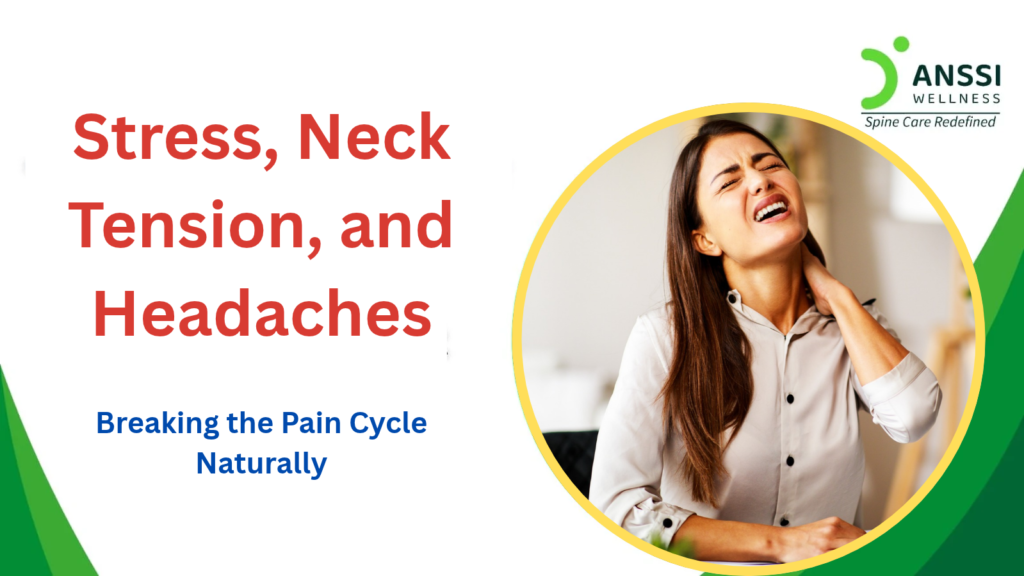
Have you ever noticed that your neck feels stiff and your head begins to ache after a stressful day at work? Perhaps deadlines, family responsibilities, poor sleep, or hours spent looking at a laptop leave your shoulders tight and your head feeling heavy. These experiences are common because mental stress and physical discomfort can influence one another.
Stress does not cause every headache or neck problem, but it can contribute to muscle tension, increase pain sensitivity, and aggravate existing symptoms. Understanding this connection is an important step toward managing discomfort and breaking the recurring cycle of stress, neck tension, and headaches.
How Does Stress Contribute to Neck Tension?
When you experience stress, your body activates its natural response to perceived challenges.
- Your breathing may become faster, your muscles may tighten, and you may unconsciously raise your shoulders or clench your jaw.
- When this response continues throughout the day, the muscles around your neck, shoulders, and upper back may remain tense for prolonged periods.
- Combined with poor posture, limited movement, and insufficient rest, this tension can contribute to discomfort and headaches.
For example, someone working long hours at a computer may lean forward toward the screen, push their head forward, and keep their shoulders raised. If this posture continues during a stressful workday, the neck and shoulder muscles may become increasingly uncomfortable.
Over time, pain can itself become a source of stress.
- Worrying about recurring headaches, losing sleep because of discomfort, and struggling to concentrate can increase emotional strain, potentially making symptoms harder to manage.
- This creates a cycle: stress contributes to tension, tension contributes to discomfort, and discomfort can increase stress.
Understanding Stress-Related Headaches
- Tension-type headaches are commonly associated with stress, although their causes can vary. They often feel like a dull ache or pressure around the forehead, temples, or back of the head. Some people describe the sensation as a tight band around their head.
- Neck and shoulder tenderness may occur alongside the headache. Symptoms can become more noticeable after prolonged screen use, demanding work, inadequate sleep, or periods of emotional strain.
- Another possibility is a cervicogenic headache, which originates from a problem involving structures in the neck. These headaches may be accompanied by neck pain, restricted movement, and pain that is triggered by certain neck positions.
Although tension-type headaches and cervicogenic headaches can overlap in their symptoms, they are different conditions and may require different management strategies. Migraine and other headache disorders can also involve neck discomfort. Therefore, recurring headaches should not automatically be blamed on stress or muscle tightness.
5 Natural Ways to Relax Your Neck and Calm Your Mind
Small, consistent changes can help reduce stress, improve muscle comfort, and support healthier movement habits.
1. Practise Slow, Controlled Breathing
The body’s stress response can be reduced with slow breathing.
- Take a comfortable seat, let your shoulders drop, and take slow, deep breaths through your nose.
- Allow your abdomen to expand as you inhale, then exhale slowly without forcing your breath.
- Practise for a few minutes when you notice tension building during the day.
The goal is to develop a calming routine rather than force yourself to breathe deeply.
2. Try Progressive Muscle Relaxation
Progressive muscle relaxation involves gently tensing and then releasing selected muscle groups.
- You can begin with your hands, shoulders, and arms while breathing normally.
- Avoid forcefully contracting painful neck muscles. Instead, focus on noticing the difference between tension and relaxation.
With regular practice, this technique may help you recognise when you are unconsciously holding tension in your body.
3. Take Regular Screen Breaks
Remaining in one position for hours can aggravate neck discomfort.
- Adjust your workstation so that your screen is approximately at eye level, your shoulders remain relaxed, and your back is supported.
- Take brief movement breaks throughout the day.
- Stand up, walk around, and gently move your shoulders and neck within a comfortable range.
- Changing positions regularly is generally more helpful than trying to maintain one supposedly perfect posture all day.
4. Use Gentle Neck and Shoulder Movements
Gentle movements may help maintain neck mobility and reduce stiffness.
- Try slow shoulder rolls, relaxed shoulder-blade movements, and comfortable neck rotations.
- Avoid sudden twisting, forceful stretching, or manipulating your neck to produce a cracking sound.
- Stop if a movement causes sharp pain, dizziness, or symptoms spreading into your arm.
If you have persistent neck pain, numbness, or a diagnosed cervical spine condition, consult a healthcare professional or physiotherapist for exercises suited to your needs.
5. Prioritise Sleep and Physical Activity
Poor sleep can make stress more difficult to manage and may increase sensitivity to pain.
- Establish a consistent sleep schedule, reduce stimulating activities before bedtime, and create a comfortable sleeping environment.
- Regular walking, gentle yoga, or other appropriate physical activities may also support mood, sleep, and general muscle function.
- Start gradually and choose activities that do not aggravate your symptoms.
When Should You Seek Professional Help?
Lifestyle changes can be useful, but they are not a substitute for medical evaluation when symptoms persist or worsen.
Consult a healthcare professional if headaches recur frequently, neck pain interferes with daily activities, or you experience persistent stiffness, arm pain, tingling, or numbness.
Seek urgent medical attention for a sudden, extremely severe headache; a headache accompanied by fever and neck stiffness; or symptoms such as new weakness, confusion, or changes in vision or speech.
These warning signs may indicate a condition requiring prompt assessment.
About ANSSI:
ANSSI Wellness focuses on improving the quality of life for patients suffering from spinal issues, aiming to provide relief where other conventional treatments have failed. Through advanced Non-Surgical Spinal Decompression Treatment, ANSSI is committed to helping patients avoid surgery and recover in a safe, effective, and compassionate environment.
Book Consultation:
Call +91 9004726844 | 9920936844
Visit www.anssiwellness.com
Connect with ANSSI Wellness on LinkedIn, Instagram, and Facebook for expert guidance.