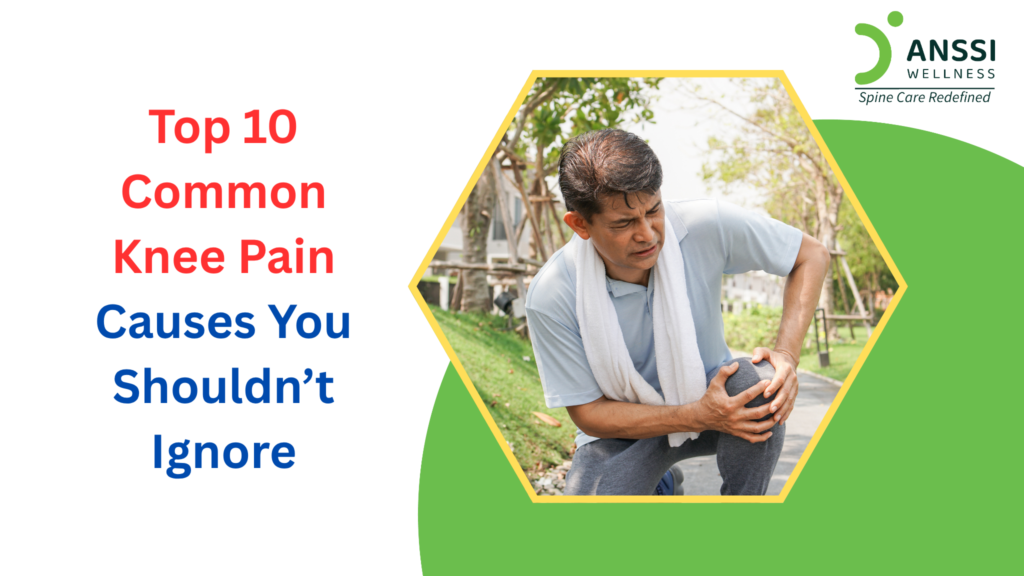
Knee pain is one of the most common health complaints affecting people of all ages. Whether it starts as a mild discomfort or a sharp pain, many people tend to ignore it, assuming it will go away on its own. However, untreated knee pain can worsen over time, leading to chronic issues and reduced mobility.
Understanding the underlying causes and recognising early warning signs can help you seek timely treatment and avoid complications.
Top 10 Common Knee Pain Causes
Here are the most common causes of knee pain you should never ignore:
1. Osteoarthritis
This is one of the leading causes of knee pain, especially in older adults. It occurs when the cartilage in the knee joint gradually wears down, leading to pain, stiffness, and swelling.
2. Ligament Injuries (ACL, MCL Tears)
Ligaments help stabilise the knee joint. Injuries to these ligaments, often caused by sports or sudden movements, can result in pain, swelling, and instability.
3. Meniscus Tear
The meniscus acts as a cushion between the bones of the knee. A tear can occur due to twisting movements or ageing, causing pain, stiffness, and difficulty moving the knee.
4. Patellar Tendonitis (Jumper’s Knee)
This condition is common among athletes and individuals involved in repetitive jumping activities. It causes pain just below the kneecap.
5. Bursitis
Inflammation of the tiny fluid-filled sacs (bursae) surrounding the knee results in bursitis. This leads to swelling, warmth, and pain.
6. Rheumatoid Arthritis
An autoimmune disease that results in joint inflammation, discomfort, stiffness, and swelling. It can affect multiple joints, including the knees.
7. Overuse and Repetitive Strain
Frequent activities like running, climbing stairs, or prolonged standing can put stress on the knee joint, leading to gradual wear and pain.
8. Obesity-Related Joint Stress
Excess body weight increases the load on the knees, accelerating joint wear and increasing the risk of pain and degeneration.
9. Poor Posture and Muscle Imbalance
Improper alignment of the body or weak supporting muscles can lead to uneven pressure on the knees, resulting in pain over time.
10. Age-Related Wear and Tear
As we age, natural degeneration of the knee joint can lead to stiffness, reduced flexibility, and chronic discomfort.
Early Warning Signs You Shouldn’t Ignore
Knee pain often begins with subtle symptoms that are easy to overlook. Paying attention to these early signs can prevent the condition from worsening.
Watch out for:
- Persistent pain or swelling
- Stiffness, especially after rest
- Clicking, popping, or locking sensations
- Difficulty walking, climbing stairs, or bending the knee
- Reduced range of motion
Ignoring these symptoms can lead to long-term damage and more complex treatment requirements.
When to Seek Medical Attention
While occasional knee pain may not be serious, certain symptoms require immediate attention.
You should consult a healthcare professional if:
- Pain lasts more than a few days
- There is sudden, severe pain after an injury
- You are unable to bear weight on the knee
- Swelling increases or does not subside
- The knee feels unstable or gives way
Early diagnosis can help identify the exact cause and prevent further complications.
Non-Surgical Treatment Options
The good news is that most knee pain conditions can be effectively managed without surgery. Non-surgical treatments focus on relieving pain, improving joint function, and addressing the root cause.
Physiotherapy and Exercise
Physiotherapy plays a crucial role in knee pain treatment.
- Strengthening exercises target the muscles around the knee, including the quadriceps and hamstrings, providing better support to the joint.
- Stretching exercises improve flexibility, while guided rehabilitation helps restore normal movement patterns.
Lifestyle Modifications
Simple lifestyle changes can make a significant difference:
- Maintain a healthy weight to reduce joint stress
- Practise good posture and body mechanics
- Avoid activities that put excessive strain on the knees
- Stay active with low-impact exercises
These changes not only relieve pain but also prevent recurrence.
Advanced Non-Surgical Treatments
Modern advancements have introduced effective non-surgical options such as knee decompression treatment.
This technique helps reduce pressure within the knee joint, improving blood flow and promoting natural healing. Such treatments target the root cause rather than just masking symptoms, offering long-term relief.
About ANSSI:
ANSSI Wellness focuses on improving the quality of life for patients suffering from knee issues, aiming to provide relief where other conventional treatments have failed. Through Advanced Knee Rehabilitation Treatment, ANSSI is committed to helping patients avoid surgery and recover in a safe, effective, and compassionate environment.
Connect with ANSSI Wellness on LinkedIn, Instagram, and Facebook for expert guidance.