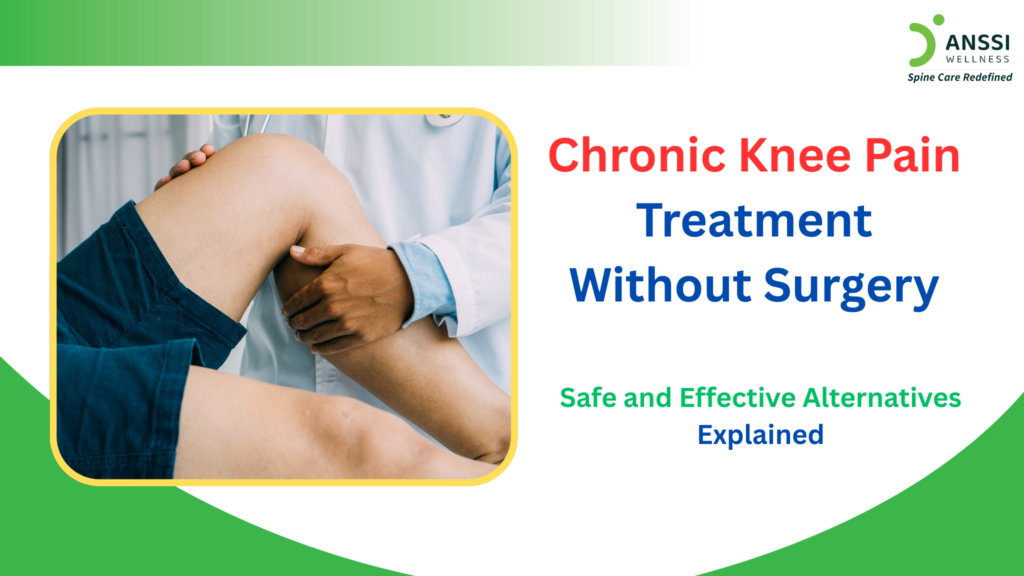
Chronic knee pain is one of the most common joint complaints affecting people of all ages. Whether you are an older adult dealing with wear and tear, a sportsperson recovering from injury, or a working professional experiencing stiffness after long hours of sitting, persistent knee pain can significantly limit mobility and reduce the quality of your life.
The good news is that surgery is not always necessary. In many cases, chronic knee pain treatment without surgery can provide long-term relief when the root cause is correctly identified and treated with a structured, non-invasive approach.
Understanding Chronic Knee Pain
Chronic knee pain refers to discomfort that lasts for more than 12 weeks. It may develop gradually or follow an injury.
Symptoms can include:
- Persistent aching or sharp pain
- Swelling or stiffness
- Reduced range of motion
- Clicking or grinding sensation
- Difficulty climbing stairs or standing for long periods
Ignoring chronic knee pain can lead to worsening joint damage over time, which is why early intervention is important.
Common Causes of Chronic Knee Pain
Effective treatment begins with understanding what is causing the pain. Some of the most common causes include:
1. Osteoarthritis
Osteoarthritis is the most frequent cause of chronic knee pain, especially in adults over 40. It occurs when the cartilage cushioning the knee joint gradually wears down, leading to bone friction, inflammation, and stiffness.
2. Ligament Injuries
Injuries to ligaments such as the ACL or MCL can cause instability and persistent pain if not properly rehabilitated.
3. Meniscus Tears
Between the thigh and shin bones, the meniscus serves as a shock absorber. A tear may result from sudden twisting movements or age-related degeneration.
4. Patellofemoral Pain Syndrome
Often called “runner’s knee,” this condition causes pain around the kneecap due to improper tracking or muscle imbalance.
5. Tendinitis
Inflammation of tendons, particularly in athletes or individuals performing repetitive movements, can lead to ongoing pain.
6. Obesity and Muscle Weakness
Excess body weight increases stress on the knee joint. Weak quadriceps and hamstrings reduce joint stability, worsening discomfort.
7. Poor Biomechanics and Repetitive Stress
Improper walking patterns, incorrect footwear, and repetitive strain can gradually damage knee structures.
Identifying the specific cause ensures that treatment targets the root problem rather than simply masking symptoms.
When Should You See a Specialist?
Consult a healthcare professional if you experience:
- Knee pain lasting more than three months
- Swelling that does not subside
- Instability or locking of the knee
- Difficulty performing daily tasks
Early treatment improves outcomes and reduces the likelihood of invasive procedures.
Is Surgery Always Necessary?
Many patients assume that chronic knee pain inevitably leads to knee replacement surgery. However, surgery is typically recommended only when:
- There is severe joint damage.
- Pain does not improve with conservative treatment.
- Daily activities are significantly restricted.
Surgery involves risks such as infection, blood clots, prolonged recovery, and high costs. Therefore, non-surgical treatment options are often the preferred first line of care.
Safe and Effective Non-Surgical Treatment Options
Modern orthopaedic care offers several non-invasive treatments that can significantly reduce pain and improve function.
1. Targeted Physiotherapy and Strengthening
A customised physiotherapy program is one of the most effective ways to manage chronic knee pain.
It focuses on:
- Strengthening quadriceps, hamstrings, and calf muscles
- Improving joint stability
- Increasing flexibility
- Enhancing balance and coordination
Strong muscles support the knee joint and reduce stress on cartilage and ligaments.
2. Weight Management and Lifestyle Changes
For individuals who are overweight, even modest weight loss can significantly reduce pressure on the knees. Studies show that losing just 5-10% of body weight can decrease joint stress and improve symptoms.
Simple lifestyle adjustments, such as low-impact exercises (walking, swimming, cycling), can help maintain joint mobility without excessive strain.
3. Knee Decompression Treatment
Knee decompression treatment is a non-invasive technique designed to reduce pressure within the knee joint. By gently creating space between joint surfaces, decompression can:
- Reduce joint compression
- Improve circulation
- Support cartilage health
- Decrease inflammation
This treatment may benefit individuals with osteoarthritis and degenerative changes.
4. Bracing and Supportive Devices
Knee braces and orthotics help stabilise the joint and improve alignment.
They can:
- Reduce abnormal joint movement
- Decrease pain during activity
- Prevent further strain
Proper footwear also plays a critical role in knee health.
5. Non-Invasive Anti-Inflammatory Therapies
Cold therapy, heat therapy, ultrasound therapy, and other physical modalities can help reduce inflammation and improve healing without medication.
Unlike long-term painkiller use, these approaches aim to manage inflammation safely.
6. Posture and Movement Correction
Incorrect walking patterns and posture can worsen knee pain. A trained professional can assess gait and recommend corrective exercises to improve biomechanics.
Achieving Long-Term Relief
Consistency is key to long-term improvement. A structured rehabilitation plan helps:
- Restore joint function
- Prevent recurrence
- Improve overall mobility
- Delay or avoid surgery
Unlike quick fixes, non-surgical treatments focus on gradual, sustainable recovery.
About ANSSI:
ANSSI Wellness focuses on improving the quality of life for patients suffering from spinal issues, aiming to provide relief where other conventional treatments have failed. Through Advanced Knee Rehabilitation Treatment, ANSSI is committed to helping patients avoid surgery and recover in a safe, effective, and compassionate environment.
Connect with ANSSI Wellness on LinkedIn, Instagram, and Facebook for expert guidance.