A disc bulge is one of the most common spinal conditions affecting people of all age groups. It often develops gradually due to poor posture, prolonged sitting, obesity, lack of exercise, repetitive spinal strain, and age-related degeneration. Many individuals initially ignore mild neck or lower back pain, assuming it is temporary. However, an untreated disc bulge can gradually worsen and lead to chronic pain, nerve compression, and reduced mobility.
As awareness about spinal health grows, many patients are now searching for safer and more effective non-surgical treatments that focus on long-term recovery instead of temporary symptom relief. Understanding the causes, symptoms, and treatment options for disc bulge is important for making informed decisions about spinal care.
Understanding Disc Bulge and Its Symptoms
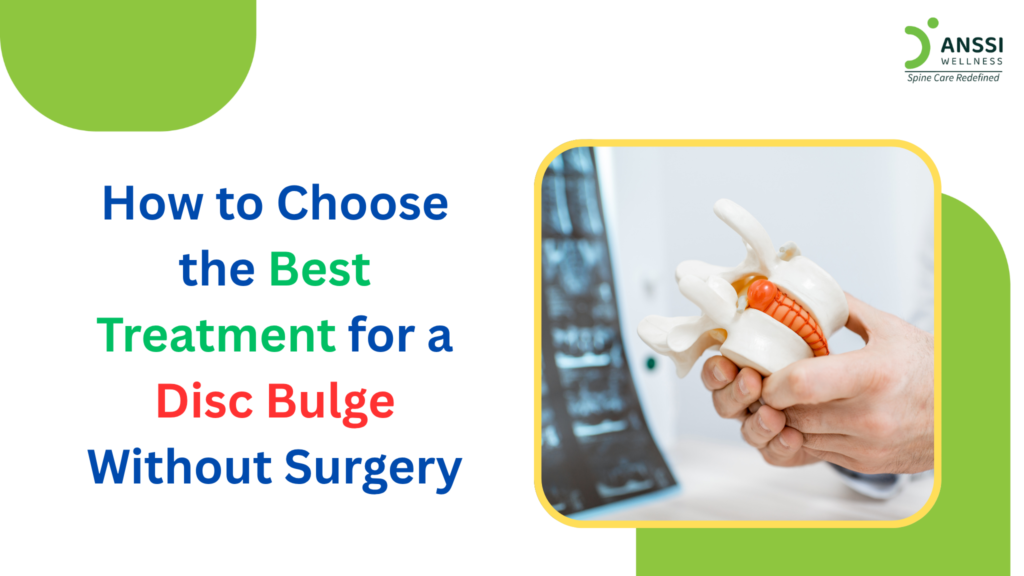
The spine contains soft spinal discs positioned between the vertebrae. These discs function as shock absorbers and help maintain flexibility and smooth spinal movement.
Each disc contains:
- A soft inner core
- A strong outer layer
Over time, spinal stress and degeneration may weaken the outer disc layer. As a result, the disc may begin to bulge outward. This condition is known as a disc bulge.
A bulging disc may place pressure on nearby spinal nerves, causing pain and neurological symptoms.
Common symptoms of a disc bulge include:
- Neck or lower back pain
- Radiating pain into the arms or legs
- Tingling or numbness
- Muscle weakness
- Stiffness and reduced flexibility
- Sciatica symptoms in lower back disc bulge
The severity of symptoms often depends on the extent of nerve compression and the location of the affected disc.
How Disc Bulge Can Progress to Slipped Disc
A disc bulge is often an early stage of spinal disc damage. If spinal stress continues without proper treatment, the outer layer of the disc may eventually tear.
When this occurs, the inner disc material may push outward through the damaged outer layer. This condition is commonly called a slipped disc or herniated disc.
A slipped disc usually causes more severe nerve compression and inflammation than a simple disc bulge.
This progression may lead to:
- Severe back or neck pain
- Increased nerve irritation
- Chronic sciatica
- Reduced mobility
- Persistent muscle weakness
Early treatment of a disc bulge is important because it may help prevent worsening spinal damage and long-term complications.
Limitations of Medication-Based Treatment
Many patients initially depend on painkillers and anti-inflammatory medications for relief. While medications may temporarily reduce pain and inflammation, they have important limitations.
Temporary Symptom Relief
Pain medications mainly mask symptoms rather than treating the underlying spinal problem. They do not repair damaged discs or relieve the mechanical pressure on spinal nerves. Once medications are stopped, symptoms often return.
Long-Term Side Effects
Prolonged medication use may increase the risk of:
- Stomach irritation
- Drowsiness
- Kidney-related problems
- Dependency concerns
- Reduced effectiveness over time
Because a disc bulge is a structural spinal condition, long-term recovery usually requires treatment that addresses the root cause of nerve compression.
Risks and Limitations of Surgery
In severe cases involving major nerve compression or neurological weakness, surgery may sometimes be considered.
Surgical procedures may involve:
- Removing part of the damaged disc
- Relieving nerve pressure
- Stabilising spinal structures
Although surgery may help some patients, it also carries potential risks.
Recovery Time
Spinal surgery often requires:
- Hospitalisation
- Physical rehabilitation
- Activity restrictions during recovery
Surgical Risks
Possible complications may include:
- Infection
- Scar tissue formation
- Bleeding
- Persistent pain
- Recurring symptoms
Increased Stress on Nearby Spinal Segments
Changes in spinal mechanics after surgery may place additional stress on nearby discs and joints.
This is why many patients now prefer exploring non-surgical treatments before considering invasive procedures.
Non-Surgical Treatments for Disc Bulge
Modern spine care increasingly focuses on non-surgical approaches that reduce spinal pressure naturally and improve long-term spinal function.
Physiotherapy and Spinal Rehabilitation
Physiotherapy helps strengthen spinal muscles, improve posture, and support spinal stability.
Programs may include:
- Stretching exercises
- Core strengthening
- Mobility training
- Postural correction
Posture Correction and Ergonomic Guidance
Poor sitting posture and improper workstation setup increase spinal stress. Ergonomic improvements help reduce ongoing strain on the spine.
Stretching and Strengthening Exercises
Controlled exercises help improve flexibility, muscle support, and spinal stability.
Lifestyle and Weight Management
Staying physically active and maintaining a healthy body weight lessens the mechanical strain on the spinal discs.
Pain Management Therapies
Supportive pain management techniques may temporarily help control inflammation and discomfort during recovery.
Advanced Non-Surgical Spinal Decompression Treatment
One of the advanced non-invasive treatment options available today is Non-Surgical Spinal Decompression Treatment.
This treatment uses specialised decompression technology to gently stretch the spine in a controlled manner. The process creates negative pressure inside the spinal discs.
This negative pressure may help:
- Reduce disc bulging
- Relieve pressure on spinal nerves
- Improve oxygen and nutrient flow into damaged discs
- Support natural disc healing
Unlike surgery, spinal decompression is non-invasive and generally does not require prolonged recovery periods.
Benefits of Non-Surgical Treatment
Non-surgical treatments offer several important advantages for disc bulge patients.
Drug-Free and Surgery-Free Care
Patients may avoid medication dependency and surgical complications.
Improved Mobility and Flexibility
Reducing spinal pressure may improve movement and daily comfort.
Reduced Nerve Compression Symptoms
Many patients experience improvement in pain, tingling, numbness, and sciatica symptoms.
Supports Natural Disc Healing
Improved circulation and reduced pressure may support natural spinal recovery.
Potential for Long-Term Relief
Root-cause-focused treatment may provide more sustainable improvement than temporary symptom management alone.
References:
- Luoma, Katariina MD*; Riihimäki, Hilkka DMedSc, MSc*; Luukkonen, Ritva PhD*; Raininko, Raili MD, DMedSc†; Viikari-Juntura, Eira MD, DMedSc*; Lamminen, Antti MD, DMedSc‡. Low Back Pain in Relation to Lumbar Disc Degeneration. Spine 25(4):p 487-492, February 15, 2000.
- Ramos G., MD, Martin W., MD. Effects of Vertebral Axial Decompression On Intradiscal Pressure. Journal of Neurosurgery 81: 350-353, 1994
- Sherry E., MD FRACS, Kitchener P., MB, BS FRANZCR, Smart R., MB, Ch.B. A Prospective Randomized Controlled Study of VAX-D and TENS for the Treatment of Chronic Low Back Pain. Journal of Neurological Research Volume 23, No 7, October 2001.
About ANSSI:
ANSSI Wellness focuses on improving the quality of life for patients suffering from spinal issues, aiming to provide relief where other conventional treatments have failed. Through advanced Non-Surgical Spinal Decompression Treatment, ANSSI is committed to helping patients avoid surgery and recover in a safe, effective, and compassionate environment.
Book Consultation:
Call +91 9004726844 | 9920936844
Visit www.anssiwellness.com
Connect with ANSSI Wellness on LinkedIn, Instagram, and Facebook for expert guidance.