Sciatica is one of the most common causes of lower back and leg pain. It can make simple activities such as walking, sitting, driving, or even sleeping extremely uncomfortable. Many people assume that sciatica is a disease, but in reality, it is a symptom caused by an underlying spinal problem. The hallmark of sciatica is pain that radiates from the lower back into the buttock and down one or both legs.
While pain medications and home remedies may provide temporary relief, they often fail to address the root cause of the problem. In most cases, nerve compression within the lower spine is responsible for the symptoms. This is why effective long-term treatment should focus on relieving pressure on the affected nerve while supporting spinal health through rehabilitation and exercise.
Understanding Sciatica and Nerve Compression
The sciatic nerve is the largest nerve in the human body. It originates from nerve roots in the lower spine and travels through the buttocks into the legs and feet.
When one or more of these nerve roots become compressed or irritated, sciatica symptoms may develop.
Common causes of nerve compression include:
- Bulging disc
- Slipped (herniated) disc
- Degenerative Disc Disease
- Lumbar Spondylosis
- Spinal stenosis
These conditions can reduce the available space around the nerves or place direct pressure on them.
As nerve compression increases, patients may experience:
- Radiating leg pain
- Tingling sensations
- Numbness in the leg or foot
- Muscle weakness
- Difficulty walking
- Reduced flexibility and mobility
The severity of symptoms often depends on the extent of nerve irritation and the underlying spinal condition.
Why Symptom-Based Treatments Often Fall Short
Many sciatica patients initially rely on painkillers, anti-inflammatory medications, or injections. While these approaches may temporarily reduce pain, they often have limitations.
- Pain Medications: Painkillers help control discomfort but do not correct the structural problem causing nerve compression. Once the medication wears off, symptoms frequently return.
- Spinal Injections: Certain injections may temporarily reduce inflammation around irritated nerves. However, their effects are often short-lived if the source of nerve pressure remains unchanged.
- Bed Rest: Although short-term rest may reduce acute pain, prolonged inactivity can weaken muscles and contribute to further spinal instability.
This is why many patients experience recurring episodes of sciatica despite repeated symptom-focused treatments.
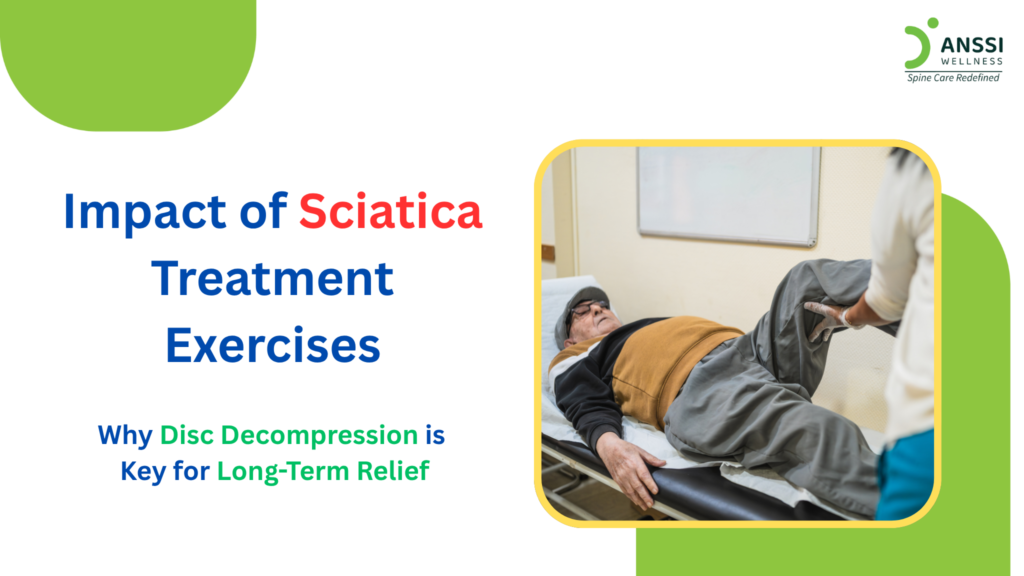
Why Disc Decompression is Key for Long-Term Relief
To achieve lasting improvement, treatment should focus on relieving the pressure placed on the compressed nerve. One of the advanced non-surgical approaches used for this purpose is Non-Surgical Spinal Decompression Treatment.
This procedure gently and carefully stretches the spine using specialised technology. The goal is to reduce pressure within the affected spinal discs.
As decompression occurs, several beneficial effects may take place:
- Reduced Nerve Compression: By reducing pressure inside damaged or bulging discs, decompression may help relieve stress on nearby nerve roots.
- Improved Disc Hydration: Healthy spinal discs rely on the movement of nutrients and fluids. Decompression may support this process by improving circulation within the disc.
- Reduced Inflammation: Less mechanical pressure often means less irritation and inflammation around the affected nerve.
- Support for Natural Healing: By creating a more favourable environment within the spine, decompression may help support the body’s natural recovery mechanisms.
Unlike treatments that simply mask symptoms, spinal decompression aims to address the source of nerve irritation. This is one reason why it is often considered an important component of long-term sciatica management.
The Role of Exercises in Sciatica Recovery
Although relieving nerve compression is essential, exercises also play a critical role in recovery.
It is important to understand that exercises alone may not remove significant nerve compression caused by a bulging or herniated disc. However, they can support healing and improve spinal function once pressure on the nerve begins to decrease.
Benefits of properly prescribed exercises include:
- Improved flexibility
- Better posture
- Stronger spinal support muscles
- Enhanced mobility
- Reduced risk of future flare-ups
Recommended Exercises During Recovery
When combined with appropriate spinal treatment, the following exercises help patients regain confidence in movement and maintain long-term spinal health.
McKenzie Extension Exercise
This exercise is commonly used in patients with disc-related lower back pain.
Potential benefits include:
- Encouraging disc centralisation
- Improving spinal mobility
- Reducing leg symptoms in some patients
Pelvic Tilt Exercise
Pelvic tilts help strengthen the muscles supporting the lower back and pelvis.
Benefits may include:
- Improved core stability
- Reduced lower back strain
- Better posture control
Knee-to-Chest Stretch
This gentle stretching exercise may help reduce tension and stiffness in the lower back.
Benefits include:
- Increased flexibility
- Improved spinal mobility
- Reduced muscular tightness
Hamstring Stretch
Tight hamstring muscles can increase stress on the lower back.
Regular stretching may:
- Improve flexibility
- Reduce spinal strain
- Support better movement patterns
Walking
Walking is one of the safest and most effective low-impact activities for many sciatica patients.
Benefits include:
- Improved circulation
- Gentle spinal movement
- Enhanced mobility
Core Strengthening Exercises
Strong core muscles provide essential support for the spine.
Core strengthening may help:
- Improve spinal stability
- Reduce recurrent strain
- Support long-term recovery
Important: Exercises should always be performed according to a healthcare professional’s recommendations, especially during active sciatica episodes.
Combining Disc Decompression and Rehabilitation
The most effective non-surgical sciatica treatment programs often combine spinal decompression with targeted rehabilitation exercises.
These approaches complement each other in important ways:
- Spinal decompression helps reduce nerve pressure.
- Exercises improve strength and flexibility.
- Posture correction reduces ongoing spinal stress.
- Rehabilitation supports long-term functional recovery.
A personalised treatment program can address the specific cause of sciatica while helping patients safely return to daily activities.
References:
- Albert, Hanne B. PT, MPH, PhD; Manniche, Claus MD, PhD, Med Sci. The Efficacy of Systematic Active Conservative Treatment for Patients With Severe Sciatica: A Single-Blind, Randomized, Clinical, Controlled Trial. Spine 37(7):p 531-542, April 01, 2012. | DOI: 10.1097/BRS.0b013e31821ace7f
- Pradhan A, J M. Effects of Neurodynamics Along With Conventional Exercises on Sciatica Patients: A Single-Blinded Randomized Clinical Trial. Cureus. 2024 May 6;16(5):e59722. doi: 10.7759/cureus.59722. PMID: 38840988; PMCID: PMC11151706.
- Ramos G., MD, Martin W., MD. Effects of Vertebral Axial Decompression On Intradiscal Pressure. Journal of Neurosurgery 81: 350-353, 1994.
- Tilaro F., MD, Miskovich D. MD. The Effects of Vertebral Axial Decompression On Sensory Nerve Dysfunction In Patients with Low Back Pain and Radiculopathy. Canadian Journal of Clinical Medicine Vol. 6, No 1, January 1999.
About ANSSI:
ANSSI Wellness focuses on improving the quality of life for patients suffering from spinal issues, aiming to provide relief where other conventional treatments have failed. Through advanced Non-Surgical Spinal Decompression Treatment, ANSSI is committed to helping patients avoid surgery and recover in a safe, effective, and compassionate environment.
Book Consultation:
Call +91 9004726844 | 9920936844
Visit www.anssiwellness.com
Connect with ANSSI Wellness on LinkedIn, Instagram, and Facebook for expert guidance.