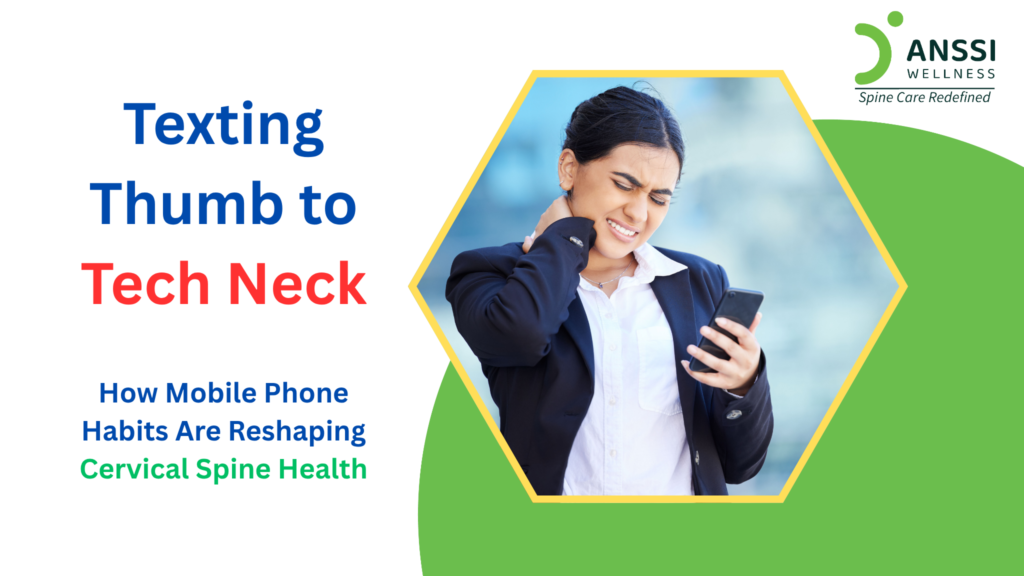
Smartphones have become an indispensable part of modern life. From texting and social media to video streaming, online shopping, gaming, and work-related communication, many people spend several hours each day looking at a mobile screen. While this technology has made life more convenient, it has also introduced a growing health concern known as “Tech Neck.”
Tech Neck refers to neck pain and other musculoskeletal problems caused by prolonged forward bending of the head while using smartphones and other handheld devices. What may begin as occasional stiffness can gradually develop into chronic neck pain, affecting work performance, sleep, and overall quality of life. Understanding how smartphone habits affect the cervical spine is the first step towards protecting your neck and preventing long-term complications.
How Smartphones Affect the Cervical Spine
The cervical spine, or neck, is designed to support the weight of the head while allowing a wide range of movement. In a neutral posture, the head weighs approximately 4 to 6 kilograms, and this weight is evenly distributed across the cervical vertebrae, discs, muscles, and ligaments.
However, when you bend your head forward to look at a mobile phone, the mechanical load on the cervical spine increases significantly. The greater the angle of neck flexion, the more stress is placed on the supporting structures.
Repeatedly maintaining this posture for long periods may result in:
- Muscle fatigue
- Ligament strain
- Increased pressure on cervical intervertebral discs
- Stress on the facet joints
- Reduced spinal mobility
Over months or years, this continuous strain may contribute to accelerated wear of the cervical spine and may aggravate existing disc-related conditions in susceptible individuals.
Common Symptoms of Tech Neck
Initially, the symptoms may appear mild and disappear after resting. However, continued poor posture often leads to persistent discomfort.
Common symptoms include:
- Chronic neck pain
- Neck stiffness
- Shoulder pain
- Upper back discomfort
- Headaches originating from the neck
- Reduced range of neck movement
- Muscle tightness
- Pain after prolonged mobile phone use
If cervical nerve roots become irritated because of disc-related changes, some patients may also experience:
- Tingling in the arms
- Numbness in the hands or fingers
- Weakness in the upper limbs
These symptoms should not be ignored, particularly if they continue to worsen.
Long-Term Consequences of Poor Mobile Phone Habits
Many people assume that neck pain caused by smartphone use is temporary. Unfortunately, repeated poor posture can have lasting consequences.
Over time, prolonged forward head posture may contribute to:
Chronic Muscle Strain
The muscles supporting the neck remain under constant tension, resulting in ongoing fatigue and discomfort.
Poor Posture
Forward head posture often becomes habitual, placing additional stress on the neck, shoulders, and upper back.
Cervical Spondylosis
Continuous mechanical stress may contribute to age-related degeneration of the cervical spine in susceptible individuals.
Disc Problems
In some patients, excessive stress on the cervical discs may aggravate disc bulges or herniated discs, leading to nerve irritation and radiating arm pain.
Reduced Productivity
Persistent neck pain often affects concentration, reduces work efficiency, and limits recreational activities.
Sleep Disturbance
Pain and muscle tightness frequently interfere with comfortable sleeping positions, resulting in poor-quality sleep and daytime fatigue.
Healthy Smartphone Habits to Protect Your Neck
Fortunately, simple lifestyle changes can significantly reduce strain on the cervical spine.
Hold the Phone Higher
Instead of bending your neck downward, raise your phone closer to eye level whenever possible.
Take Regular Breaks
Avoid using your phone continuously for extended periods. Stand up, move around, and gently stretch your neck every 20 to 30 minutes.
Perform Neck and Shoulder Exercises
Simple stretching and strengthening exercises help maintain flexibility and improve muscle endurance.
Maintain Good Sitting Posture
When using your phone while seated, keep your back supported and avoid slouching.
Limit Binge-Watching
Watching videos for hours without changing posture places prolonged stress on the neck. Break long viewing sessions into shorter intervals.
Reduce Unnecessary Screen Time
Limiting recreational mobile phone use can reduce cumulative strain on the cervical spine.
Stay Physically Active
Regular exercise strengthens the muscles supporting the spine and promotes better posture throughout the day.
When Should You See a Spine Specialist?
Occasional neck discomfort often improves with rest and posture correction. However, professional evaluation becomes important if you experience:
- Neck pain lasting several weeks
- Pain radiating into the shoulders or arms
- Tingling or numbness
- Progressive muscle weakness
- Persistent headaches associated with neck pain
- Difficulty performing daily activities
A spine specialist can determine whether the symptoms are due to simple muscle strain or an underlying cervical disc problem requiring additional treatment.
Non-Surgical Treatment Options
Many patients with chronic neck pain benefit from conservative treatment.
Common non-surgical approaches include:
- Physiotherapy
- Posture correction
- Ergonomic counselling
- Stretching and strengthening exercises
- Activity modification
- Medications for symptom control when clinically appropriate
These treatments aim to improve posture, reduce muscle tension, restore mobility, and strengthen the supporting muscles of the neck.
The Role of Non-Surgical Spinal Decompression Treatment
For appropriately selected patients whose chronic neck pain is associated with cervical disc-related conditions, Non-Surgical Spinal Decompression Treatment (NSSDT) may form part of a personalised rehabilitation programme.
Using computer-controlled technology, NSSDT is designed to gently reduce pressure within affected cervical discs, relieve mechanical stress on nearby nerve roots, and support disc hydration. When combined with physiotherapy, posture correction, and rehabilitation exercises, it may help improve spinal function in selected patients.
It is important to note that Non-Surgical Spinal Decompression Treatment is not intended for simple postural muscle strain alone. Treatment suitability depends on a thorough clinical evaluation and appropriate imaging where required.
About ANSSI:
ANSSI Wellness focuses on improving the quality of life for patients suffering from spinal issues, aiming to provide relief where other conventional treatments have failed. Through advanced Non-Surgical Spinal Decompression Treatment, ANSSI is committed to helping patients avoid surgery and recover in a safe, effective, and compassionate environment.
Book Consultation:
Call +91 9004726844 | 9920936844
Visit www.anssiwellness.com
Connect with ANSSI Wellness on LinkedIn, Instagram, and Facebook for expert guidance.
Clinical References:
- Hansraj KK. Assessment of stresses in the cervical spine caused by posture and position of the head. Surgical Technology International. 2014;25:277-279.
- Hoy DG, Protani M, De R, Buchbinder R. The epidemiology of neck pain. Best Practice & Research Clinical Rheumatology. 2010;24(6):783-792.
- Borghouts JA, Koes BW, Bouter LM. The clinical course and prognostic factors of non-specific neck pain: a systematic review. Pain. 1998;77(1):1-13.
- Naguszewski W., MD, Naguszewski R., MD, Gose E., Ph.D. Dermatosomal Somatosensory Evoked Potential Demonstration of Nerve Root Decompression After VAX-D Therapy. Journal of Neurological Research Vol 23 , No 7, October 2001.