Chronic knee pain is one of the most common musculoskeletal problems affecting people of all ages. Whether it is caused by osteoarthritis, a previous injury, excess body weight, or age-related joint degeneration, persistent knee pain can make everyday activities challenging. Walking, climbing stairs, getting up from a chair, exercising, and even standing for extended periods may become uncomfortable.
While medical evaluation is important to identify the cause of knee pain, exercise often plays a crucial role in recovery and long-term joint health. When performed correctly, safe and low-impact exercises can strengthen the muscles that support the knee, improve mobility, and reduce stress on the joint. For individuals undergoing a structured rehabilitation program, these exercises can serve as valuable additions to professional treatment.
Understanding the Causes of Knee Pain
Before beginning any exercise program, it is important to understand what may be causing the pain.
Some common causes of chronic knee pain include:
- Osteoarthritis: Osteoarthritis occurs when the protective cartilage inside the knee gradually wears down, leading to pain, stiffness, and reduced mobility.
- Cartilage Degeneration: Natural wear and tear over time can badly affect the smooth surfaces that allow the knee joint to move comfortably.
- Previous Knee Injuries: Old injuries involving ligaments, tendons, or cartilage may continue to cause discomfort long after the initial injury has healed.
- Ligament and Meniscus Problems: Damage to the meniscus or supporting ligaments can affect knee stability and movement.
- Obesity and Excess Joint Stress: Carrying extra body weight increases the pressure placed on the knee joints during everyday activities.
- Muscle Weakness: Weak muscles around the hips, thighs, and lower legs can reduce knee support and increase joint strain.
Because different conditions require different treatment approaches, it is always advisable to obtain a proper diagnosis before starting a new exercise routine.
Why Exercise Matters in Knee Pain Recovery
Many people worry that movement may worsen knee pain. However, appropriate exercises can provide several important benefits.
Regular exercise may help:
- Strengthen the muscles supporting the knee joint
- Improve flexibility and range of motion
- Reduce stiffness
- Enhance balance and stability
- Improve circulation
- Support long-term joint health
When combined with professional rehabilitation, exercise can help patients regain confidence in movement and improve their quality of life.
Safe Exercises for Knee Pain at Home
The following exercises are generally considered low-impact and beginner-friendly. They can often be incorporated into a rehabilitation program under professional guidance.
1. Quad Sets
The quadriceps muscles at the front of the thigh play a major role in supporting the knee.
To perform:
- Sit or lie with your leg straight.
- Tighten the muscles on the front of the thigh.
- Hold for 5-10 seconds.
- Relax and repeat.
Benefits:
- Strengthens the thigh muscles
- Improves knee support
- Places minimal stress on the joint
2. Straight Leg Raises
This exercise helps strengthen the quadriceps without requiring significant knee movement.
To perform:
- Lie on your back.
- Keep one leg straight and bend the other knee.
- Slowly raise the straight leg.
- Hold briefly and lower slowly.
Benefits:
- Improves muscle strength
- Enhances knee stability
3. Heel Slides
Heel slides help improve knee flexibility and mobility.
To perform:
- Lie on your back with legs extended.
- Slowly slide one heel toward your buttocks.
- Straighten the leg again.
Benefits:
- Encourages gentle knee movement
- Reduces stiffness
- Improves range of motion
4. Seated Knee Extensions
This exercise helps improve muscle control and joint mobility.
To perform:
- Sit in a chair.
- Slowly straighten one knee.
- Hold briefly before lowering.
Benefits:
- Strengthens the quadriceps
- Improves joint movement
5. Hamstring Stretch
Tight hamstrings can increase stress on the knee joint.
To perform:
- Sit with one leg extended.
- Lean forward gently while keeping your back straight.
- Hold the stretch comfortably.
Benefits:
- Improves flexibility
- Reduces tension around the knee
6. Calf Raises
Strong calf muscles contribute to better walking mechanics and balance.
To perform:
- Stand while holding a stable support.
- Slowly rise onto your toes.
- Lower yourself back down.
Benefits:
- Strengthens lower leg muscles
- Supports walking and stability
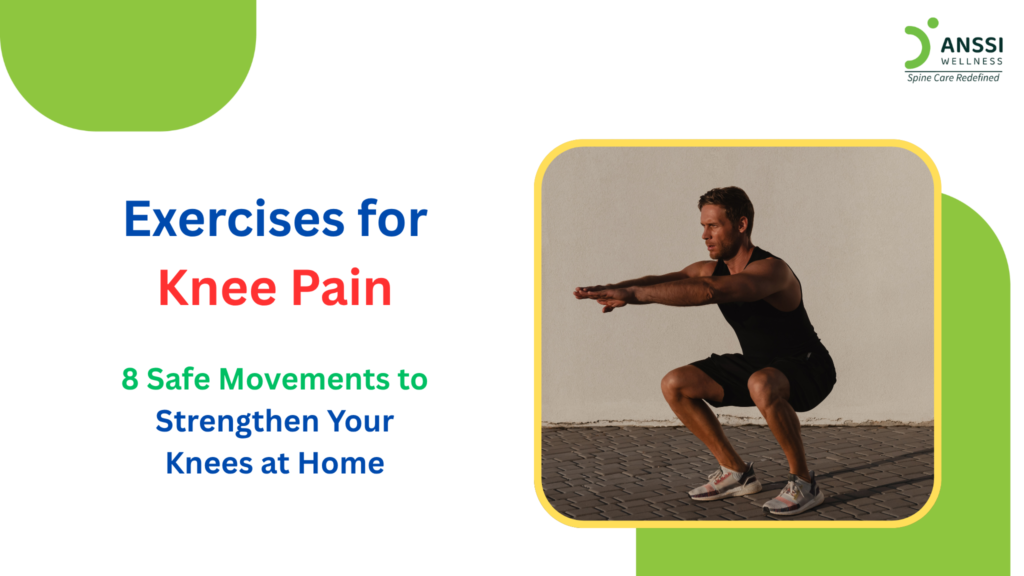
7. Supported Mini Squats
Mini squats help strengthen multiple muscle groups involved in knee support.
To perform:
- Stand while holding a chair or countertop.
- Bend your knees slightly.
- Return to standing.
Benefits:
- Improves lower body strength
- Enhances functional mobility
Avoid deep squats if they increase knee discomfort.
8. Walking
Walking remains one of the simplest and most effective low-impact activities for many people with chronic knee pain.
Benefits:
- Promotes circulation
- Supports joint mobility
- Helps maintain overall fitness
Start with short distances and gradually increase duration as much as you can tolerate.
Important Safety Tips
While exercise can be highly beneficial, it is important to approach it safely.
Keep the following guidelines in mind:
- Start slowly and increase intensity gradually.
- Avoid sudden, high-impact movements.
- Stop if you experience sharp or worsening pain.
- Focus on proper form and posture.
- Wear supportive footwear.
- Follow the recommendations of your healthcare provider or rehabilitation specialist.
Exercises should challenge the muscles without causing significant joint irritation.
Combining Exercise with Rehabilitation
Home exercises are most effective when they are part of a comprehensive rehabilitation strategy.
For patients with chronic knee pain caused by osteoarthritis or joint degeneration, personalised rehabilitation programs can provide additional support through:
- Professional assessment
- Strengthening programs
- Flexibility training
- Balance exercises
- Movement correction
Some advanced rehabilitation programs may also incorporate modern knee decompression technology. This approach is designed to reduce pressure within the knee joint and complement therapeutic exercise by promoting improved joint function and mobility.
Combining structured rehabilitation with regular home exercise often produces better results than relying on either approach alone.
About ANSSI:
ANSSI Wellness focuses on improving the quality of life for patients suffering from knee issues, aiming to provide relief where other conventional treatments have failed. Through Advanced Knee Rehabilitation Treatment, ANSSI is committed to helping patients avoid surgery and recover in a safe, effective, and compassionate environment.
Book Consultation:
Call +91 9004726844 | 9920936844
Visit www.anssiwellness.com
Connect with ANSSI Wellness on LinkedIn, Instagram, and Facebook for expert guidance.