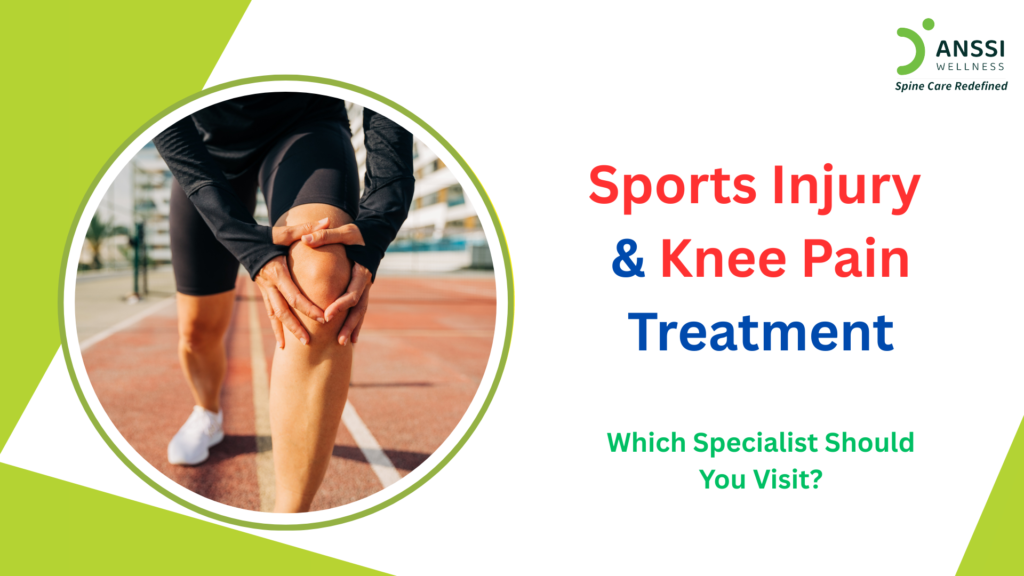
Whether you are a marathon runner, a weekend cricketer, a football enthusiast, a badminton player, or someone who regularly works out in the gym, your knees endure tremendous stress during physical activity. While occasional soreness after exercise is normal, persistent knee pain following a sports injury should never be ignored.
Sports-related knee injuries are among the leading causes of chronic knee pain in active individuals. If left untreated or managed incorrectly, a minor injury can develop into a long-term problem that affects not only athletic performance but also everyday activities such as walking, climbing stairs, or even sitting comfortably.
The good news is that not every sports-related knee injury requires surgery. With an accurate diagnosis and a personalised rehabilitation program, many athletes and fitness enthusiasts can recover successfully without undergoing surgery.
Understanding Sports-Related Knee Pain
The knee is one of the body’s most complex and heavily used joints. It must withstand repeated bending, twisting, jumping, sprinting, and sudden changes in direction during sports.
Common sports-related knee injuries include:
- Anterior Cruciate Ligament (ACL) sprains or tears
- Medial Collateral Ligament (MCL) injuries
- Meniscal tears
- Patellofemoral Pain Syndrome (Runner’s Knee)
- Patellar tendinitis (Jumper’s Knee)
- Cartilage injuries
- Muscle imbalance around the knee
- Overuse injuries caused by repetitive training
Some injuries occur suddenly following trauma, while others develop gradually because of repetitive strain, improper training techniques, or inadequate recovery.
Symptoms That Should Never Be Ignored
Many athletes continue training despite knee pain, assuming it will resolve on its own. However, persistent symptoms often indicate structural injury that requires professional evaluation.
Warning signs include:
- Knee pain that continues after activity
- Swelling around the joint
- Knee instability or “giving way”
- Locking or catching sensations
- Difficulty running or jumping
- Pain while climbing stairs
- Reduced range of motion
- Pain that returns every time training resumes
Early assessment helps prevent minor injuries from progressing into chronic conditions.
Why Accurate Diagnosis Matters
Successful treatment begins with identifying the exact cause of the pain rather than simply treating symptoms.
A capable specialist should recommend the following clinical tests:
- Detailed history of the injury
- Physical examination
- Functional movement assessment
- Evaluation of muscle strength and joint stability
- Gait analysis
- MRI or other imaging when clinically indicated
Understanding whether the pain originates from a ligament, cartilage, tendon, meniscus, or another structure allows the doctor to recommend the most appropriate treatment plan.
Which Specialist Should You Visit?
Choosing the right specialist can make a significant difference in recovery.
- Athletes with persistent knee pain should consider consulting specialists experienced in sports medicine, orthopaedic assessment, and advanced knee rehabilitation.
- A multidisciplinary approach often provides the greatest benefit, combining clinical diagnosis with rehabilitation planning, physiotherapy, strength training, and movement correction.
- Rather than focusing solely on pain relief, experienced specialists evaluate the entire movement pattern to identify the factors contributing to the injury.
When is Surgery the Right Choice?
Although many patients hope to avoid surgery, there are situations where surgical treatment is the most appropriate option.
Surgery may be recommended for:
- Complete ACL rupture associated with significant knee instability
- Complex or displaced meniscal tears
- Severe cartilage injuries
- Multi-ligament knee injuries
- Fractures involving the knee joint
- Conditions that fail to improve despite appropriate conservative treatment
The decision to proceed with surgery should always be based on clinical examination, imaging findings, activity level, and the individual’s recovery goals.
When Can Non-Surgical Treatment Be Effective?
Many sports-related knee conditions can be managed successfully without surgery.
These include:
- Mild to moderate ligament injuries
- Overuse syndromes
- Patellofemoral pain syndrome
- Tendinitis
- Early cartilage degeneration
- Selected meniscal injuries
- Persistent mechanical knee pain without major structural instability
Early rehabilitation is particularly important because delayed treatment may prolong recovery and increase the likelihood of chronic pain.
Advanced Knee Rehabilitation Program
Modern sports rehabilitation focuses on restoring knee function rather than simply reducing pain. Every patient undergoes a comprehensive clinical assessment before an individualised treatment plan is developed.
The rehabilitation program may include:
Personalised Physiotherapy
Specific exercises improve flexibility, mobility, and muscle coordination while protecting injured tissues.
Modern Knee Decompression Technology
For appropriately selected patients, modern knee decompression technology may be incorporated into rehabilitation programs. By reducing compressive forces across the knee joint, it aims to improve joint mechanics, reduce discomfort, and support functional recovery alongside other rehabilitation therapies.
Strengthening Exercises
Targeted strengthening of the quadriceps, hamstrings, gluteal muscles, and core enhances joint stability and reduces stress on the injured knee.
Neuromuscular and Balance Training
Improving balance, coordination, and movement control helps reduce the risk of future injuries.
Flexibility and Mobility Exercises
Restoring normal joint movement allows athletes to return to sports with improved confidence and function.
Gait and Movement Correction
Correcting faulty running mechanics or movement patterns reduces repetitive stress on the knee during training and competition.
Gradual Return-to-Sport Planning
Recovery programs are carefully progressed to help athletes return safely to their preferred sport while minimising the risk of reinjury.
Benefits of Early Rehabilitation
Patients who begin rehabilitation early often experience:
- Faster pain reduction
- Improved knee stability
- Better muscle strength
- Enhanced flexibility and mobility
- Reduced swelling
- Lower risk of recurrent injury
- Improved sports performance
- Potential avoidance of surgery in appropriately selected cases
Early intervention also helps preserve long-term knee health, allowing athletes to continue participating in the activities they enjoy.
About ANSSI:
ANSSI Wellness focuses on improving the quality of life for patients suffering from knee issues, aiming to provide relief where other conventional treatments have failed. Through Advanced Knee Rehabilitation Treatment, ANSSI is committed to helping patients avoid surgery and recover in a safe, effective, and compassionate environment.
Connect with ANSSI Wellness on LinkedIn, Instagram, and Facebook for expert guidance.
Clinical References:
- Nielsen, Allan Buhl MD; Yde, Johannes MD. Epidemiology of Acute Knee Injuries: A Prospective Hospital Investigation. The Journal of Trauma: Injury, Infection, and Critical Care 31(12):p 1644-1648, December 1991.
- Sam K. Yasen, Ahmed Mabrouk. Common knee injuries, diagnosis and management, Surgery (Oxford). Volume 44, Issue 2, 2026, Pages 115-122, ISSN 0263-9319.
- M. Majewski, Habelt Susanne, Steinbrück Klaus. Epidemiology of athletic knee injuries: A 10-year study. The Knee, Volume 13, Issue 3, 2006, Pages 184-188, ISSN 0968-0160.