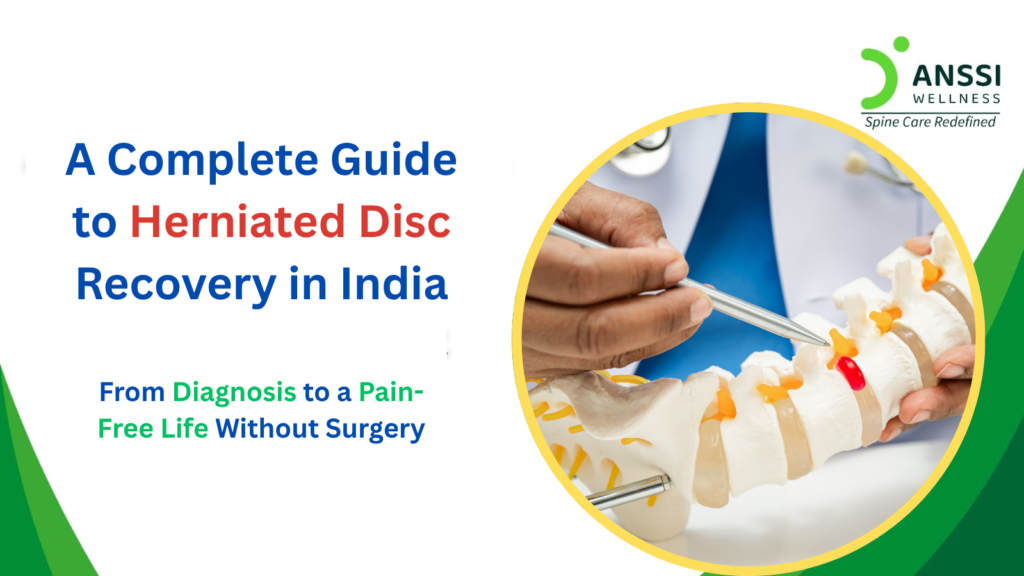
Being diagnosed with a herniated disc can be overwhelming. Many patients immediately worry about surgery, prolonged bed rest, or living with lifelong pain. Whether you are experiencing severe lower back pain, sciatica, neck pain, or pain radiating into your arms, understanding your condition is the first step toward recovery.
The good news is that surgery is not the only treatment option for every patient. With advances in diagnostic imaging, non-surgical spine rehabilitation, and personalised treatment programs, many people with disc herniations can achieve significant pain relief and regain their quality of life without surgery.
This guide explains the complete recovery journey, from diagnosis to long-term spinal health, and helps you understand when non-surgical treatment may be the right choice.
Understanding a Herniated Disc
Intervertebral discs, which serve as cushions and shock absorbers, lie between the vertebrae that make up the spine. Each disc contains a tough outer layer and a soft, gel-like centre.
A herniated disc occurs when the inner material pushes through a weakened outer layer. If the displaced disc material presses on nearby spinal nerves, it can cause pain, numbness, tingling, or muscle weakness.
Disc problems are commonly classified as:
- Disc Bulge: The disc extends beyond its normal boundary, but the outer layer remains intact.
- Disc Protrusion: The disc begins to push outward with a localised bulge.
- Disc Extrusion: The inner disc material breaks through the outer layer.
- Disc Sequestration: A fragment of disc material separates completely from the main disc.
The severity of symptoms depends not only on the size of the herniation but also on its location and the degree of nerve compression.
What Causes a Herniated Disc?
Several factors increase the risk of developing a herniated disc:
- Age-related disc degeneration
- Prolonged sitting and poor posture
- Heavy lifting with improper technique
- Repetitive bending and twisting
- Obesity
- Smoking
- Sedentary lifestyle
These factors gradually weaken the spinal discs, making them more susceptible to injury.
Step 1: Accurate Diagnosis is the Foundation of Recovery
Successful treatment begins with an accurate diagnosis.
A comprehensive clinical assessment includes:
- Detailed medical history
- Physical examination
- Neurological assessment
- Functional movement evaluation
MRI plays an essential role in identifying:
- The affected spinal level
- Disc herniation severity
- Nerve root compression
- Associated degenerative changes
However, MRI findings should always be interpreted alongside the patient’s symptoms and clinical examination. Some individuals have disc herniations on MRI without significant pain, while others experience severe symptoms from relatively small herniations.
Step 2: Choosing the Right Treatment Path
One of the biggest misconceptions is that every herniated disc requires surgery.
When Conservative Treatment May Be Appropriate
Many patients with mild to moderate disc herniations, and even some with larger herniations but without progressive neurological deficits, can improve through structured non-surgical treatment.
These patients often benefit from personalised rehabilitation aimed at reducing pain, improving spinal function, and restoring mobility.
When Surgery May Be Necessary
Surgery remains an important treatment option for selected patients, particularly those with:
- Progressive muscle weakness
- Severe neurological deficits
- Loss of bladder or bowel control (cauda equina syndrome)
- Persistent symptoms that do not improve despite appropriate conservative treatment
An experienced spine specialist can determine which treatment pathway is most appropriate based on the individual’s condition.
Why Consider Non-Surgical Spinal Decompression Treatment (NSSDT)?
One of the advanced treatment options incorporated into comprehensive rehabilitation programs is Non-Surgical Spinal Decompression Treatment (NSSDT).
How NSSDT Works
Using computer-controlled technology, NSSDT applies gentle, precisely controlled decompression forces to the affected spinal segment.
The treatment aims to:
- Reduce intradiscal pressure
- Create negative pressure within the disc
- Encourage retraction of bulging or herniated disc material
- Reduce pressure on compressed nerve roots
- Promote improved nutrient exchange and disc hydration
Rather than simply masking symptoms, the treatment is designed to address the structural factors contributing to pain.
Suitability for NSSDT is determined only after a thorough clinical assessment and MRI review.
The ANSSI Wellness Treatment Journey
At ANSSI Wellness, every patient’s recovery begins with a personalised evaluation.
The treatment pathway includes:
Comprehensive Assessment
Specialists review the patient’s symptoms, MRI findings, neurological status, lifestyle, and treatment goals.
Personalised Treatment Planning
Each rehabilitation program is tailored according to:
- Severity of the disc herniation
- Pain intensity
- Functional limitations
- Occupational demands
- Overall health
Integrated Rehabilitation
NSSDT is combined with evidence-based rehabilitation therapies such as:
- Physiotherapy
- Core strengthening
- Flexibility and mobility exercises
- Posture correction
- Ergonomic education
- Lifestyle modification
This multidisciplinary approach helps improve spinal stability while reducing the likelihood of symptom recurrence.
What to Expect During Recovery
Recovery is gradual, and every patient progresses differently.
- Weeks 1-3: Many patients begin noticing reductions in pain and improved comfort during everyday activities.
- Weeks 4-8: Mobility often improves further, nerve-related symptoms may reduce, and strength gradually returns.
- Two to Six Months: Patients continue restoring spinal function through rehabilitation exercises, improved posture, and healthier movement habits.
Recovery timelines depend on factors such as the severity of the herniation, general health, adherence to treatment, and occupational demands.
Maintaining Long-Term Spinal Health
Recovery does not end when pain disappears.
Maintaining a healthy spine requires long-term lifestyle changes, including:
- Regular exercise
- Maintaining a healthy body weight
- Good sitting posture
- Safe lifting techniques
- Ergonomic workstations
- Smoking cessation
- Continuing prescribed home exercise programs
These habits help reduce stress on the spine and minimise the risk of future disc problems.
Why Choose ANSSI Wellness?
ANSSI Wellness offers comprehensive non-surgical spine care through personalised rehabilitation programs designed around each patient’s diagnosis and recovery goals.
Patients receive:
- Detailed clinical evaluation
- MRI-guided treatment planning
- Advanced Non-Surgical Spinal Decompression Treatment
- Individualised physiotherapy
- Postural rehabilitation
- Long-term spinal health education
The focus is not simply on relieving pain but on addressing the structural causes contributing to symptoms and helping patients return to an active lifestyle safely.
About ANSSI:
ANSSI Wellness focuses on improving the quality of life for patients suffering from spinal issues, aiming to provide relief where other conventional treatments have failed. Through advanced Non-Surgical Spinal Decompression Treatment, ANSSI is committed to helping patients avoid surgery and recover in a safe, effective, and compassionate environment.
Book Consultation:
Call +91 9004726844 | 9920936844
Visit www.anssiwellness.com
Connect with ANSSI Wellness on LinkedIn, Instagram, and Facebook for expert guidance.
Clinical References:
- North American Spine Society. Evidence-based recommendations for the diagnosis and conservative and surgical management of lumbar disc herniation.
- National Institute for Health and Care Excellence. Clinical guideline covering assessment and non-surgical management of low back pain and sciatica related to disc pathology.
- Gose E., Ph.D, Naguszewski W., MD, Naguszewski R., MD. Vertebral Axial Decompression Therapy for Pain Associated with Herniated or Degenerated Discs or Facet Syndrome: An Outcome Study. Journal of Neurological Research, Volume 20, No 3, April 1998.
- Naguszewski W., MD, Naguszewski R., MD, Gose E., Ph.D. Dermatosomal Somatosensory Evoked Potential Demonstration of Nerve Root Decompression After VAX-D Therapy. Journal of Neurological Research Vol 23 , No 7, October 2001.