A diagnosis of Prolapsed Intervertebral Disc (PIVD) often raises many questions. Why has the pain started travelling into the leg or arm? Why are tingling, numbness, or weakness developing? Is it simply muscle pain, or is something more serious happening inside the spine?
The answer lies in the anatomy of the spinal discs and nerves. PIVD is one of the most common structural causes of chronic back pain, neck pain, sciatica, and cervical radiculopathy. As the prolapsed disc presses against nearby nerve roots, it produces symptoms that follow predictable nerve pathways throughout the body.
Understanding these symptoms can help patients seek a timely diagnosis and appropriate treatment before permanent nerve damage occurs.
Understanding PIVD
The spine is made up of vertebrae separated by intervertebral discs, which act as cushions between the bones. Each disc has a tough outer ring called the annulus fibrosus and a soft gel-like centre known as the nucleus pulposus.
A Prolapsed Intervertebral Disc (PIVD) develops when the outer layer weakens or tears, allowing the inner disc material to protrude outward. If this prolapsed disc material comes into contact with nearby spinal nerves, it can produce pain, inflammation, numbness, tingling, and muscle weakness.
The location of the prolapsed disc determines where symptoms appear.
Lumbar PIVD: How It Causes Lower Back Pain and Sciatica
The lumbar spine is the most common location for PIVD because it bears much of the body’s weight and experiences significant mechanical stress.
The two levels most frequently affected are:
- L4-L5
- L5-S1
How Nerve Compression Occurs
As disc material protrudes into the spinal canal or nerve exit pathways, it compresses the lumbar nerve roots responsible for supplying sensation and muscle function to the legs.
This compression causes both mechanical irritation and inflammation, resulting in the familiar symptoms of sciatica.
Common Symptoms of Lumbar PIVD
Persistent Lower Back Pain
Patients often experience pain that worsens while sitting, bending forward, lifting objects, or coughing.
Sciatica
Pain radiates from the lower back into the buttock and travels down the back or side of the leg. The severity may range from a dull ache to sharp, electric shock-like pain.
Tingling and Numbness
Compression of sensory nerve fibres produces numbness or tingling in specific areas of the leg or foot.
Muscle Weakness
When motor nerve fibres become compressed, patients may notice weakness while walking, climbing stairs, or standing on their toes.
Symptom Distribution by Nerve Root
The location of symptoms often helps specialists identify which nerve root has been affected.
- L4 Nerve Root: Compression may produce pain in the front of the thigh and weakness while straightening the knee.
- L5 Nerve Root: Patients commonly experience pain along the outer leg extending towards the top of the foot and big toe, accompanied by difficulty lifting the foot or toes.
- S1 Nerve Root: Pain usually travels down the back of the leg into the heel or outer foot. Patients may also have difficulty standing on their toes due to calf muscle weakness.
Recognising these dermatomal patterns helps clinicians accurately localise the structural source of nerve compression.
Cervical PIVD: How It Causes Neck Pain and Arm Symptoms
A prolapsed disc can also occur in the cervical spine, particularly at:
- C5-C6
- C6-C7
These levels are especially vulnerable because they support considerable movement while bearing the weight of the head.
Structural Mechanism
When cervical disc material protrudes, it narrows the space available for exiting nerve roots.
The compressed nerves then produce symptoms extending beyond the neck into the shoulders, arms, and hands.
Common Symptoms of Cervical PIVD
Patients may experience:
- Chronic neck pain
- Shoulder pain
- Pain radiating into the arm
- Tingling and numbness
- Reduced grip strength
- Difficulty performing fine hand movements
- Muscle weakness
Symptoms often worsen during prolonged computer work, driving, or looking downward for extended periods.
Dermatomal Symptom Patterns
Different cervical nerve roots produce characteristic symptom patterns.
- C6 Nerve Root: Compression commonly causes pain and numbness extending into the thumb and index finger.
- C7 Nerve Root: Patients often experience symptoms radiating into the middle finger, together with weakness during pushing movements.
These predictable neurological patterns help guide both diagnosis and treatment planning.
Red Flag Symptoms That Require Immediate Medical Attention
Although many patients improve with appropriate treatment, certain symptoms require urgent specialist evaluation.
These include:
- Progressive muscle weakness
- Weakness affecting both legs
- Loss of bladder or bowel control
- Numbness around the groin or saddle region
- Rapidly worsening neurological symptoms
These warning signs may indicate severe nerve compression requiring immediate medical assessment.
Diagnosing PIVD
Accurate diagnosis is essential before selecting any treatment.
A comprehensive evaluation includes:
Clinical Examination
The specialist evaluates:
- Pain location
- Muscle strength
- Reflexes
- Sensory changes
- Walking pattern
- Spinal movement
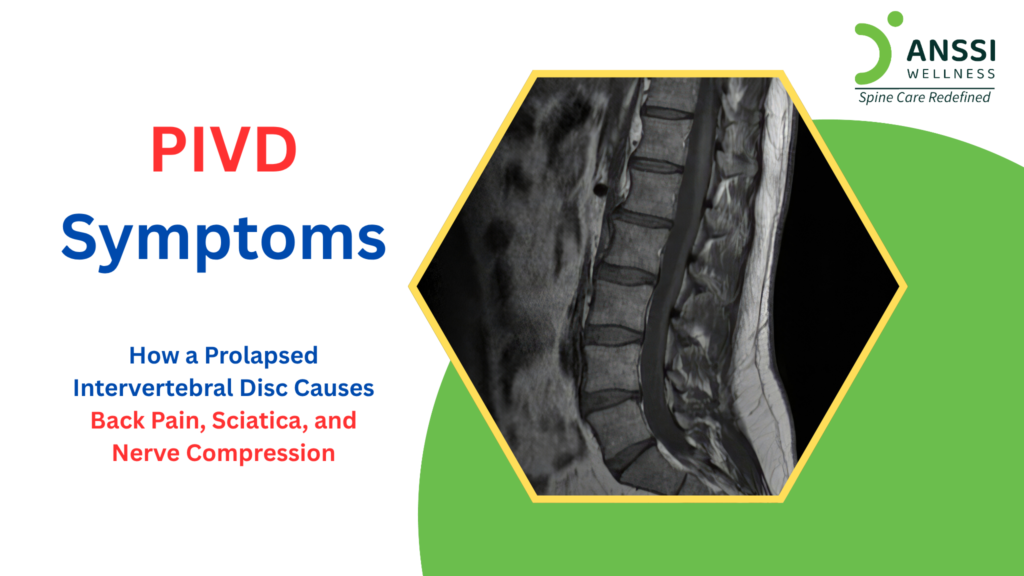
MRI Assessment
MRI is the preferred imaging method because it clearly demonstrates:
- Disc prolapse
- Nerve root compression
- Disc degeneration
- Spinal canal narrowing
- Severity of the condition
Combining MRI findings with clinical examination enables accurate treatment planning.
Treating the Structural Cause
Many patients initially rely on pain medication or repeated physiotherapy sessions.
While these approaches may reduce symptoms temporarily, they do not always address the structural problem responsible for ongoing nerve compression. Long-term improvement often depends on reducing pressure on the affected spinal nerves.
Non-Surgical Spinal Decompression Treatment (NSSDT)
Modern spine rehabilitation programs may incorporate Non-Surgical Spinal Decompression Treatment (NSSDT) for appropriately selected patients with lumbar or cervical PIVD.
How NSSDT Works
Using computer-controlled technology, NSSDT gently applies decompression forces to the affected spinal segments.
The treatment aims to:
- Reduce pressure within the damaged disc
- Create negative intradiscal pressure
- Encourage partial retraction of prolapsed disc material
- Reduce compression of affected nerve roots
- Improve nutrient exchange and disc hydration
By addressing the structural factors contributing to nerve irritation, the treatment seeks to reduce both spinal pain and neurological symptoms.
Suitability for NSSDT depends on the patient’s clinical condition, MRI findings, and overall medical assessment.
Comprehensive Rehabilitation
At ANSSI Wellness, NSSDT forms part of an individualised rehabilitation program that may include:
- Physiotherapy
- Core strengthening
- Flexibility exercises
- Postural correction
- Ergonomic advice
- Lifestyle modification
This multidisciplinary approach aims to improve spinal function while helping reduce the risk of symptom recurrence.
Benefits of Early Treatment
Patients receiving timely treatment may experience:
- Reduced back and neck pain
- Relief from sciatica or cervical radiculopathy
- Improved muscle strength
- Better mobility
- Reduced dependence on long-term pain medication
- Potential avoidance of surgery in appropriately selected patients
Early diagnosis also reduces the likelihood of progressive nerve damage and long-term disability.
About ANSSI:
ANSSI Wellness focuses on improving the quality of life for patients suffering from spinal issues, aiming to provide relief where other conventional treatments have failed. Through advanced Non-Surgical Spinal Decompression Treatment, ANSSI is committed to helping patients avoid surgery and recover in a safe, effective, and compassionate environment.
Book Consultation:
Call +91 9004726844 | 9920936844
Visit www.anssiwellness.com
Connect with ANSSI Wellness on LinkedIn, Instagram, and Facebook for expert guidance.
Clinical References:
- Kreiner DS et al. North American Spine Society. An evidence-based clinical guideline for the diagnosis and treatment of lumbar disc herniation with radiculopathy. Spine J. 2014 Jan;14(1):180-91.
- Yasuma, T; Koh, S; Okamura, T; Yamauchi, Y. Histological changes in aging lumbar intervertebral discs. Their role in protrusions and prolapses.. The Journal of Bone & Joint Surgery 72(2):p 220-229, Feb 1990.
- Gose E., Ph.D, Naguszewski W., MD, Naguszewski R., MD. Vertebral Axial Decompression Therapy for Pain Associated with Herniated or Degenerated Discs or Facet Syndrome: An Outcome Study. Journal of Neurological Research, Volume 20, No 3, April 1998.
- Naguszewski W., MD, Naguszewski R., MD, Gose E., Ph.D. Dermatosomal Somatosensory Evoked Potential Demonstration of Nerve Root Decompression After VAX-D Therapy. Journal of Neurological Research Vol 23 , No 7, October 2001.