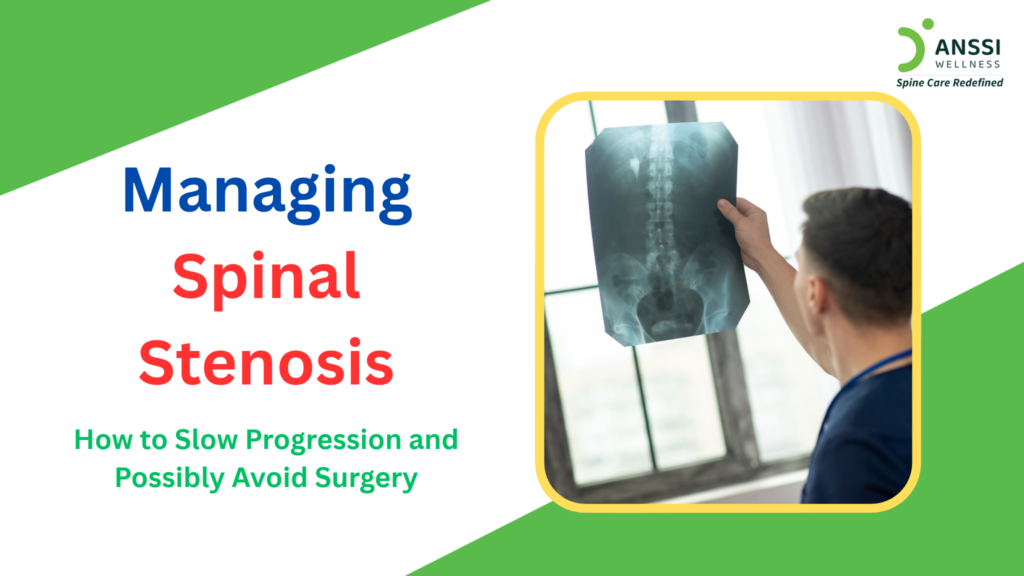
A diagnosis of spinal stenosis can raise concerns about worsening pain, reduced mobility, and the possibility of surgery.
Spinal stenosis occurs when the spaces within the spine narrow, potentially putting pressure on the spinal cord or nearby nerves. It commonly affects the lower back (lumbar stenosis) or neck (cervical stenosis) and can cause pain, numbness, tingling, weakness, or difficulty walking.
Although age-related degenerative changes cannot always be reversed, appropriate management can help reduce symptoms, maintain mobility, and improve quality of life. Many patients can initially explore non-surgical treatment, depending on the severity of their condition and neurological symptoms.
What Causes Spinal Stenosis to Progress?
Spinal stenosis commonly develops because of age-related changes involving the intervertebral discs, spinal joints, and ligaments.
- Degenerating discs may lose height or bulge, joints may develop bony growths called osteophytes, and ligaments may thicken. These changes can reduce the space available for spinal nerves.
- Other contributing factors include spinal arthritis, spondylolisthesis, previous injuries, and congenital narrowing of the spinal canal.
Symptoms vary considerably.
- Some people have narrowing visible on an MRI but experience few problems, while others develop persistent back or neck pain, leg discomfort, numbness, or weakness.
- In lumbar stenosis, symptoms may worsen while standing or walking and improve when sitting or leaning forward.
Because the severity of symptoms does not always correspond directly to the degree of narrowing on an MRI, management should be based on clinical assessment rather than imaging alone.
1. Modify Daily Activities to Reduce Spinal Stress
Your daily habits can influence how comfortably you move and manage spinal stenosis symptoms.
- Avoid remaining in one position for extended periods.
- If your work involves prolonged sitting, take regular movement breaks and adjust your workstation to support a comfortable posture.
- When standing for long periods aggravates symptoms, alternate between sitting, standing, and gentle movement.
- Use safe lifting techniques, avoid sudden twisting while carrying heavy objects, and gradually increase activity according to your tolerance.
- If walking causes discomfort, shorter, more frequent walks may be more manageable than one long walk.
For people with lumbar stenosis:
- Slightly bending forward may provide temporary relief because this position can increase the available space in parts of the spinal canal.
- However, the most comfortable position varies by individual and should be decided with a professional assessment.
2. Follow a Safe, Individualised Exercise Routine
Exercise is an important part of managing spinal stenosis. Appropriate movement can improve muscle strength, flexibility, balance, and overall physical conditioning.
A physiotherapist may recommend:
- Gentle mobility exercises suited to your symptoms.
- Core and trunk strengthening to support spinal function.
- Hip and leg strengthening to improve walking and everyday activities.
- Stationary cycling or other low-impact activities that you can tolerate.
- Balance exercises to support stability and reduce fall risk.
For lumbar stenosis, some patients tolerate cycling or exercises performed in a slightly forward-bent position better than prolonged upright walking. However, exercise selection must account for the location and severity of the narrowing.
Important to note:
- Avoid exercises that consistently worsen pain, produce increasing numbness, or trigger weakness.
- People with cervical stenosis, particularly those with signs of spinal cord involvement, should seek professional guidance before beginning neck exercises or manipulation.
3. Support Spinal Health Through Nutrition
No specific food or supplement can reopen a narrowed spinal canal or reverse established spinal stenosis. Nevertheless, good nutrition supports muscle function, bone health, and general well-being.
- Include adequate protein from foods such as pulses, dairy products, eggs, fish, or other suitable sources to support muscle maintenance.
- Calcium-rich foods and sufficient vitamin D are important for bone health, particularly in older adults and people at risk of osteoporosis.
- Maintaining a healthy body weight may also reduce the physical demands placed on the spine during everyday activities.
- If weight management is appropriate for you, gradual dietary changes combined with tolerable physical activity are generally more sustainable than restrictive diets.
Consult a doctor before taking high-dose supplements, especially if you have other medical conditions or use regular medication.
4. Can Non-Surgical Spinal Decompression Help?
For patients looking to manage spinal symptoms without surgery, Non-Surgical Spinal Decompression Treatment (NSSDT) is one option that may be considered in selected cases.
- NSSDT uses a computer-regulated treatment table and harness to apply controlled decompression forces to specific spinal segments.
- The intended goal is to reduce mechanical stress and potentially help relieve symptoms associated with certain disc-related conditions.
- It may be incorporated into an individualised program alongside physiotherapy, strengthening exercises, posture guidance, and activity modification.
However, it is important to understand that NSSDT has not been established as a way to reverse spinal canal narrowing or reliably remove nerve compression caused by bony overgrowth, thickened ligaments, or advanced degenerative changes.
A proper clinical assessment is essential to determine whether spinal decompression is appropriate, particularly when MRI findings indicate significant narrowing or symptoms suggest nerve or spinal cord involvement.
When is Surgery Necessary?
Non-surgical treatment may help manage symptoms, but avoiding surgery should not become the primary goal when an operation is medically necessary.
- Progressive muscle weakness, worsening walking ability, or signs of spinal cord compression require prompt specialist evaluation.
- New bladder or bowel dysfunction, numbness around the saddle area, or rapidly worsening neurological symptoms require emergency medical assessment.
- Surgery may be recommended when symptoms remain disabling despite appropriate conservative care or when significant neurological impairment makes decompression necessary.
- The decision depends on the diagnosis, symptoms, examination, imaging, and overall health.
About ANSSI:
ANSSI Wellness focuses on improving the quality of life for patients suffering from spinal issues, aiming to provide relief where other conventional treatments have failed. Through advanced Non-Surgical Spinal Decompression Treatment, ANSSI is committed to helping patients avoid surgery and recover in a safe, effective, and compassionate environment.
Book Consultation:
Call +91 9004726844 | 9920936844
Visit www.anssiwellness.com
Connect with ANSSI Wellness on LinkedIn, Instagram, and Facebook for expert guidance.