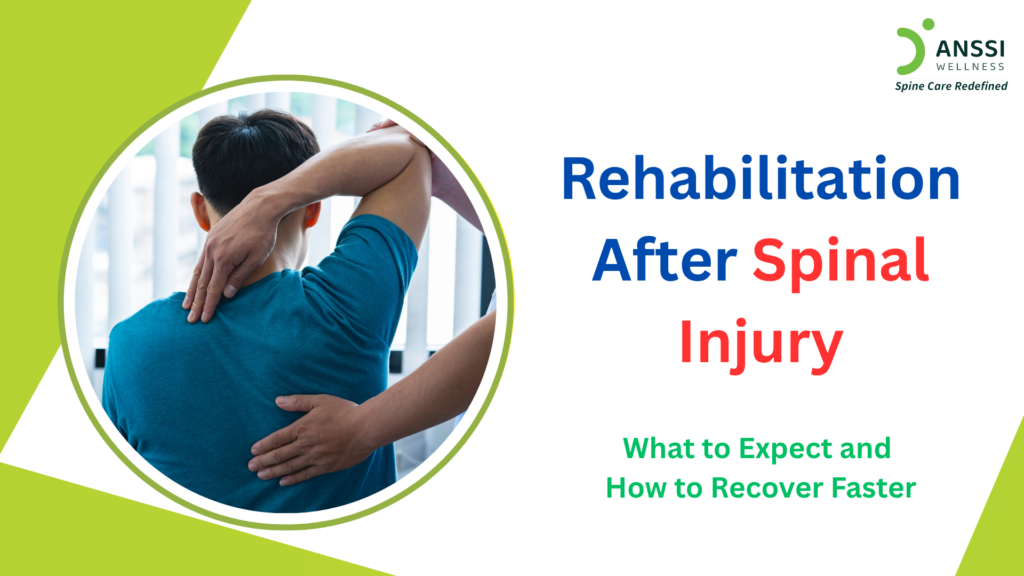
A spinal injury can change the way a person moves, works, exercises, sleeps, and performs everyday activities. While spinal injuries are commonly associated with road accidents, falls, or sports injuries, they can affect many different people. Office workers, manual labourers, athletes, older adults, and even people who experience repetitive strain or improper lifting can develop spinal problems.
One possible consequence of spinal trauma or excessive spinal loading is damage to the intervertebral discs. Disc bulges and slipped discs can sometimes develop or become symptomatic following an injury. With appropriate diagnosis and rehabilitation, many disc-related conditions can be managed without surgery.
Understanding what recovery involves is an important first step.
Common Occurrence of a Spinal Injury
Spinal injuries can happen in several situations. A road traffic accident or fall can place sudden force on the spine. Athletes may experience injuries during contact sports, weightlifting, running, or sudden movements. People involved in physically demanding jobs may repeatedly lift, bend, or twist their spine.
Even people working at desks are not completely protected. Sitting for prolonged periods, poor ergonomics, inadequate physical activity, and repetitive movements can contribute to back and neck problems.
The severity of an injury can vary considerably. Some people experience temporary muscle or ligament strain, while others may develop disc-related problems or nerve compression.
Disc Bulge and Slipped Discs After Injury
The spinal discs are flexible structures positioned between the vertebrae. They help absorb forces and allow movement between the spinal bones.
A disc bulge occurs when a disc extends beyond its usual boundary. A disc herniation or slipped disc occurs when a portion of the disc material protrudes through a weakened or damaged area.
Trauma may contribute to disc injury in some individuals. However, disc abnormalities can also develop gradually because of degeneration, repetitive loading, age-related changes, or other factors. Importantly, an abnormality seen on an MRI does not automatically mean that it is responsible for a person’s pain. Imaging findings need to be considered alongside symptoms and clinical examination.
When a disc problem irritates or compresses a nearby nerve, symptoms may include lower back or neck pain, pain travelling into the leg or arm, tingling, numbness, or weakness.
How Can a Spinal Injury Affect Your Life?
The impact of a spinal injury can extend far beyond physical pain.
- Persistent symptoms may make it difficult to sit through a workday, drive, climb stairs, exercise, sleep comfortably, or perform household activities.
- Someone who previously enjoyed sports may stop exercising because of pain.
- A professional may find it difficult to concentrate at work because prolonged sitting increases discomfort.
- Even simple activities such as bending down, getting out of bed, or picking up an object can become challenging.
For these reasons, rehabilitation is not simply about reducing pain. It is also about helping a person gradually restore movement, strength, confidence, and participation in everyday life.
Can Medication Provide Long-Term Relief?
Medication may be useful for managing pain and inflammation during certain stages of recovery. However, medicines primarily address symptoms and do not necessarily correct an underlying disc bulge, herniation, mechanical problem, or contributing lifestyle factor.
Repeatedly relying on medication without addressing the underlying cause may therefore provide an incomplete long-term strategy. Treatment should instead be based on an appropriate diagnosis and an individual’s symptoms and functional limitations.
What About Surgery?
Surgery can be an important and sometimes necessary treatment for serious spinal conditions. However, it is not automatically required for every person with a disc bulge or herniation.
Depending on the procedure, spinal surgery can involve risks including infection, bleeding, anaesthesia-related complications, nerve or spinal cord injury, persistent symptoms, and the possibility of requiring additional treatment or surgery.
The decision should therefore be made after appropriate medical evaluation, particularly when neurological symptoms are present.
Non-Surgical Rehabilitation for Disc Problems
For appropriately selected patients, rehabilitation can form an important part of managing disc-related spinal problems.
Physiotherapy can help improve flexibility, mobility, muscle strength, posture, and functional movement. A physiotherapist may progressively introduce exercises according to the patient’s condition rather than placing excessive stress on an injured area.
Ice or cold therapy may be used during appropriate stages to help manage pain and swelling. It should be applied safely and according to professional guidance.
Lifestyle changes are equally important. Improving workplace ergonomics, avoiding inappropriate lifting, maintaining healthy body weight, gradually increasing physical activity, correcting poor movement habits, and following a structured exercise program can help reduce unnecessary stress on the spine.
Role of Non-Surgical Spinal Decompression Treatment
Another option that may be considered for selected patients with certain disc-related conditions is Non-Surgical Spinal Decompression Treatment (NSSDT).
NSSDT uses controlled, computer-regulated forces to provide targeted decompression of selected spinal segments. The approach is intended to reduce mechanical loading on the affected area and support the management of appropriate disc-related conditions.
NSSDT may be incorporated into a personalised rehabilitation program along with physiotherapy and other supportive measures. Treatment duration and intensity can vary according to the patient’s diagnosis, symptoms, progress, and clinical requirements.
Non-Surgical Spinal Decompression Treatment is not suitable for every spinal injury and cannot guarantee that surgery will be avoided. Proper assessment is essential before considering any treatment.
When is Surgery Necessary?
Some spinal conditions cannot safely be managed with non-surgical treatment alone. Progressive neurological weakness, significant spinal cord compression or myelopathy, spinal instability, certain fractures, tumours, infections, or severe nerve compression causing emergency symptoms may require surgical evaluation.
New loss of bladder or bowel control, numbness around the groin or saddle region, or rapidly progressing weakness can indicate a medical emergency and require immediate attention.
About ANSSI:
ANSSI Wellness focuses on improving the quality of life for patients suffering from spinal issues, aiming to provide relief where other conventional treatments have failed. Through advanced Non-Surgical Spinal Decompression Treatment, ANSSI is committed to helping patients avoid surgery and recover in a safe, effective, and compassionate environment.
Book Consultation:
Call +91 9004726844 | 9920936844
Visit www.anssiwellness.com
Connect with ANSSI Wellness on LinkedIn, Instagram, and Facebook for expert guidance.
Clinical References:
- Hoy D, Bain C, Williams G, et al. A systematic review of the global prevalence of low back pain. Arthritis & Rheumatism. 2012;64(6):2028-2037.
- Adams MA, Hutton WC. Prolapsed intervertebral disc: a hyperflexion injury. Spine. 1982;7(3):184-191.
- Dahm KT, Brurberg KG, Jamtvedt G, Hagen KB. Advice to rest in bed versus advice to stay active for acute low back pain and sciatica. Cochrane Database of Systematic Reviews. 2010;(6):CD007612.
- Gose E., Ph.D, Naguszewski W., MD, Naguszewski R., MD. Vertebral Axial Decompression Therapy for Pain Associated with Herniated or Degenerated Discs or Facet Syndrome: An Outcome Study. Journal of Neurological Research, Volume 20, No 3, April 1998.
- Naguszewski W., MD, Naguszewski R., MD, Gose E., Ph.D. Dermatosomal Somatosensory Evoked Potential Demonstration of Nerve Root Decompression After VAX-D Therapy. Journal of Neurological Research Vol 23 , No 7, October 2001.