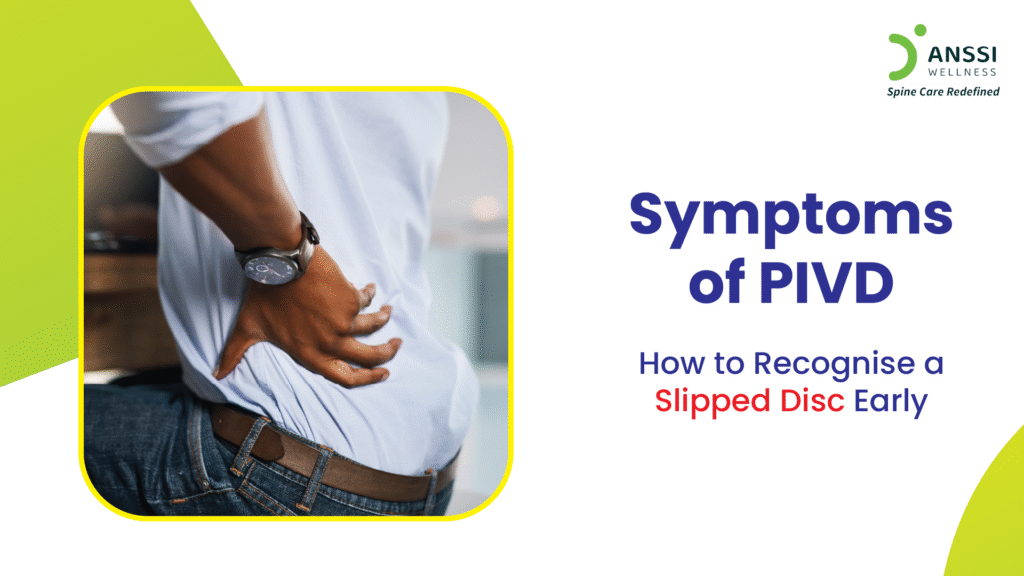
Back pain is one of the most common health complaints worldwide, but sometimes, it’s more than just muscle strain. A condition known as PIVD (Prolapsed Intervertebral Disc), commonly called a slipped or herniated disc, can cause persistent pain, numbness, or weakness that affects daily life.
Recognising the early signs of PIVD is essential for timely treatment and preventing long-term spinal complications.
What is PIVD?
Your spine is made up of vertebrae (bones) stacked one over another, separated by soft, cushion-like discs called intervertebral discs. These discs act as shock absorbers, allowing flexibility, bending, and twisting without friction between bones.
Each disc has two parts: a tough outer layer (annulus fibrosus) and a soft, gel-like centre (nucleus pulposus). When this outer layer weakens or tears, the inner material may bulge or leak out in a process known as disc prolapse or herniation. The displaced material can press on nearby spinal nerves, causing pain, numbness, or weakness.
PIVD can occur in any part of the spine, but it is most common in the lumbar (lower back) and cervical (neck) regions due to the constant stress these areas bear during daily activities.
What Are the Key Symptoms of a Slipped Disc?
A slipped disc can cause a range of symptoms depending on its location and severity. Understanding these warning signs can help you seek medical help before the condition worsens.
1. Localised Back or Neck Pain
The most common symptom of a slipped disc is pain in the affected area, either the lower back or neck. The pain may worsen with certain movements like bending, lifting, or sitting for long periods. In the case of a lumbar disc issue, pain is usually felt in the lower back and buttocks, while a cervical disc issue can cause discomfort in the neck and shoulders.
2. Radiating Pain (Lumbar or Cervical Radiculopathy)
When a herniated disc compresses a spinal nerve, the pain may radiate to other parts of the body.
- In lumbar PIVD, the pain travels down the leg, occasionally resulting in sciatica. It may feel like a sharp, shooting, or burning pain that follows the path of the irritated nerve.
- In cervical PIVD, the pain may radiate down the arm or shoulder, known as cervical radiculopathy.
3. Numbness and Tingling
A common but often ignored symptom is numbness or a tingling sensation (pins and needles) in the limbs. This occurs because the herniated disc presses on nerves responsible for sensory functions. Persistent numbness should never be ignored, as it may indicate ongoing nerve compression.
4. Muscle Weakness
When nerve compression continues for an extended period, it can affect muscle strength. You may notice difficulty in lifting objects, gripping, or walking properly. Some people experience a “foot drop,” where the foot drags while walking due to weakened muscles.
5. Postural Changes and Restricted Movement
People with PIVD often develop a compensatory posture to reduce pain, such as leaning to one side or avoiding certain movements. Over time, this altered posture can lead to muscle imbalances and further strain on the spine.
When to Seek Medical Help?
While occasional back or neck pain may seem harmless, it’s crucial to differentiate between minor strain and a potential disc problem. You should seek immediate medical attention if you experience:
- Severe pain that does not improve with rest or basic treatment.
- Numbness or tingling that spreads down your arms or legs.
- Weakness that affects walking or lifting.
- Loss of bladder or bowel control (signs of a rare but serious condition called cauda equina syndrome).
Early diagnosis through physical examination and imaging (like MRI) allows for timely, effective, and non-surgical treatment. Ignoring symptoms can lead to chronic nerve compression and long-term disability.
What Are the Non-Surgical Treatment Options for PIVD?
Most cases of PIVD do not require surgery. With proper care, lifestyle modifications, and targeted therapy, pain relief and recovery are possible without invasive procedures.
Physiotherapy
A structured physiotherapy program helps relieve pain, improve flexibility, and strengthen spinal muscles. Techniques such as stretching, core strengthening, and posture correction exercises promote healing and prevent recurrence.
Ice and Heat Therapy
Alternating ice and heat can help reduce inflammation and relax tight muscles. Ice packs minimise swelling in the initial phase, while heat improves blood flow and eases stiffness.
Non-Surgical Spinal Decompression Treatment
One of the most effective modern treatments for PIVD is non-surgical spinal decompression treatment. This advanced, computer-controlled treatment gently stretches the spine, relieving pressure on the compressed discs and nerves. It promotes natural rehydration and healing of the affected discs, restoring normal spinal alignment and function.
Non-surgical spinal decompression treatment is completely non-invasive, drug-free, and safe, making it ideal for individuals who want to avoid surgery or long-term medication.
Posture and Ergonomic Correction
Adjusting daily habits, such as sitting posture, sleeping position, and lifting techniques, can significantly reduce spinal stress. Using lumbar support cushions, maintaining a straight back, and avoiding prolonged sitting contribute significantly to protecting your spine.
Lifestyle and Nutrition
Staying hydrated, maintaining a healthy weight, and consuming nutrient-rich foods (especially those high in calcium, vitamin D, and antioxidants) support spinal health and disc integrity.
What Are the Long-Term Care Strategies for PIVD?
Once you’ve recovered from a slipped disc, preventing recurrence should be your next focus.
- Regular exercise, mindful posture, and spine-friendly habits can keep your discs healthy.
- Avoid smoking and prolonged inactivity, as both can accelerate disc degeneration.
About ANSSI:
ANSSI Wellness focuses on improving the quality of life for patients suffering from spinal issues, aiming to provide relief where other conventional treatments have failed. Through advanced Non-Surgical Spinal Decompression Treatment, ANSSI is committed to helping patients avoid surgery and recover in a safe, effective, and compassionate environment.
Connect with ANSSI Wellness on LinkedIn, Instagram, and Facebook for expert guidance.