
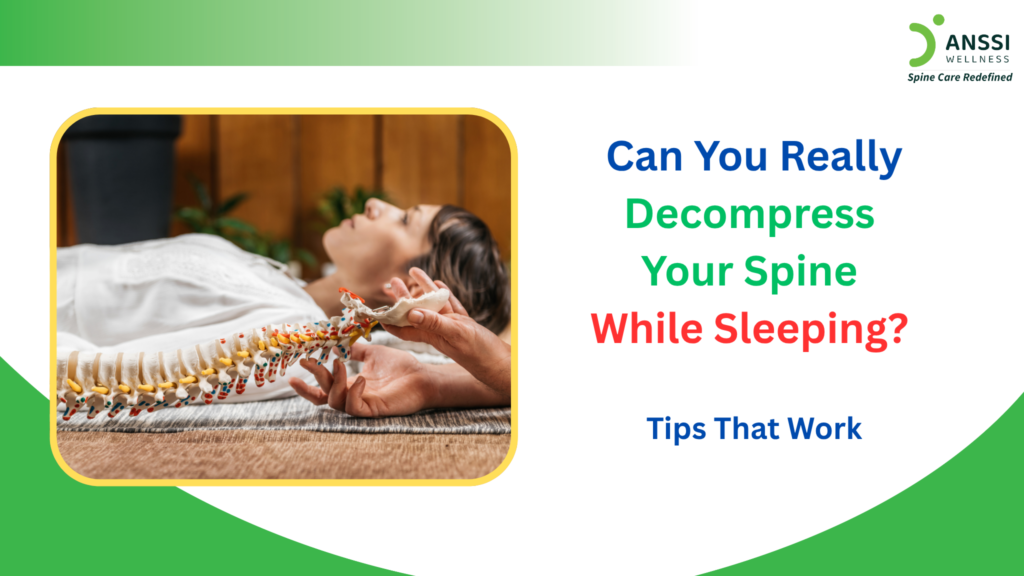
A good night’s sleep is essential not just for overall health, but also for maintaining a healthy spine. Many people believe that the spine naturally “rests” and recovers during sleep. But can your spine actually decompress while you sleep? The answer, at least partially, is yes.
While sleep does reduce pressure on the spine, the way you sleep plays a crucial role in how effective this natural decompression really is. By adopting the right habits, you can significantly improve spinal health and reduce back and neck pain.
What Happens to Your Spine During Sleep
Throughout the day, your spine is constantly under pressure due to gravity, especially if you spend long hours sitting or standing. This pressure compresses the spinal discs, which act as cushions between your vertebrae.
When you lie down to sleep, the effect of gravity is reduced, allowing the spine to relax and slightly decompress. This process helps the discs rehydrate and recover. In fact, this is why many people feel slightly taller in the morning!
However, this natural decompression is only effective if your sleeping posture supports proper spinal alignment. Poor sleeping positions can continue to strain the spine, limiting its ability to recover overnight.
Common Mistakes That Prevent Proper Spinal Relief
Many people unknowingly adopt sleep habits that do more harm than good for their spines. Here are some common mistakes:
1. Using the Wrong Mattress
A mattress that is too soft can cause your body to sink, leading to poor spinal alignment. On the other hand, a mattress that is too hard may not provide adequate support to the natural curves of your spine.
2. Poor Pillow Support
An improper pillow can strain your neck, especially if it is too high or too flat. This can lead to stiffness and neck pain upon waking.
3. Incorrect Sleeping Positions
Sleeping on your stomach is one of the worst positions for your spine, as it forces your neck into an unnatural angle and increases pressure on your lower back.
These factors can prevent your spine from properly decompressing, leading to persistent discomfort.
Tips to Improve Spinal Decompression While Sleeping
The good news is that small changes in your sleep setup and habits can make a big difference. Here are some practical and proven tips:
1. Choose the Right Mattress
Opt for a medium-firm mattress that provides adequate support while maintaining comfort. This helps keep your spine in a neutral position throughout the night.
2. Use Ergonomic Pillows
Your pillow should support the natural curve of your neck. For back sleepers, a thinner pillow works best, while side sleepers may need a slightly thicker one to maintain alignment.
3. Adopt the Best Sleeping Positions
- Sleeping on your back: Place a pillow under your knees to reduce pressure on the lower back.
- Sleeping on your side: Keep a pillow between your knees to align your hips and spine.
Both positions help maintain proper spinal alignment and support natural decompression.
4. Maintain Consistent Posture
Try to maintain a consistent sleeping posture throughout the night. Frequent tossing and turning can disrupt spinal alignment.
5. Stretch Before Bed
Gentle stretching exercises before sleep can relax tight muscles and reduce tension in the spine, making it easier for your body to recover overnight.
When Sleep Alone is Not Enough
While proper sleep habits can significantly improve spinal health, they may not be sufficient for individuals with chronic conditions such as a slipped disc, sciatica, or severe back pain.
In such cases, the spine may require targeted treatment to relieve pressure on discs and nerves. Relying solely on sleep may not address the root cause of the problem.
In clinics like ANSSI Wellness, advanced non-surgical treatments like spinal decompression are used to provide effective relief. This treatment works by gently stretching the spine in a controlled manner, reducing pressure on affected areas and promoting natural healing.
About ANSSI:
ANSSI Wellness focuses on improving the quality of life for patients suffering from spinal issues, aiming to provide relief where other conventional treatments have failed. Through advanced Non-Surgical Spinal Decompression Treatment, ANSSI is committed to helping patients avoid surgery and recover in a safe, effective, and compassionate environment.
Connect with ANSSI Wellness on LinkedIn, Instagram, and Facebook for expert guidance.