
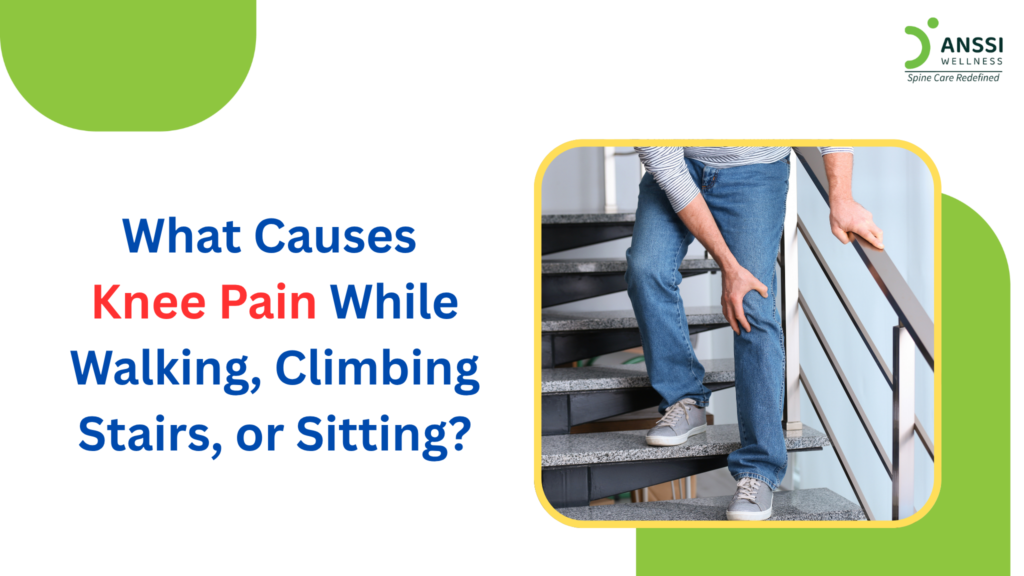
Knee pain is one of the most common joint-related problems affecting adults of all ages. Many people experience discomfort while performing simple daily activities such as walking, climbing stairs, or getting up after sitting for a long time. While occasional pain may result from temporary strain, persistent knee pain should never be ignored.
The knee is one of the most heavily used joints in the body, supporting body weight and movement throughout the day. Repetitive stress, ageing, poor posture, injuries, and lifestyle habits can gradually damage the knee joint and surrounding tissues.
Understanding the exact cause of pain is important for effective treatment and long-term relief.
Why Does Knee Pain Occur During Walking?
Walking places continuous pressure on the knee joints. When the joint structures are healthy, movement remains smooth and pain-free. However, when cartilage wears down or surrounding tissues become inflamed, walking can become uncomfortable.
- One of the most common causes is osteoarthritis, where the cartilage cushioning the knee gradually degenerates. This leads to friction between bones, causing pain, stiffness, and swelling.
- Ligament strain, muscle weakness, and overuse injuries can also contribute to knee pain during walking. Some individuals experience instability or a feeling that the knee may “give way” while moving.
- Runner’s knee and tendon irritation are other common reasons for pain during walking, especially among active individuals or those who stand for long hours.
If pain continues for weeks or begins affecting mobility, a medical evaluation becomes necessary.
Knee Pain While Climbing Stairs: What It May Indicate
Climbing stairs places greater stress on the knees compared to walking on flat surfaces. The kneecap and surrounding muscles must work harder to support body weight during upward or downward movement.
- Pain while climbing stairs is often associated with patellofemoral pain syndrome, commonly known as “runner’s knee.” In this condition, the kneecap does not move smoothly over the joint surface, causing discomfort and irritation.
- Arthritis is another common cause, particularly in middle-aged and elderly individuals. As cartilage wears away, bending the knee during stair climbing becomes painful.
- Inflammation of tendons around the knee joint may also cause sharp pain while using stairs. Knee soreness can be made worse by weak thigh muscles and misaligned joints.
Many patients notice difficulty bending the knee fully or weakness while climbing stairs. These symptoms should not be ignored, especially if they worsen over time.
Why Knee Pain Happens While Sitting or Standing Up
Some people experience knee stiffness and pain after sitting for long periods, especially when standing up suddenly. This is often referred to as “startup pain.”
- One common reason is early-stage arthritis, where inflammation and joint stiffness increase during inactivity. When movement resumes, the knee feels painful until the joint loosens up.
- Poor circulation, muscle weakness, and reduced flexibility can also contribute to discomfort after prolonged sitting. In some cases, sitting with incorrect posture or keeping the knees bent for extended periods increases joint stress.
- People with cartilage damage or inflammation inside the knee joint may feel clicking sensations or tightness while getting up from a chair.
If these symptoms occur regularly, it may indicate underlying knee degeneration that requires professional assessment.
Other Symptoms That Should Not Be Ignored
Knee pain is often accompanied by additional symptoms that help identify the underlying condition.
- Swelling around the knee joint is a common sign of inflammation or fluid buildup.
- Some individuals hear clicking or grinding sounds while moving the knee.
- Others may experience a locking sensation where the knee temporarily gets stuck during movement.
- Redness, warmth, and severe pain may indicate more advanced inflammation or injury.
- Weakness and reduced balance can also occur if the supporting muscles are affected.
- Pain that gradually worsens, limits mobility, or interferes with daily activities should not be ignored.
Early medical consultation can help prevent long-term joint damage.
Diagnosis and Non-Surgical Treatment Options
Accurate diagnosis is essential for identifying the root cause of knee pain. A specialist typically begins with a clinical examination to evaluate movement, swelling, alignment, and joint stability.
Imaging tests such as X-rays and MRI scans may be recommended to assess cartilage damage, arthritis, ligament injuries, or inflammation inside the knee joint.
In many cases, knee pain can be effectively treated without surgery.
Physiotherapy and Strengthening Exercises
Guided exercises help strengthen the muscles around the knee, improve flexibility, and reduce stress on the joint.
Stronger muscles provide better support and stability, helping reduce pain during walking, stair climbing, and other daily activities.
Lifestyle Changes and Weight Management
Maintaining a healthy body weight significantly reduces pressure on the knees. Even small weight loss can improve mobility and decrease pain.
Regular movement, proper footwear, posture correction, and avoiding prolonged sitting also support better knee health.
Advanced Non-Surgical Knee Treatments
Advanced non-surgical treatments can help reduce inflammation, improve joint function, and support long-term recovery. Treatments such as knee decompression focus on addressing the root cause rather than simply masking symptoms.
Patients often benefit from a combination of rehabilitation, strengthening, and personalised treatment plans designed according to their condition.
Book Consultation
Call +91 9004726844 | 9920936844
Visit www.anssiwellness.com
References:
- King LK, Kendzerska T, Waugh EJ, Hawker GA. Impact of Osteoarthritis on Difficulty Walking: A Population-Based Study. Arthritis Care Res (Hoboken). 2018 Jan;70(1):71-79. doi: 10.1002/acr.23250. Epub 2017 Dec 15. PMID: 28513082.
- Goudakos IG, König C, Schöttle PB, Taylor WR, Singh NB, Roberts I, Streitparth F, Duda GN, Heller MO. Stair climbing results in more challenging patellofemoral contact mechanics and kinematics than walking at early knee flexion under physiological-like quadriceps loading. J Biomech. 2009 Nov 13;42(15):2590-6. doi: 10.1016/j.jbiomech.2009.07.007. Epub 2009 Aug 4. PMID: 19656517.
- Kim K, Lee HY, Lim SJ. Effects of increased standing balance on pain in patients with knee osteoarthritis. J Phys Ther Sci. 2016 Jan;28(1):87-9. doi: 10.1589/jpts.28.87. Epub 2016 Jan 30. PMID: 26957734; PMCID: PMC4755980.
About ANSSI:
ANSSI Wellness focuses on improving the quality of life for patients suffering from knee issues, aiming to provide relief where other conventional treatments have failed. Through Advanced Knee Rehabilitation Treatment, ANSSI is committed to helping patients avoid surgery and recover in a safe, effective, and compassionate environment.
Connect with ANSSI Wellness on LinkedIn, Instagram, and Facebook for expert guidance.