In today’s digital workplace, spending long hours in front of a computer has become a normal part of professional life. Whether you are an IT professional, software engineer, accountant, designer, remote worker, or office executive, your spine is likely experiencing significant stress every day. Unfortunately, many professionals ignore early symptoms such as neck pain, back pain, stiffness, or tingling sensations until they begin affecting work performance and quality of life.
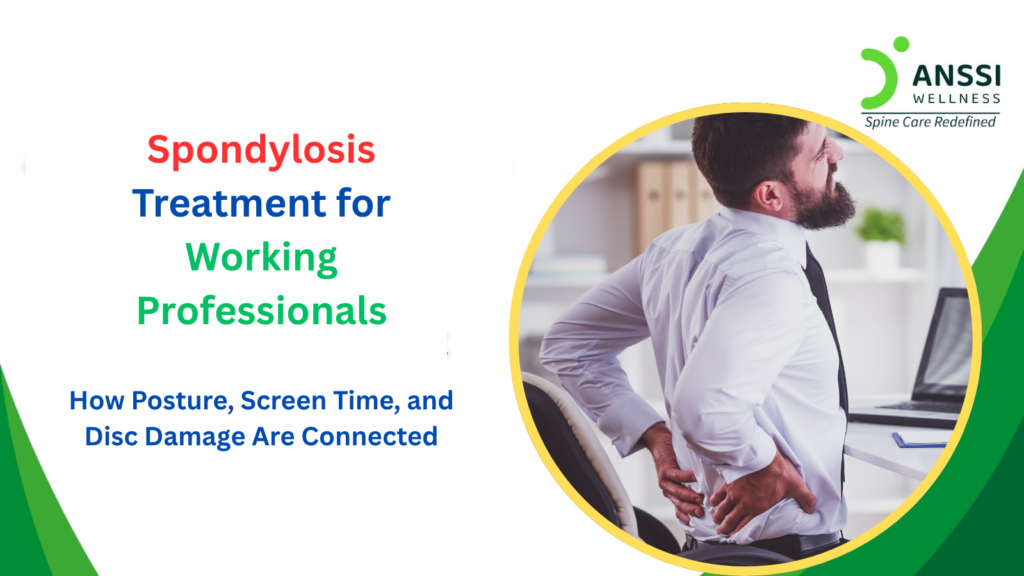
One of the most common spine conditions affecting desk workers is spondylosis. While age-related wear and tear can contribute to the condition, modern work habits such as poor posture, prolonged sitting, and excessive screen time are increasingly becoming major risk factors. Understanding how these factors contribute to disc damage and nerve compression can help working professionals take timely action and avoid long-term spinal problems.
Understanding Spondylosis
Spondylosis refers to the gradual degeneration of the spine, including the intervertebral discs, vertebral joints, and surrounding structures. As the spine ages or undergoes repeated stress, the discs may lose hydration and elasticity, making them less effective at absorbing shock.
The two most common forms of the condition are:
- Cervical Spondylosis: This affects the neck region and is particularly common among people who spend long hours looking at computer screens or mobile devices.
- Lumbar Spondylosis: This affects the lower back and is frequently associated with prolonged sitting, poor posture, and lack of movement.
As spinal discs degenerate, the space between vertebrae may decrease, increasing the likelihood of nerve compression and chronic pain.
How Poor Posture Damages the Spine
Posture plays a critical role in spinal health. Unfortunately, many professionals spend hours working in positions that place excessive stress on the neck and back.
Forward Head Posture
One of the most common workplace postural problems is forward head posture. This occurs when the head moves ahead of the shoulders while looking at a screen.
Even a slight forward shift can significantly increase the load placed on the cervical spine.
Over time, this can contribute to:
- Neck pain
- Muscle tension
- Disc stress
- Accelerated spinal degeneration
Slouching While Sitting
Many employees sit with rounded shoulders and poor lower back support.
This position can:
- Increase pressure on spinal discs
- Reduce spinal stability
- Place additional strain on muscles and ligaments
The longer these postural habits continue, the greater the risk of developing chronic spinal problems.
The Impact of Long Screen Time
Modern professionals often spend eight to twelve hours per day in front of digital screens. While technology improves productivity, excessive screen time can negatively affect spinal health.
Reduced Movement
Healthy spinal discs rely on regular movement to receive nutrients and maintain hydration.
When individuals remain seated for prolonged periods:
- Blood circulation decreases
- Disc nutrition becomes less efficient
- Muscles become stiff and weak
Increased Disc Stress
Sitting for long periods places considerable pressure on spinal discs, particularly in the lower back.
Without regular breaks and movement, this stress can contribute to:
- Disc degeneration
- Bulging discs
- Chronic neck and back pain
Many professionals unknowingly accelerate spinal wear and tear simply through prolonged daily sitting.
From Disc Damage to Nerve Compression
As discs begin to degenerate, they may lose height and flexibility. In some cases, discs may bulge outward or become damaged.
This process can reduce the space available for nearby nerves.
Nerve Compression
When spinal nerves become compressed or irritated, symptoms may extend beyond simple back or neck pain.
Common symptoms include:
- Persistent neck pain
- Lower back pain
- Pain radiating into the arms or legs
- Tingling sensations
- Numbness
- Muscle weakness
For many working professionals, these symptoms can interfere with concentration, productivity, and overall well-being.
Warning Signs Working Professionals Should Not Ignore
Early intervention is often the key to preventing more serious spinal problems.
Seek professional evaluation if you experience:
- Persistent Neck or Back Pain: Pain that continues for several weeks despite rest should not be ignored.
- Radiating Pain: Pain travelling into the shoulders, arms, buttocks, or legs may indicate nerve involvement.
- Frequent Headaches: Cervical spine problems and muscle tension can contribute to recurring headaches.
- Reduced Mobility: Difficulty turning the neck or bending the back may suggest progressive spinal degeneration.
- Sleep Disturbance: Pain that interferes with sleep can significantly affect recovery and daily performance.
Recognising these warning signs early may help prevent long-term complications.
Non-Surgical Treatment Options for Spondylosis
Many patients with spondylosis can benefit from non-surgical treatment approaches designed to improve spinal function and reduce pain.
Posture Correction and Ergonomic Improvements
Simple workplace adjustments can significantly reduce spinal strain.
These include:
- Proper chair support
- Correct monitor height
- Ergonomic desk setup
- Frequent movement breaks
Small changes often produce meaningful improvements over time.
Physiotherapy and Rehabilitation
Physiotherapy focuses on:
- Strengthening spinal support muscles
- Improving flexibility
- Enhancing posture
- Restoring movement patterns
A structured rehabilitation program can help improve spinal stability and reduce recurring symptoms.
Lifestyle Modifications
Healthy lifestyle habits contribute to long-term spinal health.
Important measures include:
- Regular physical activity
- Weight management
- Stress reduction
- Adequate sleep
These factors help reduce strain on the spine and support recovery.
Non-Surgical Spinal Decompression Treatment (NSSDT)
One of the advanced treatment options available for selected patients is Non-Surgical Spinal Decompression Treatment.
NSSDT uses specialised technology to gently stretch the spine in a controlled manner.
Potential benefits include:
- Reduced pressure within spinal discs
- Relief of nerve compression
- Improved disc hydration
- Enhanced spinal mobility
- Support for natural healing processes
Unlike surgery, Non-Surgical Spinal Decompression Treatment is non-invasive and does not require lengthy recovery periods.
Benefits of Early Non-Surgical Treatment
Addressing spondylosis early can provide several advantages:
- Reduced pain and stiffness
- Improved mobility and flexibility
- Better workplace comfort
- Increased productivity
- Reduced dependence on pain medication
- Lower risk of progression to more severe spinal problems
For many professionals, early treatment can help preserve both spinal health and career performance.
References:
- Kang, X., Qian, M., Liu, M., Xu, H., & Xu, B. (2023). Predictive Factors Associated with Chronic Neck Pain in Patients with Cervical Degenerative Disease: A Retrospective Cohort Study. Journal of Pain Research, 16, 4229–4239. https://doi.org/10.2147/JPR.S423144.
- Garg A, Anandabai J, Singh S.Prevalence and Symptomatology of Cervical Spondylosis in Computer Professionals: A Cross-sectional StudyJ Clin of Diagn Res.2025; 19(9):222-. https://www.doi.org/10.7860/JCDR/2025/80478/21810.
- Gose E., Ph.D, Naguszewski W., MD, Naguszewski R., MD. Vertebral Axial Decompression Therapy for Pain Associated with Herniated or Degenerated Discs or Facet Syndrome: An Outcome Study. Journal of Neurological Research, Volume 20, No 3, April 1998.
- Ramos G., MD, Martin W., MD. Effects of Vertebral Axial Decompression On Intradiscal Pressure. Journal of Neurosurgery 81: 350-353, 1994.
About ANSSI:
ANSSI Wellness focuses on improving the quality of life for patients suffering from spinal issues, aiming to provide relief where other conventional treatments have failed. Through advanced Non-Surgical Spinal Decompression Treatment, ANSSI is committed to helping patients avoid surgery and recover in a safe, effective, and compassionate environment.
Book Consultation:
Call +91 9004726844 | 9920936844
Visit www.anssiwellness.com
Connect with ANSSI Wellness on LinkedIn, Instagram, and Facebook for expert guidance.