Chronic back and neck pain can gradually become a part of everyday life. What may begin as occasional discomfort can turn into persistent pain that affects sleep, work, exercise, travel, and even simple activities such as sitting or bending. For many people, taking medication or undergoing repeated conventional treatments may provide temporary relief, but the pain can return when the underlying problem remains.
Understanding the possible cause of spinal pain is therefore important before deciding on a treatment approach. For selected patients, Non-Surgical Spinal Decompression Treatment (NSSDT) may provide a non-invasive treatment option that focuses on reducing mechanical stress on affected spinal structures.
What Causes Chronic Back and Neck Pain?
Back and neck pain can have many different causes. Some people develop symptoms because of prolonged sitting, poor posture, repetitive movements, physical strain, or previous injuries. Others may experience pain because of changes in the spinal discs or other structures of the spine.
Common conditions associated with chronic back or neck pain include disc bulges, herniated or slipped discs, degenerative disc changes, spondylosis, spinal stenosis, and nerve compression.
The intervertebral discs between the spinal bones act as cushions and help the spine move. With age, injury, or repeated mechanical stress, these discs can undergo changes. A disc may bulge or herniate and, in some cases, irritate or compress nearby nerves.
This can cause more than local pain. Depending on the affected area, patients may experience stiffness, pain radiating into the leg or arm, tingling, numbness, or weakness.
Because several conditions can produce similar symptoms, proper clinical assessment and appropriate imaging tests, such as an MRI when indicated, can help identify the underlying problem.
Why Medication May Not Provide Long-Term Relief
Pain medication is commonly used to manage back and neck pain. Depending on the condition, doctors may prescribe painkillers, anti-inflammatory medicines, muscle relaxants, or other medications.
These treatments can be useful for controlling symptoms and helping a person remain active while recovering. However, symptom relief does not necessarily mean that the underlying disc or mechanical problem has been corrected.
When the effect of medication wears off, pain may return, particularly when the contributing structural or mechanical factors have not been addressed. Long-term or inappropriate use of some medications can also involve side effects and requires medical supervision.
This is why patients with recurring spinal pain may need to look beyond repeated short-term symptom management and understand whether a specific underlying condition is contributing to their symptoms.
Why Are Patients Hesitant About Spine Surgery?
Spinal surgery can be an important and sometimes necessary treatment. Patients with severe or progressive neurological problems, significant spinal cord compression, instability, certain fractures, or other serious conditions may require surgical intervention.
However, surgery is an invasive procedure and naturally causes concern among many patients. Depending on the procedure and individual circumstances, potential risks may include infection, bleeding, nerve or spinal cord injury, anaesthesia-related complications, persistent symptoms, and the possibility of additional treatment.
Recovery can also require time, rehabilitation, and temporary restrictions on normal activities.
As a result, patients who have been advised to undergo surgery may want to understand whether an appropriate non-surgical treatment option is available for their particular diagnosis before making a decision.
What is Non-Surgical Spinal Decompression Treatment?
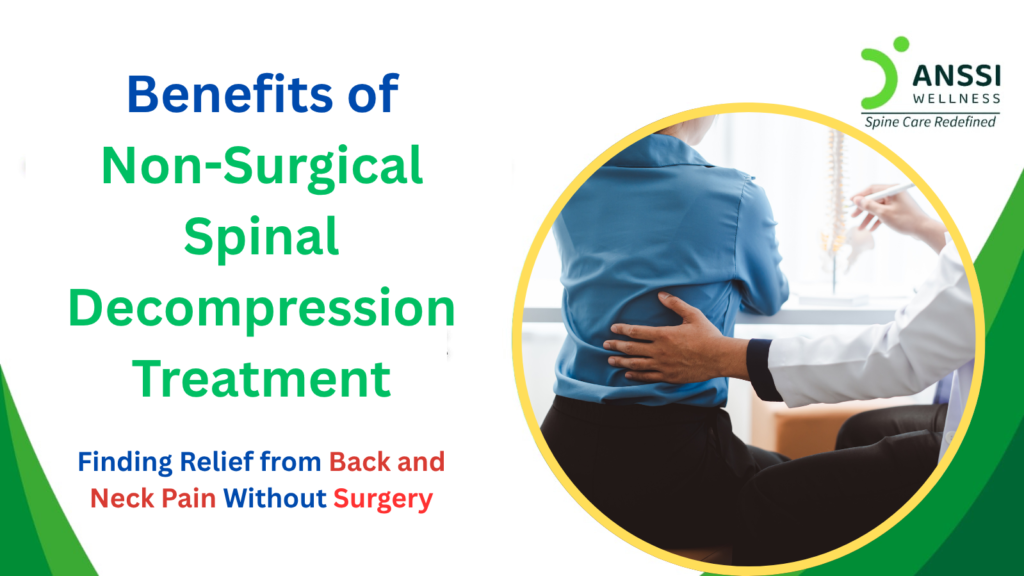
Non-Surgical Spinal Decompression Treatment (NSSDT) is a non-invasive approach used for selected patients with certain disc-related and spinal conditions.
The treatment uses a computer-controlled decompression system designed to apply carefully regulated forces to the spine. Instead of surgically removing or altering spinal structures, the treatment aims to reduce mechanical pressure and stress on the affected spinal segment.
The concept behind spinal decompression is based on controlled changes in spinal loading. By applying a programmed decompressive force, the treatment is intended to create conditions that may reduce pressure and mechanical stress around affected discs and associated structures.
Non-Surgical Spinal Decompression Treatment is not suitable for every type of back or neck pain. A patient’s diagnosis, symptoms, examination findings, medical history, and imaging findings should be considered before treatment is recommended.
How Does Non-Surgical Spinal Decompression Work for a Patient?
Treatment generally begins with an assessment by an appropriate orthopaedic doctor. The patient’s symptoms, medical history, physical findings, and available diagnostic reports are reviewed to understand the possible source of pain.
Based on this assessment, a personalised treatment plan can be developed.
During an NSSDT session, the patient is positioned comfortably on a specialised decompression table. A harness is used to help target the appropriate spinal region. The equipment then delivers controlled and computer-regulated decompressive forces according to the treatment plan.
The process is gradual and monitored rather than involving sudden or uncontrolled pulling of the spine.
Treatment may also be combined with physiotherapy, posture correction, strengthening exercises, mobility work, heat or cold therapy, and lifestyle or ergonomic guidance. These complementary approaches can help patients improve movement, strengthen supporting muscles, and address factors that may contribute to recurring pain.
Treatment duration and the number of sessions vary according to the patient’s condition and response. A personalised programme may involve multiple sessions over several weeks rather than a single treatment.
The Importance of Choosing the Right Treatment
The biggest benefit of considering a non-surgical approach is not simply avoiding surgery. It is about determining whether the patient’s particular condition can be appropriately managed without an invasive procedure.
Non-Surgical Spinal Decompression Treatment may be considered for selected patients whose symptoms are associated with disc-related mechanical problems. However, it should not be presented as a universal solution or a guarantee of permanent relief.
Patients experiencing worsening weakness, significant difficulty walking, loss of bladder or bowel control, saddle-area numbness, or rapidly progressing neurological symptoms require urgent medical evaluation. In such situations, delaying necessary surgical or specialist care can be dangerous.
About ANSSI:
ANSSI Wellness focuses on improving the quality of life for patients suffering from spinal issues, aiming to provide relief where other conventional treatments have failed. Through advanced Non-Surgical Spinal Decompression Treatment, ANSSI is committed to helping patients avoid surgery and recover in a safe, effective, and compassionate environment.
Book Consultation:
Call +91 9004726844 | 9920936844
Visit www.anssiwellness.com
Connect with ANSSI Wellness on LinkedIn, Instagram, and Facebook for expert guidance.
Clinical References:
- Punnett L, Wegman DH. Work-related musculoskeletal disorders: the epidemiology and cost. Journal of Electromyography and Kinesiology. 2004;14(1):13-23.
- Hoy DG, Protani M, De R, Buchbinder R. The epidemiology of neck pain. Best Practice & Research Clinical Rheumatology. 2010;24(6):783-792.
- Deyo RA, Weinstein JN. Low back pain. New England Journal of Medicine. 2001;344(5):363-370.
- Ramos G., MD, Martin W., MD. Effects of Vertebral Axial Decompression On Intradiscal Pressure. Journal of Neurosurgery 81: 350-353, 1994.
- Gose E., Ph.D, Naguszewski W., MD, Naguszewski R., MD. Vertebral Axial Decompression Therapy for Pain Associated with Herniated or Degenerated Discs or Facet Syndrome: An Outcome Study. Journal of Neurological Research, Volume 20, No 3, April 1998.
- Tilaro F., MD, Miskovich D. MD. The Effects of Vertebral Axial Decompression On Sensory Nerve Dysfunction In Patients with Low Back Pain and Radiculopathy. Canadian Journal of Clinical Medicine Vol. 6, No 1, January 1999.