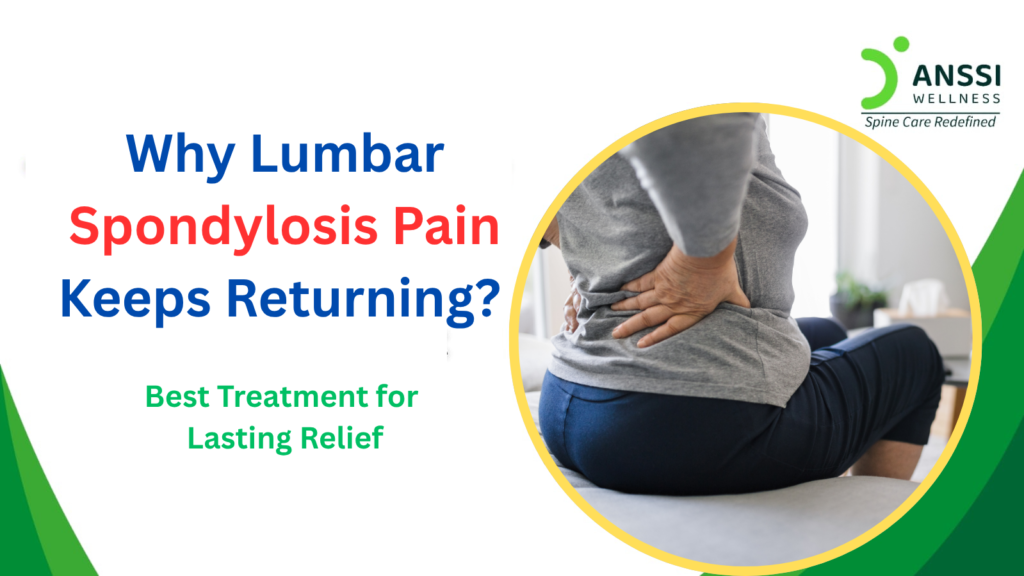
Lower back pain has become one of the most common health complaints in modern life, especially among people who spend long hours sitting, working on computers, driving, or performing repetitive physical activities. One of the leading causes of chronic lower back pain is lumbar spondylosis, a degenerative condition that affects the lower spine.
Many people suffering from lumbar spondylosis experience temporary relief with medications, rest, or physiotherapy, only to find that the pain returns after some time. This recurring cycle of pain can affect work performance, sleep quality, mobility, exercise, and overall quality of life.
The reason lumbar spondylosis pain often keeps returning is that many treatments focus only on controlling symptoms rather than addressing the actual root cause of spinal degeneration and nerve compression. Understanding why the pain returns is important for choosing a treatment that offers long-term relief rather than temporary comfort.
Understanding Lumbar Spondylosis
Lumbar spondylosis refers to age-related wear and tear affecting the discs, joints, ligaments, and vertebrae in the lower back region of the spine. Over time, spinal discs gradually lose water content, flexibility, and cushioning ability.
As degeneration progresses:
- Disc height decreases
- Bone spurs may form
- Spinal joints become stiff
- Pressure on nearby nerves may increase
The lower back is especially vulnerable because it supports much of the body’s weight and handles daily movement stresses such as bending, lifting, twisting, and sitting.
Common symptoms of lumbar spondylosis include:
- Chronic lower back pain
- Stiffness in the spine
- Sciatica or radiating leg pain
- Tingling or numbness in the legs
- Muscle weakness
- Difficulty standing or walking for long periods
- Reduced flexibility and mobility
In some individuals, symptoms may remain mild initially but gradually worsen over time as spinal degeneration progresses.
Why Lumbar Spondylosis Pain Keeps Returning
Many patients become frustrated when their lower back pain repeatedly returns despite treatment. This usually happens because lumbar spondylosis is a progressive spinal condition involving ongoing degeneration and mechanical stress within the spine.
Persistent Disc Pressure and Nerve Compression
Even when pain temporarily improves, the underlying spinal compression may still remain. Degenerated discs and narrowed spinal spaces continue to place pressure on nearby nerves, leading to recurring inflammation and pain.
As long as the source of nerve irritation is not adequately addressed, symptoms are likely to return periodically.
Lifestyle Factors Continue to Stress the Spine
Modern lifestyle habits often contribute to ongoing spinal strain, including:
- Prolonged sitting
- Poor posture
- Lack of exercise
- Obesity
- Incorrect lifting techniques
- Long driving hours
These factors continuously increase pressure on already weakened spinal discs and joints.
Degeneration Continues Over Time
Lumbar spondylosis does not usually develop overnight. It progresses gradually over the years, meaning that temporary symptom relief alone may not stop further degeneration if spinal function is not properly supported.
Limitations of Conservative Treatments
Conservative treatments are often the first step in managing lumbar spondylosis. While these approaches may provide symptom relief, they may not fully address the root cause of chronic spinal pain.
Medications: Temporary Relief but Not a Permanent Solution
Doctors commonly prescribe:
- Painkillers
- Anti-inflammatory drugs
- Muscle relaxants
These medications may reduce pain and inflammation temporarily, allowing patients to move more comfortably.
However, medications do not:
- Repair damaged spinal discs
- Restore spinal alignment
- Relieve long-term nerve compression
Once the medication effect wears off, symptoms often return because the underlying spinal degeneration remains unchanged.
Long-term use of medications may also lead to:
- Stomach irritation
- Drowsiness
- Kidney-related side effects
- Dependency risks
Physiotherapy: Helpful but Sometimes Incomplete
Physiotherapy plays an important role in improving posture, muscle strength, flexibility, and spinal support.
Rehabilitation programs may include:
- Stretching exercises
- Core strengthening
- Postural correction
- Mobility exercises
Physiotherapy can help reduce mechanical stress on the spine and improve overall spinal stability.
However, severe disc degeneration or nerve compression may not always respond fully to exercise alone. In some cases:
- Pain may return after therapy ends
- Exercises may not sufficiently reduce disc pressure
- Symptoms may persist if nerve compression remains untreated
This is why many patients continue experiencing recurring pain despite ongoing physiotherapy.
The Need for Root-Cause-Focused Treatment
For lasting relief from lumbar spondylosis, treatment must focus on addressing the actual source of pain rather than only masking symptoms.
The root causes often include:
- Disc compression
- Reduced disc space
- Nerve irritation
- Poor spinal mechanics
- Degenerative changes within the spine
Long-term improvement usually requires:
- Reducing pressure within spinal discs
- Relieving nerve compression
- Supporting spinal alignment
- Improving nutrient flow to damaged tissues
- Enhancing spinal function naturally
Treatments targeting these mechanical spinal problems may provide more sustainable relief compared to symptom-based approaches alone.
Non-Surgical Spinal Decompression Treatment
One of the advanced non-invasive options available for lumbar spondylosis is Non-Surgical Spinal Decompression Treatment.
This modern procedure uses a specialised decompression system that gently stretches the spine in a controlled and precise manner. The treatment creates negative pressure within the spinal discs.
This negative pressure may help:
- Reduce disc compression
- Relieve pressure on spinal nerves
- Improve circulation to damaged discs
- Encourage movement of oxygen, water, and nutrients into spinal tissues
Unlike traditional traction methods, modern spinal decompression systems are computer-controlled to ensure safe and targeted treatment.
Benefits of Non-Surgical Spinal Decompression
- Targets the Root Cause: The treatment focuses on relieving mechanical pressure within the spine rather than only suppressing pain symptoms.
- Drug-Free and Surgery-Free: Patients can avoid prolonged medication use and the risks associated with spinal surgery.
- Improved Mobility and Flexibility: Reducing nerve irritation may help patients move more comfortably and perform daily activities with less pain.
- Supports Natural Healing: Improved nutrient flow may assist damaged spinal discs in recovering more effectively.
- Long-Term Relief Potential: Because decompression addresses spinal compression directly, many patients experience more lasting symptom improvement.
Book Consultation:
Call +91 9004726844 | 9920936844
Visit www.anssiwellness.com
References:
- Tikhile P, Patil DS. Unveiling the Efficacy of Physiotherapy Strategies in Alleviating Low Back Pain: A Comprehensive Review of Interventions and Outcomes. Cureus. 2024 Mar 12;16(3):e56013. doi: 10.7759/cureus.56013. PMID: 38606230; PMCID: PMC11008921.
- A Prospective Randomized Controlled Study of VAX-D and TENS for the Treatment of Chronic Low Back Pain. Sherry E., MD FRACS, Kitchener P., MB, BS FRANZCR, Smart R., MB, Ch.B. Journal of Neurological Research Volume 23, No 7, October 2001
- Vertebral Axial Decompression Therapy for Pain Associated with Herniated or Degenerated Discs or Facet Syndrome: An Outcome Study. Gose E., Ph.D, Naguszewski W., MD, Naguszewski R., MD. Journal of Neurological Research, Volume 20, No 3, April 1998.
About ANSSI:
ANSSI Wellness focuses on improving the quality of life for patients suffering from spinal issues, aiming to provide relief where other conventional treatments have failed. Through advanced Non-Surgical Spinal Decompression Treatment, ANSSI is committed to helping patients avoid surgery and recover in a safe, effective, and compassionate environment.
Connect with ANSSI Wellness on LinkedIn, Instagram, and Facebook for expert guidance.