Understanding the Growing Problem of Slip Disc in Pune
Slip disc has become a common health issue among people living in fast-growing urban cities like Pune. Long office hours, work-from-home routines, poor posture, stressful schedules, and lack of physical activity are placing increasing pressure on the spine. Working professionals, drivers, elderly individuals, and even younger adults are now experiencing chronic lower back pain caused by spinal disc problems.
Many patients initially ignore symptoms or depend only on painkillers for temporary relief. However, untreated slip disc problems can gradually worsen and begin affecting mobility, sleep, productivity, and overall quality of life.
Choosing the right treatment early is important for avoiding complications and achieving long-term recovery. Understanding available treatment options can help patients make informed decisions about their spinal health.
What is a Slip Disc and How Does It Affect Daily Life?
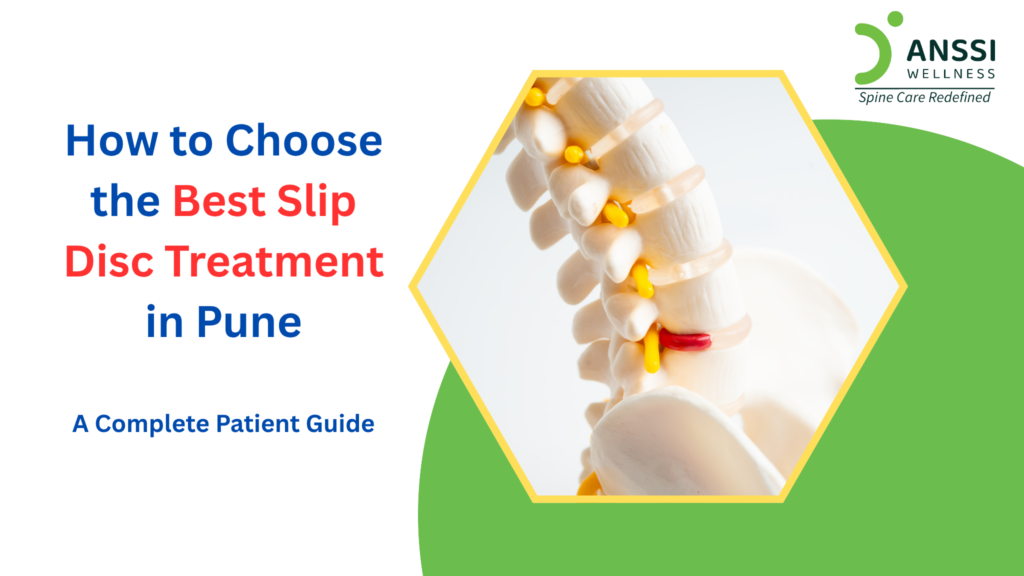
A slip disc, also known as a herniated or prolapsed disc, occurs when the soft inner portion of a spinal disc pushes outward through its outer layer. The spinal discs act as cushions between the vertebrae and help absorb shock during movement.
When a disc bulges or ruptures, it may compress nearby nerves. This nerve compression often leads to chronic pain and neurological symptoms.
Common Symptoms of Slip Disc
- Persistent lower back pain
- Pain radiating to the legs, commonly known as sciatica
- Numbness and tingling sensations
- Muscle weakness in the legs
- Difficulty sitting, standing, bending, or walking comfortably
Many patients also experience pain while driving, working, or sleeping. Daily activities that once felt simple may become difficult and uncomfortable.
If left untreated, the condition can progressively worsen and significantly affect the quality of your life.
Why Proper Diagnosis Matters
Accurate diagnosis is the foundation of successful treatment.
Several spinal conditions can produce similar symptoms, which is why proper clinical evaluation is important. Spine specialists typically assess posture, movement patterns, nerve involvement, and pain severity.
Imaging tests such as MRI scans and X-rays help identify the exact location and severity of disc damage, nerve compression, or degeneration.
Understanding the root cause allows specialists to develop personalised treatment plans tailored to the patient’s condition, lifestyle, and recovery goals. Early diagnosis also improves the chances of avoiding surgery and achieving faster recovery through conservative care.
Limitations of Medication and Surgery
When diagnosed with a slip disc, many patients immediately begin taking painkillers or assume surgery is the only solution. However, both approaches have important limitations.
Painkillers Provide Temporary Relief
Pain medications may reduce discomfort for a short period, but they do not correct the underlying spinal problem. Disc damage and nerve compression may continue progressing even when pain appears controlled.
Long-term medication use may also lead to side effects such as stomach irritation, kidney problems, and dependency risks.
Surgery is Not Always Necessary
Surgery may be required in severe cases involving major nerve damage or loss of bladder and bowel control. However, many slip disc cases respond well to conservative treatment.
Spinal surgery also involves recovery time, hospitalisation, rehabilitation, and potential complications. Some patients may continue experiencing discomfort even after surgery.
Because of these factors, many specialists recommend exploring non-surgical treatments before considering invasive procedures.
Non-Surgical Spinal Decompression Treatment in Pune
One of the most advanced non-surgical treatments available for slip disc patients today is non-surgical spinal decompression treatment.
This treatment gently stretches the spine using specialised equipment in a controlled and calculated manner. In order to lessen nerve compression and encourage the bulging disc to return to its natural position, the stretching produces negative pressure inside the spinal discs.
Spinal decompression also improves blood circulation and nutrient delivery to the damaged area, supporting natural healing and reducing inflammation.
Benefits of Non-Surgical Spinal Decompression
- Non-invasive and surgery-free
- Minimal downtime and no hospitalisation
- Helps reduce nerve pressure naturally
- Supports long-term pain relief and mobility improvement
- Allows patients to continue many daily activities during treatment
For many patients in Pune seeking safer alternatives to surgery, spinal decompression has become an effective option for chronic back disc pain management.
Other Non-Surgical Treatments That Support Recovery
- Physiotherapy and Core Strengthening: Physiotherapy helps strengthen the muscles supporting the spine, improve flexibility, and restore spinal stability. Guided exercises reduce pressure on the affected disc and improve movement patterns.
- Posture Correction and Ergonomic Guidance: Incorrect posture is a major contributor to slip disc problems. Specialists often provide ergonomic advice regarding sitting posture, workstation setup, and safe lifting techniques.
- Lifestyle Modifications: Regular movement, weight management, healthy exercise habits, and avoiding prolonged sitting can significantly improve spinal health and reduce the risk of recurrence.
- Rehabilitation Programs: Personalised rehabilitation programs help patients recover safely while gradually improving strength, mobility, and overall function.
How to Choose the Right Slip Disc Treatment Centre in Pune
Selecting the right treatment centre is essential for achieving effective long-term recovery.
- Experienced Spine Specialists: Choose clinics with experienced specialists who focus on accurate diagnosis and patient-centred treatment planning.
- Advanced Technology: Modern non-surgical technologies, such as spinal decompression treatment, can improve treatment outcomes and reduce recovery time.
- Personalised Care: Every patient’s condition is unique. A good spine centre should provide individualised treatment plans based on symptoms, lifestyle, and severity of the condition.
- Focus on Long-Term Recovery: The best treatment centres focus on addressing the root cause of pain instead of only providing temporary symptom relief.
Book Consultation:
Call +91 9004726844 | 9920936844|
Visit www.anssiwellness.com
References:
- Effects of Vertebral Axial Decompression On Intradiscal Pressure. Ramos G., MD, Martin W., MD. Journal of Neurosurgery 81: 350-353, 1994.
- The Effects of Vertebral Axial Decompression On Sensory Nerve Dysfunction In Patients with Low Back Pain and Radiculopathy. Tilaro F., MD, Miskovich D. MD. Canadian Journal of Clinical Medicine Vol. 6, No 1, January 1999.
- Vertebral Axial Decompression Therapy for Pain Associated with Herniated or Degenerated Discs or Facet Syndrome: An Outcome Study. Gose E., Ph.D, Naguszewski W., MD, Naguszewski R., MD. Journal of Neurological Research, Volume 20, No 3, April 1998.
About ANSSI:
ANSSI Wellness focuses on improving the quality of life for patients suffering from spinal issues, aiming to provide relief where other conventional treatments have failed. Through advanced Non-Surgical Spinal Decompression Treatment, ANSSI is committed to helping patients avoid surgery and recover in a safe, effective, and compassionate environment.
Connect with ANSSI Wellness on LinkedIn, Instagram, and Facebook for expert guidance.